- News
- entertainment
- hindi
- bollywood
- Abhishek Chaubey: The book is always better than the film
Trending
This story is from December 2, 2014
Abhishek Chaubey: The book is always better than the film
This was the first time that the school was distributing tokens for admission forms to the parents at 5.30 in the morning.
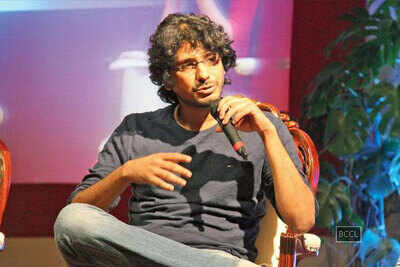
Abhishek Chaubey, who has written the script for three films based on Shakespearean tragedies, on translating literature to celluloid.
The recently-concluded Lucknow Literature Carnival saw UP lad and filmmaker Abhishek Chaubey talk about the much-discussed topic of adapting books into movies. Abhishek, who was the scriptwriter for all three of Vishal Bhardwaj’s onscreen adaptations of Shakespearean tragedies – Maqbool from Macbeth, Omkara from Othello and Haider from Hamlet, spoke about the challenges associated with bringing Shakespeare to the screen.
ALSO READ: Amitabh Bachchan showers praise on 'Haider'
If you’ve read the book first, the book is always better.

Intimidated by Shakespeare? Heck, no!
At the risk of being pompous, I’ll say that we didn’t take Shakespeare too seriously. We were not intimidated by the idea of doing Shakespeare in the first place. What appealed to Vishal was the core conflict of Omkara. There are places in the script which resonate very carefully with the text. However, it is a free-wheeling adaptation. The author isn’t the supreme authority. Once you’ve written the book, or a script in my case, it doesn’t even belong to you anymore.
Write a script in 25 days? Bring it on
Othello wasn’t even intended to be made into a film. It so happened that during the editing of Maqbool, we had a lot of free time. Ajay (Devgn) showed his keenness to do a Shakespearean adaptation and that’s how Omkara happened. The film was written in 25 days! What was terrible about it is that after that we thought that we can write any script in 25 days. However, we were lucky because a lot of groundwork had already been done with Vishal over several drinks. We spent 15 days in Meerut where we met all sorts of colourful characters, and then we went to Mussoorie to write it.
There’s poetry in the crass language
There is a great amount of poetry in Shakespeare’s writing. Doing a literal translation of that poetry is ridiculous. You cannot do it in today’s cinema. And Omkara was a fairly realistic film – with criminal gangs in Western UP... we couldn’t have Omkara going into soliloquies and talking about how he is trying to deal with his jealousy. So, we used a lot of colourful language, which got a lot of backlash. The Censors thought that it’s not cultural, but it was intentional. The crass language sounded almost foreign to the mainstream multiplex audience. In a very strange way, it was coarse, yet poetic. That is how we tackled the problem of poetry.
‘Rural Cool’ is the in thing
A lot of work is happening now in Mumbai regarding the Hindi heartland. I think it’s got to do a lot more with filmmakers coming from there. The audiences are still in the big cities though. That’s where the revenues are coming from. Whatever little change has happened has happened primarily because of the filmmakers coming from these places and making films on their experiences. That’s why filmmakers like Vishal (Bhardwaj) and Anurag (Kashyap) are now doing something called the rural cool – the gamccha-clad hero and all.
LISTEN: Songs of Haider on Gaana.com
WATCH: 'Haider' Wins Award At Rome Film Festival
End of Article
FOLLOW US ON SOCIAL MEDIA






Photostories
entertainment videos
Featured In Movies

Popular Categories
Trending in Entertainment
Latest MoviesBollywood MoviesHollywood MoviesTamil Movies 2024Telugu Movies 2024Malayalam Movies 2024Kannada Movies 2024Marathi Movies 2024Bengali Movies 2024Top Rated Movies 2024Best Hindi MoviesBest English MoviesBest Telugu MoviesBest Tamil MoviesBest Malayalam MoviesBest Kannada MoviesBest Bengali MoviesUpcoming Hindi MoviesBest Movies Of All TimeBest Hindi Movies of All Time
Trending in Etimes
Trending in TV
Trending in Lifestyle
Trending in Regional
Movie Reviews
The Wild Robot ReviewSmile 2 ReviewAayushmati Geeta Matric Pass ReviewJigra ReviewVicky Vidya Ka Woh Wala Video ReviewBougainvillea ReviewSir (Tamil) ReviewRocket Driver ReviewAaryamala ReviewBlack ReviewVettaiyan ReviewJhini Bini Chadariya ReviewColourrs Of Love ReviewAmar Prem Ki Prem Kahani Review
Upcoming Hindi Movies
Upcoming Regional Movies
Latest News
Diljit Dosanjh becomes 1st Indian artiste to feature on Billboard CanadaDenzel Washington reveals details about his character in "Gladiator II"; says, ‘I hadn’t done that before’Is Kanu Behl's film Despatch, starring Manoj Bajpayee, based on slain journalist J Dey's life?Top 5 Government/Defence schools in Delhi/NCR to consider for quality educationHandling 750 flights daily, Bengaluru's KIA airport celebrates air traffic controllers' critical roleBest Glass Top 3 Burner Gas Stove: Top Recommendations for Gourmet Home Cooking'Will not let boat sink, but ... ': RJD hints at going solo in Jharkhand polls'Congressman by birth': Ex Hrayana minister Ajay Yadav makes another U-turn, returns to Congress in two daysRohini blast: Material used in blast outside Delhi school resembles crude bomb, says forensic lab sourcesInstant Camera for Gifting: Best Picks To Turn Ordinary Moments Into Instant JoyWhen Janhvi Kapoor recalled about the ‘hectic itineraries’ made by her dad that gave her mother late Sridevi ‘anxiety’Optical illusion personality test: Are you diplomatic or brutally honest?Mehendi laga ke rakhna! Trending Karwa Chauth mehendi designsCentre unable to maintain law and order in Delhi: AAP on school blastTamil Nadu governor R N Ravi faces the music after omisson of ‘dravida’ from Tamil anthemRani Mukerji, Sonam Kapoor, Padmini Kolhapure and others make heads turn at Anil Kapoor-Sunita Kapoor's Karwa Chauth celebration - See photos'Aap gaaliyan de rahe hain...': Basit Ali blasts Pakistan bowler for Abhishek Sharma send-off'Trudeau destroyed Canada-India ties based on ...': Outgoing envoy Sanjay Verma slams baseless Nijjar allegations
Other Group Sites -
ETimes is an Entertainment, TV & Lifestyle industrys promotional website and carries advertorials and native advertising.