- News
- entertainment
- events
- kolkata
- #EatPrayLove: How Kolkata’s Chinese community plans to ring in Year of the Tiger
Trending
This story is from February 1, 2022
#EatPrayLove: How Kolkata’s Chinese community plans to ring in Year of the Tiger
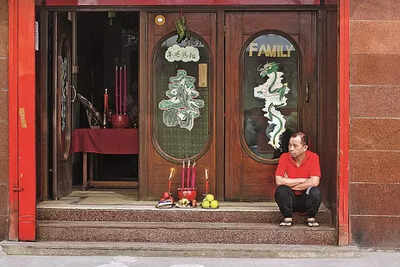
We, like Bengalis, consider red an auspicious colour,” said Janice Lee, a young entrepreneur from old Chinatown, as she guided us through the dingy alleys of Tiretta Bazar. We were on our way to get introduced to other community members who were busy preparing to welcome the Chinese New Year. “You will see the entrances are all painted in red – red gates, grilles, lanterns and so on,” she said. Today, the communities from both Chinatowns in the city – Tiretta Bazar and Tangra – are celebrating the beginning of the Year of Tiger.
“The pandemic had upset all our plans for a couple of years,” said Monica Liu, one of the oldest restaurateurs in Tangra. “Now, with the night curfew in place, the chances of celebrating it are slim. I spoke with the police. We might have a small celebration at night at Pei May School. We will cook a Chinese dinner and celebrate with our families at home. However, we are organising a food festival on the school ground on Friday and Saturday,” she told us.
Like Tangra, the old Chinatown in Tiretta Bazar is also keeping celebrations low-key. “We will cook food, offer prayers and enjoy the time with our families. I’m also looking forward to the Tiger and lion dance performances,” Janice said, adding that she’ll cook noodles for her family. “According to our culture, the long strings of noodles signify a long life,” she added.

“Kolkata is one of the few cities in the world that has two Chinatowns. If you get onto a yellow cab and tell the driver to take you to Chinatown, he would ask you, ‘Which one?’” said Dominic Lee with a smile. Elaborating on his Kolkata connection, he said, “There was a time when there used to be 20,000 to 30,000 Chinese here in Kolkata. Now the number has gone down to approximately 2,500 or so. During the 1962 war, thousands from the community were taken to detention camps. My wife was born in the Deoli Camp in Rajasthan. Several Chinese professionals, carpenters, tailors, dry cleaners, shoemakers, restaurateurs and others migrated to the US, Canada and other parts of the world. We stayed back. Bengalis are a learned race that accepted us as part of their culture. We work here and we have been working hard. Now we understand this language more than Mandarin and we love Bengali food. That’s the way to look forward to the New Year,” said Dominic with a broad smile.
STEPHEN CHEN AND MAJHONG
89274920
“We pray and we play,” said Dr Chang, as his friends swiftly stacked up Mahjong blocks in a century-old building near Tiretta Bazar. He was sitting near a group of elderly men playing the game in front of an altar in a prayer room on the second floor. “Every day you’ll find someone playing here. It’s busier on Sundays. We have a strong culture of association,” he said. It was Dr Chang’s nephew, Stephen Chen, who took us to the Mahjong centre. Stephen and his family represent another club, Sei Vui Association, which runs a Chinese restaurant to generate funds to maintain the heritage building and the temple. Stephen manages the restaurant.
Dominic Lee and Janice Lee
It was Dominic’s father, Lee Shih Chuan, who started making Chinese sauces as soon as the cuisine gained popularity in Kolkata. “When the big factories closed down and Chinese businessmen started leaving Kolkata, the jobless Chinese workers started opening small eateries. My father used to approach them with bottles of sauce and that’s how he slowly created a market for it,” said Dominic, one of the most successful members of the community. Now her daughter Janice has joined him. “During the pandemic, the supply of imported sauces was disrupted. Our sauces got popular as chefs here found them cheaper but good quality,” said Janice.
Monica Liu
Monica Liu introduced the first air-conditioned Chinese restaurant in Kolkata in the early ’90s. But it was not an easy journey. She built her empire bit by bit after she came to the city. “I started off with a beauty parlour in Lansdowne. Years later, after saving up with much effort, I opened my restaurant. People, especially customers, tried to take me for a ride. They would eat and then complain about it to avoid paying the bills. I started fighting with them and compelled them to pay. My elder son, Vincent, joined me too,” she recalled. She plans to organise a New Year food festival in Tangra along with other community members.
Abhrajit Lao Fu Choudhury and Yok Ho Choudhury
Abhrajit has a deep Chinese bond. “Like biryani, Chinese food is an integral part of Kolkata’s culture. Hence, I quit my job and started my Chinese food catering business,” he said. Abhrajit also takes the initiative to spread Chinese language education, and along with his wife, Yok Ho Choudhury, he is bringing back the heritage of the Cheongsam dress. Yok Ho said, “There was a time when you would find fine dressmakers in Kolkata. Traditionally, Cheongsam is made only for a slim fit. We now make them for all sizes.” The couple is planning to usher in the New Year with food, family and prayers.
Dr Christopher Chang
Dr Christopher Chang is a fourth-generation descendant of an Indian-Chinese family. “I am not from Kolkata, but from Bihar. After completing my dentistry degree from Chennai, I set up my chamber in Kolkata. Now my entire family has shifted here and we’re all set to ring in the New Year,” he said.
“The pandemic had upset all our plans for a couple of years,” said Monica Liu, one of the oldest restaurateurs in Tangra. “Now, with the night curfew in place, the chances of celebrating it are slim. I spoke with the police. We might have a small celebration at night at Pei May School. We will cook a Chinese dinner and celebrate with our families at home. However, we are organising a food festival on the school ground on Friday and Saturday,” she told us.
FAMILY TIME AND LION DANCE
Like Tangra, the old Chinatown in Tiretta Bazar is also keeping celebrations low-key. “We will cook food, offer prayers and enjoy the time with our families. I’m also looking forward to the Tiger and lion dance performances,” Janice said, adding that she’ll cook noodles for her family. “According to our culture, the long strings of noodles signify a long life,” she added.
Meanwhile, Abhrajit Lao Fu Choudhury, an entrepreneur from Indian-Chinese descent, has planned to cook all day with his wife Yok Ho Choudhury. “We are cooking the entire Monday for a royal dinner. Then we’ll visit my wife’s uncle, her father figure, Ho Yen Fu, to offer our prayers to our God. We call it Pai Sin. He is the eldest in the family and he will make the offerings. After that, we might check out the lion dance in Tangra and go to the Pei May compound. That’s the celebration for us,” he said.
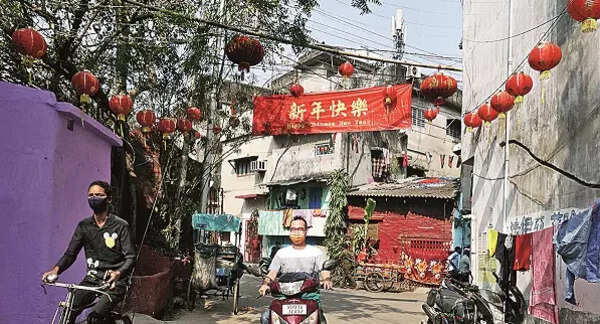
THE ORIENTAL BOND
“Kolkata is one of the few cities in the world that has two Chinatowns. If you get onto a yellow cab and tell the driver to take you to Chinatown, he would ask you, ‘Which one?’” said Dominic Lee with a smile. Elaborating on his Kolkata connection, he said, “There was a time when there used to be 20,000 to 30,000 Chinese here in Kolkata. Now the number has gone down to approximately 2,500 or so. During the 1962 war, thousands from the community were taken to detention camps. My wife was born in the Deoli Camp in Rajasthan. Several Chinese professionals, carpenters, tailors, dry cleaners, shoemakers, restaurateurs and others migrated to the US, Canada and other parts of the world. We stayed back. Bengalis are a learned race that accepted us as part of their culture. We work here and we have been working hard. Now we understand this language more than Mandarin and we love Bengali food. That’s the way to look forward to the New Year,” said Dominic with a broad smile.
“We pray and we play,” said Dr Chang, as his friends swiftly stacked up Mahjong blocks in a century-old building near Tiretta Bazar. He was sitting near a group of elderly men playing the game in front of an altar in a prayer room on the second floor. “Every day you’ll find someone playing here. It’s busier on Sundays. We have a strong culture of association,” he said. It was Dr Chang’s nephew, Stephen Chen, who took us to the Mahjong centre. Stephen and his family represent another club, Sei Vui Association, which runs a Chinese restaurant to generate funds to maintain the heritage building and the temple. Stephen manages the restaurant.
Dominic Lee and Janice Lee
It was Dominic’s father, Lee Shih Chuan, who started making Chinese sauces as soon as the cuisine gained popularity in Kolkata. “When the big factories closed down and Chinese businessmen started leaving Kolkata, the jobless Chinese workers started opening small eateries. My father used to approach them with bottles of sauce and that’s how he slowly created a market for it,” said Dominic, one of the most successful members of the community. Now her daughter Janice has joined him. “During the pandemic, the supply of imported sauces was disrupted. Our sauces got popular as chefs here found them cheaper but good quality,” said Janice.
Monica Liu
Monica Liu introduced the first air-conditioned Chinese restaurant in Kolkata in the early ’90s. But it was not an easy journey. She built her empire bit by bit after she came to the city. “I started off with a beauty parlour in Lansdowne. Years later, after saving up with much effort, I opened my restaurant. People, especially customers, tried to take me for a ride. They would eat and then complain about it to avoid paying the bills. I started fighting with them and compelled them to pay. My elder son, Vincent, joined me too,” she recalled. She plans to organise a New Year food festival in Tangra along with other community members.
Abhrajit Lao Fu Choudhury and Yok Ho Choudhury
Abhrajit has a deep Chinese bond. “Like biryani, Chinese food is an integral part of Kolkata’s culture. Hence, I quit my job and started my Chinese food catering business,” he said. Abhrajit also takes the initiative to spread Chinese language education, and along with his wife, Yok Ho Choudhury, he is bringing back the heritage of the Cheongsam dress. Yok Ho said, “There was a time when you would find fine dressmakers in Kolkata. Traditionally, Cheongsam is made only for a slim fit. We now make them for all sizes.” The couple is planning to usher in the New Year with food, family and prayers.
Dr Christopher Chang
Dr Christopher Chang is a fourth-generation descendant of an Indian-Chinese family. “I am not from Kolkata, but from Bihar. After completing my dentistry degree from Chennai, I set up my chamber in Kolkata. Now my entire family has shifted here and we’re all set to ring in the New Year,” he said.
End of Article
FOLLOW US ON SOCIAL MEDIA
Visual Stories




Photostories
entertainment videos
Featured In Movies
Popular Categories
Entertainment NewsBollywood NewsTollywood NewsKollywood NewsMollywood NewsMovie ReviewsLatest Hindi MoviesLatest Tamil MoviesMX PlayerParenting TipsHome RemediesWeight LossBeauty TipsParenting TipsHindi VideosHindi Video SongsBhojpuri Music VideosLatest Telugu MoviesBhojpuri Music VideoHindi TV News
Trending in Entertainment
Latest MoviesBollywood MoviesHollywood MoviesTamil Movies 2024Telugu Movies 2024Malayalam Movies 2024Kannada Movies 2024Marathi Movies 2024Bengali Movies 2024Top Rated Movies 2024Best Hindi MoviesBest English MoviesBest Telugu MoviesBest Tamil MoviesBest Malayalam MoviesBest Kannada MoviesBest Bengali MoviesUpcoming Hindi MoviesBest Movies Of All TimeBest Hindi Movies of All Time
Trending in Etimes
Horoscope TodayNumerology Predictions TodayElla EmhoffDonald Trump AssassinationIvanka TrumpJose LopezKristina JoksimovicJoe WilsonTrump Eating The Dogs SongGermany NewsKamala HarrisPrince HarryBelly Fat LossDiabetes RiskFull Moon in September 2024Trump Vs HarrisJoe JonasTito Jackson DeathDave Bautista
Trending in TV
Trending in Lifestyle
Trending in Regional
Movie Reviews
Berlin ReviewThe Buckingham Murders ReviewSpeak No Evil ReviewVisfot ReviewThalapathy Is The G.O.A.T ReviewRebel Ridge ReviewDetective Conan vs. Kid the Phantom Thief ReviewBeetlejuice Beetlejuice ReviewPad Gaye Pange ReviewA Wedding Story ReviewThe Diary Of West Bengal ReviewTikdam ReviewKinds Of Kindness ReviewAfraid Review
Upcoming Hindi Movies
Upcoming Regional Movies
Latest News
Vempalle Shareef's story is now a lesson for degree students in Andhra PradeshGovt launches programme to tackle glacial lake outburst flood threat in Himalayas, all 190 high-risk lakes to be monitoredKhatron Ke Khiladi 14: Shalin Bhanot hosts a fun party for his co-contestants Krishna Shroff, Abhishek Kumar, KaranVeer Mehra and othersAstrological Influence on Zodiac Signs' Career ChoicesBike rally held to raise voter awareness in Jammu and Kashmir's Doda ahead of assembly electionsFalcons' Predictable Offense and Cousins' Prime-Time Woes Spell Trouble in PhiladelphiaTaurus, Daily Horoscope Today, September 17, 2024: Anxiety and stress diminishLiza Colon becomes 1st Latina to win Best Supporting Emmy Award'Oh no!': Hilarious goof-up leads to missed catch, leaves bowler in smile. WatchTop NFL Superstars Who Are Vegan: Derrick Morgan, David Carter, Theo Riddick and moreKSCA Invitational: Arjun Tendulkar takes match haul of 9 wickets in big Goa CA XI winAbhishek Kumar shares selfies with Alia Bhatt; recalls the time when he worked as a crowd artist in ‘Humpty Sharma Ki Dulhaniya’Shocking! Man celebrates birthday by lying among massive PythonsSohum Shah says 'Tumbbad 2' will be different from 'Munjya' and 'Stree 2': 'They are not making dadi-nani ki kahaniyaan'1031 candidates to contest Haryana Assembly Elections to be held on October 5: CEO J AgarwalSathiyan set to partner Sreeja in mixed doublesHere's why multiple WWE Hall of Famers refused to team up with Kevin Owens on SmackDownCarlito's Net Worth 2024, Current WWE Salary and More
Other Group Sites -
ETimes is an Entertainment, TV & Lifestyle industrys promotional website and carries advertorials and native advertising.