- News
- entertainment
- events
- kochi
- Yes, we call ourselves open-minded, but even a novel on homosexuality will offend us!
Trending
This story is from May 12, 2017
Yes, we call ourselves open-minded, but even a novel on homosexuality will offend us!
The recent incident where writer Sreeparvathy was denied permission to launch her fictional work themed on lesbianism at the St Teresa’s College, Kochi, shows how homophobic we still are as a society
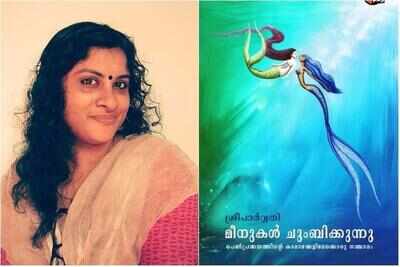
When writer Sreeparvathy decided to launch her novel Meenukal Chumbikkumbol, which is about lesbian love, this was all she imagined. And when she got the St. Teresa’s College as a venue for the launch, her joy knew no bounds. However, little did she know that the college authorities would deny her the venue when they found out about the theme of the book!
Well, even in a State like Kerala, which has one of the highest literary rates in the country and boasts of progressive LGBT initiatives by the government, the ground reality is still bleak, proves this latest incident.

This is just the tip of the iceberg
Tell the LGBT community about the latest book launch instance and most of them say, “‘The author of this book isn’t even a lesbian, just a supporter. If this is her experience, you can imagine our plight in the ‘educated, enlightened’ Kerala.”
Devi Jyoti, who works in an IT company in Kochi, speaks about how her ‘lesbian tag’ came in the way of everything in her previous workplace. “I have always been a person who kept my sexuality private, but since I was continuously bombarded with ‘Why aren’t you getting married’ questions from my loving colleagues, I revealed it to a few of them. Little did I know that it would spread like wildfire and their attitude towards me would change. While there was no official side-lining from the part of the company, the change in their perception was obvious even at the lunch table and it prevailed, in the form of suspicion regarding even a touch from me, the degree of closeness to anyone, and more. Finally I quit the job.” Devi says that other homosexuals too have shared similar experiences with her, because of which they keep mum about their sexuality.
Researcher-cum-activist Jijo Kuriakose was asked to move out of his apartment in Kochi, when his landlord discovered that he was gay. “I used to regularly take part in TV discussions and appear on media to talk about LGBT issues, previously.
Now, I keep away from channels as it’s not practical to go house hunting every time a house owner finds it a problem,” he explains.
Why aren’t we growing up yet, despite all the ‘education’?
In the case of Sreeparvathy, the homophobia can probably be attributed to Church’s ever-against attitude towards homosexuality, she points out. “My friend, who had arranged St Teresa’s College as the venue, was informed that the management doesn’t want to allot the college due to the theme of the story,” she says. As for the rest of the instances, the reasons are numerous, about which many discussions have already been held often, at length.
Interestingly, what is baffling is that ours was a culture that considered the various forms of sex as beautiful, until we started getting influenced by ‘Victorian morality’, say many. Malayalam writer Saradakutty says, “Basically, ours is an extremely closed society now. We are averse or shy to even try to understand the concept of sexuality in itself. Especially when a woman writer talks about sexuality, our society finds it hard to handle and she is bombarded with questions like, ‘Will this be allowed in your own home?’ Nobody would ask the same question to a man who does the same thing. I don’t think anyone asked filmmaker Padmarajan the same question, when he made the iconic film Desadanakkili Karayarilla.”
Ours might be the ‘Land of Kama Sutra and Khajuraho Temples’ but how openly do we even discuss sexuality at homes, educational institutions or even amidst peer groups? Asks Jeena George, a counsellor. “Despite being educated, many of those I meet still like to believe that ‘sexuality matters only after marriage’ and don’t even understand sex or gender diversities much. They like to be in denial. In such a setting, how do you expect them to understand homosexuality? We simply don’t know much about it and so we are scared of it, which results in the hatred,” she says.
And homosexuals are treated as funny in our films, rather than as normal beings, adds Jeena. “This makes you believe that anything about them is laughable or abnormal. Naturally, your attitude towards them is different.”
The beliefs that homosexuality can be ‘cured’ by marriage; that it’s against Indian culture, its religions and ‘values,’ a false sense of morality, and above all, the lack of legal recognition - all of these directly contribute to elevating the homophobia quotient of our society. “As long as section 377 exists, criminalising LGBT relationships, there is nothing much that can be done about improving the rest of the situations,” Jijo says.
How to help the situation?
Saradakutty says that the more the voices of dissent, the more we should strongly stand for homosexual love. “Yes, there would be a lot of opposition and pelting of stones when you stand up for something. Be ready to face it, and each one of us should stand up boldly and continue to speak for it. A change can’t be brought about in a day.”
Sreeparvathy also believes that homosexuals should also keep coming out, bravely. “The more they come out, the more people will get used to seeing them around and accepting them. That should definitely bring in a change,” she says.
Many youngsters also believe that alongside open dialogue and social activism, it is also necessary to take initiatives to sensitise and create awareness among the older generation. Lakshmi Surendran, a student, says, “Our parents belong to a generation that wasn’t aware about gender issues or bothered about them much. Though their children understand them, they keep quiet for the fear of hurting their parents. Just like the anti-smoking or drug ads, why can’t the government take some initiatives to educate them that this is normal, at the least? Only such initiatives can bring in a wholesome, impactful change.”
Despite repeated attempts, we were unable to reach out to the college authorities.
End of Article
FOLLOW US ON SOCIAL MEDIA








Photostories
Featured In Movies

Popular Categories
Entertainment NewsBollywood NewsTollywood NewsKollywood NewsMollywood NewsMovie ReviewsLatest Hindi MoviesLatest Tamil MoviesMX PlayerParenting TipsHome RemediesWeight LossBeauty TipsParenting TipsHindi VideosHindi Video SongsBhojpuri Music VideosLatest Telugu MoviesBhojpuri Music VideoHindi TV News
Trending in Entertainment
Latest MoviesBollywood MoviesHollywood MoviesTamil Movies 2024Telugu Movies 2024Malayalam Movies 2024Kannada Movies 2024Marathi Movies 2024Bengali Movies 2024Top Rated Movies 2024Best Hindi MoviesBest English MoviesBest Telugu MoviesBest Tamil MoviesBest Malayalam MoviesBest Kannada MoviesBest Bengali MoviesUpcoming Hindi MoviesBest Movies Of All TimeBest Hindi Movies of All Time
Trending in Etimes
Horoscope TodayNumerology Predictions TodayWalz Vs VanceJD VanceKamala HarrisPopulated Indian CitiesAlcohol Cancer RiskNational Boyfriend Day 2024Sunita WilliamsDepression RiskNepal FloodBarbra StreisandSnoring Prevention TipsDonald TrumpMagnesium DeficiencyRelationship TipsLake Michigan DiscoveryRelationship TipsEkadashi in October 2024
Trending in TV
Trending in Lifestyle
Trending in Regional
Movie Reviews
Binny And Family ReviewLove, Sitara ReviewWill & Harper ReviewWolfs ReviewYudhra ReviewJo Tera Hai Woh Mera Hai ReviewKahan Shuru Kahan Khatam ReviewHis Three Daughters ReviewNever Let Go ReviewDancing Village: The Curse Begins ReviewTransformers One ReviewFirst Love ReviewBerlin ReviewThe Buckingham Murders Review
Upcoming Hindi Movies
Upcoming Regional Movies
Latest News
Kolkata’s Ganga ghats transform into a hub of rituals with the arrival of DurgaNavratri Will Be Luckiest for These Signs5 corporate employees share their workplace horror storiesStart construction on 12th October this Navaratri and you will say WOW!Neelam Kothari speaks out against ageism says 'aunties' label is uncoolJr NTR-Hrithik Roshan dance-off in 'War 2' set to be shot during THIS timeYouTube Shorts extends duration to 3 minutesWill join NCP (SP) with supporters, says BJP leader Harshvardhan Patil'Was screaming, hitting him': 5-year-old Florida boy suffers cardiac arrest on Disney rollercoaster ride'We spoke about it and ...': What Trump said on wife Melania backing abortion rights in new memoirTDP welcomes SC's ruling on SIT to probe Tirupati laddu adulterationJannik Sinner not 'comfortable' as doping case clouds Shanghai campaignKolkata shoppers flood markets ahead of Durga Puja weekend rushThis is the stock trading app linked to Rs 500 crore investment fraud; YouTubers Elvish Yadav, Bharti Singh among 5 summonedCongress leader urges West Bengal governor to act against politicians for polarizing votersTwo Indian-Americans among 15 selected for prestigious 2024-2025 White House fellowshipWWE Throwback: Shawn Michaels retires with a heartfelt speech after losing the “Career vs Streak” matchSupreme Court dismisses pleas seeking review of sub-classifications in SC reservation judgment
Other Group Sites -
ETimes is an Entertainment, TV & Lifestyle industrys promotional website and carries advertorials and native advertising.