- News
- entertainment
- events
- indore
- Lost in translation…No more
Trending
This story is from February 13, 2019
Lost in translation…No more
Looking at their interest in original texts of youngsters at a literature festival in the city we spoke to a few young bibliophiles from the city to understand what they prefer more – the translated versions or the original language text.
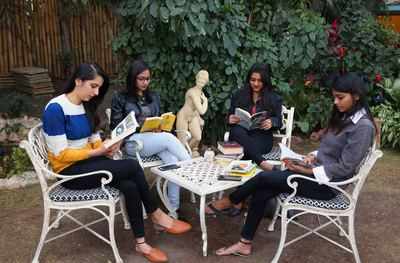

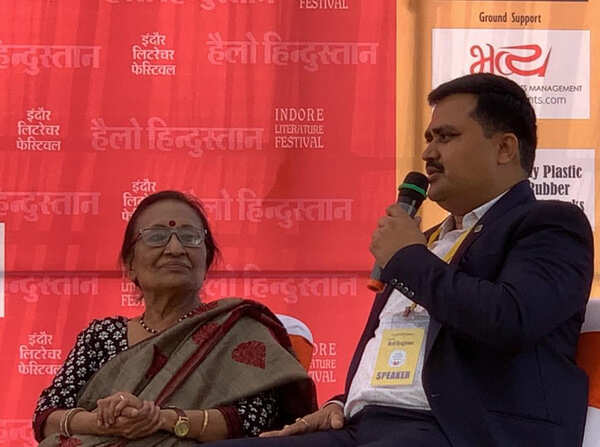
Getting hooked to Hindi due to English translation
When MBA student Ishita Shrivastava first received Premchand’s short story collection as a gift a year ago, she immediately devoured the book in two months’ time and was wondering why she hadn’t actually read these classics before. She was so taken by the stories that she would go and watch the plays based on these stories whenever she could, and liked the Hindi script much better. Eventually, she got the Godaan in Hindi for herself, and realised what she had been missing out in the translated work. “After reading the original text that had been written by Munshi Premchand, I figured that the true emotion was getting lost in translation. However, I cannot deny that I got introduced to the stories because of the translated work.” Like her, many others have been introduced to famous Hindi or Urdu authors’ works through their translated texts, which has got them to hunt down the original text. 23-year-old Suyash Gupta, who is also a member of book reading club in the city states, “I’ve picked up numerous poems and prose of Gulzar’s in English translations. Mind you, there is not one, but a myriad of authors translating the same prose to English, and there was always a difference. This inconsistency led me to picking up his Hindi collection. And I was impressed – not just by the bevy of emotions, but by the beautiful words he had used, which the translated work could not do justice with”.
Importance of good translation
Another important point that Dwivedi emphasised upon is choosing the translator well. "I have rejected close to five translators before finalising upon Rajya Sabha sachivalay deputy director Sanjay Dev for translation of Madaripur into English. The hunt was tough for me because the story is satire and nothing in the story is direct. It is a reference, a dig at the scenario existing in this town of eastern UP. I zeroed on Sanjay after reading his other works and comparing them to original. Even he took his time to fully understand the book before translating." The readers agree. “While most of the translations lose out on nuances of the original text, it is important to be as close to the original as possible. Because thoughts of the translating author could also have a heavy impact on the original authors’ work. So a copy that does not having glaring mistakes and misinterpretation will get more readers than others” says Simran Sharma, a English Literature, PhD scholar.
Exploring the roots
Once the bookworms got a glimpse of the vast imagery of Hindi, there was no looking back for them. They have been investing in finding the original texts in bookstores and libraries. “I had read Two by Gulzar in English first, but then I read an article where he said he wasn’t too happy with the translation, even though it was largely done by him. After reading Do Log in Hindi, I understood what he meant. My connect with the latter was instant and I could feel the emotion of the people who went through partition” comments law student Pooja Ratnani. Her friend Radhika Vyas, agrees with Pooja and adds, “The understanding of situations, emotions, and relationships is much better in the original language of the author. Otherwise the explanation in English translation of what word means what, and footnotes etc. gets just too exhausting. The essence of the story gets diluted.”
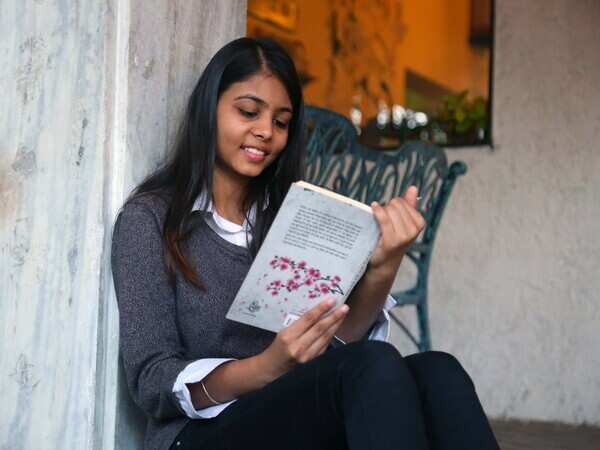
Sitting with shabdkosh and translation apps worth it
“But that’s how we learnt English too while growing up! By looking up meanings of different words in the dictionary as we read short stories in textbooks” reasons Aman Hussain, a CA aspirant who loves Urdu poems, and tries reading them in original text. “I know how to read Urdu, but had never delved into the literature part of it. After finding some old books my mother read of Allama Iqbal, Faiz Ahmed – I thought of giving it a chance. Most of the words you get by context only, but if I get stuck I quickly look it up on my translation app. However, the effort is completely worth it, as I have an upper hand over those who read his translated works” he adds. Other readers who have new found love for the Hindustaani zubaan (as Gulzar calls it) have either started engrossing themselves in Hindi Shabdkosh or get the word to word translation on apps. “I prefer the old school way of looking up words in the dictionary. In this case it is the Shabdkosh. Since Hindi is my mother tongue it’s easier for me to get the context. If in case there is an archaic shudh hindi word, I look it up. I don’t find it taxing, because let’s face it – we do this for western author novels too. Be it American, British or German authors, we do not get words from their time and culture. So it’s just the same for the books of Indian language authors. The sheer joy of discovering these beautiful words, makes it worthwhile”.
"Youngsters read and understand English better because it is the accepted medium of communication these days. They read more of it to keep up with their counterparts across the globe. However, a good translation makes them levitate towrds the original text and they put in efforts to read and grasp that subject. I have even seen some of them take up a said language as a subject of study - like Urdu - to read more in that literature. Exhaustive oeuvre of certain languages attracts bookworms to pick up that language in order to read better." - Balendu Dwivedi, author
"While working with hindustaani zubaan, we encounter a lot of imagery which is dense with the emotions of the writer. Most of the times in translation, the words may come out beautifully, but they betray the original compositions’ emotions." – Gulzar sahab, at a literature fest held in Bhopal.
End of Article
FOLLOW US ON SOCIAL MEDIA








Photostories
entertainment videos
Featured In Movies

Popular Categories
Entertainment NewsBollywood NewsTollywood NewsKollywood NewsMollywood NewsMovie ReviewsLatest Hindi MoviesLatest Tamil MoviesMX PlayerParenting TipsHome RemediesWeight LossBeauty TipsParenting TipsHindi VideosHindi Video SongsBhojpuri Music VideosLatest Telugu MoviesBhojpuri Music VideoHindi TV News
Trending in Entertainment
Latest MoviesBollywood MoviesHollywood MoviesTamil Movies 2024Telugu Movies 2024Malayalam Movies 2024Kannada Movies 2024Marathi Movies 2024Bengali Movies 2024Top Rated Movies 2024Best Hindi MoviesBest English MoviesBest Telugu MoviesBest Tamil MoviesBest Malayalam MoviesBest Kannada MoviesBest Bengali MoviesUpcoming Hindi MoviesBest Movies Of All TimeBest Hindi Movies of All Time
Trending in Etimes
Horoscope TodayNumerology Predictions TodayWalking BenefitsBreast Cancer DiagnosisYung Filly Rape CaseTaylor Rousseau GriggBelly FatSean Diddy CombsOzempic PersonalityDepression RiskBelly Fat LossDurga Visarjan 2024Toxic FriendshipDonald TrumpElon MuskDussehra 2024Durga Ashtami 2024Multitasking TipsSaraswati Visarjan 2024
Trending in TV
Trending in Lifestyle
Trending in Regional
Movie Reviews
Binny And Family ReviewLove, Sitara ReviewWill & Harper ReviewWolfs ReviewYudhra ReviewJo Tera Hai Woh Mera Hai ReviewKahan Shuru Kahan Khatam ReviewHis Three Daughters ReviewNever Let Go ReviewDancing Village: The Curse Begins ReviewTransformers One ReviewFirst Love ReviewBerlin ReviewThe Buckingham Murders Review
Upcoming Hindi Movies
Upcoming Regional Movies
Latest News
Salman Khan’s security beefed up after Baba Siddiqui’s murder; ‘Sultan’ star looked uncomfortable after visiting the late politician’s family at 3 amOver 70 injured at Devaragattu Banni stick festival during Dussehra celebrationsPassion missing, players don’t want to work hard, lament former intl’sHow tomato, potato, onion influence food inflationBiker’s death ignites village fury in Odisha's Boudh, massive traffic jam on NH-57Reliance Jio sends 'complaint letter' to telecom minister Jyotiraditya ScindiaWomen's T20 World Cup: Why India need Pakistan victory over New Zealand to secure semifinal berthSpaceX's fifth Starship test flight achieves historic booster catchCops probing Bishnoi gang's links to Siddique's murderNews brief: 'Who is listening? Modi?': Kapil Sibal takes a dig at RSS chief Mohan BhagwatPapankusha Ekadashi 2024: Date, Parana Time, Puja Rituals and SignificanceKenya's Ruth Chepngetich breaks women's world record at Chicago MarathonAI’S OppenheimerMahela Jayawardene returns as Mumbai Indians head coachMidnight queues, long waits, bad advice: It's not easy getting therapy in IndiaBaba Siddique murder case: Slum dispute that sparked ED inquest to be part of probeFor 20 years, Thar getting more rain than normalSpiritual fervour marks Bagh Savari festival held at Tirumala
Other Group Sites -
ETimes is an Entertainment, TV & Lifestyle industrys promotional website and carries advertorials and native advertising.