- News
- entertainment
- events
- "I failed my first semester - that built my foundation in design": Girish Doshi
Trending
"I failed my first semester - that built my foundation in design": Girish Doshi

Kolkata recently hosted the 2nd B.V. Doshi Memorial Exhibition, celebrating architect Girish Doshi's four-decade career. Curated by Ar. Abin Chaudhuri, the exhibition highlighted Doshi's philosophy of architecture deeply intertwined with life, showcasing designs from low-cost homes to educational institutions. Doshi emphasized architecture's role in reflecting lifestyles and values, creating spaces for people, not applause.

The city came alive last Thursday as architects, students, and design enthusiasts gathered for the 2nd Edition of the B.V. Doshi Memorial Exhibition organised by Ambuja Neotia Group . In a heartfelt tribute to the late Padma Bhushan recipient Balkrishna Vithaldas Doshi - mentor, philosopher, and one of India’s most celebrated architects - the exhibition showcased four decades of Girish Doshi ’s work, carefully curated by Ar. Abin Chaudhuri.
Architecture as life
Walking through the galleries, the idea that “life and architecture are one” became palpable. From low-cost homes in rural villages to the School of Architecture in Pune, Doshi’s work spoke of discipline, continuity, and above all, humanity. “To me, architecture is never separate from life,” he said. “My office functions like a family — my wife, my grandson, everyone is part of the process. Revisiting 40 years of work is both humbling and exhilarating.” Each display — whether a simple, single-room village house or a sprawling educational campus — carried the quiet power of designs meant for people, not for applause.
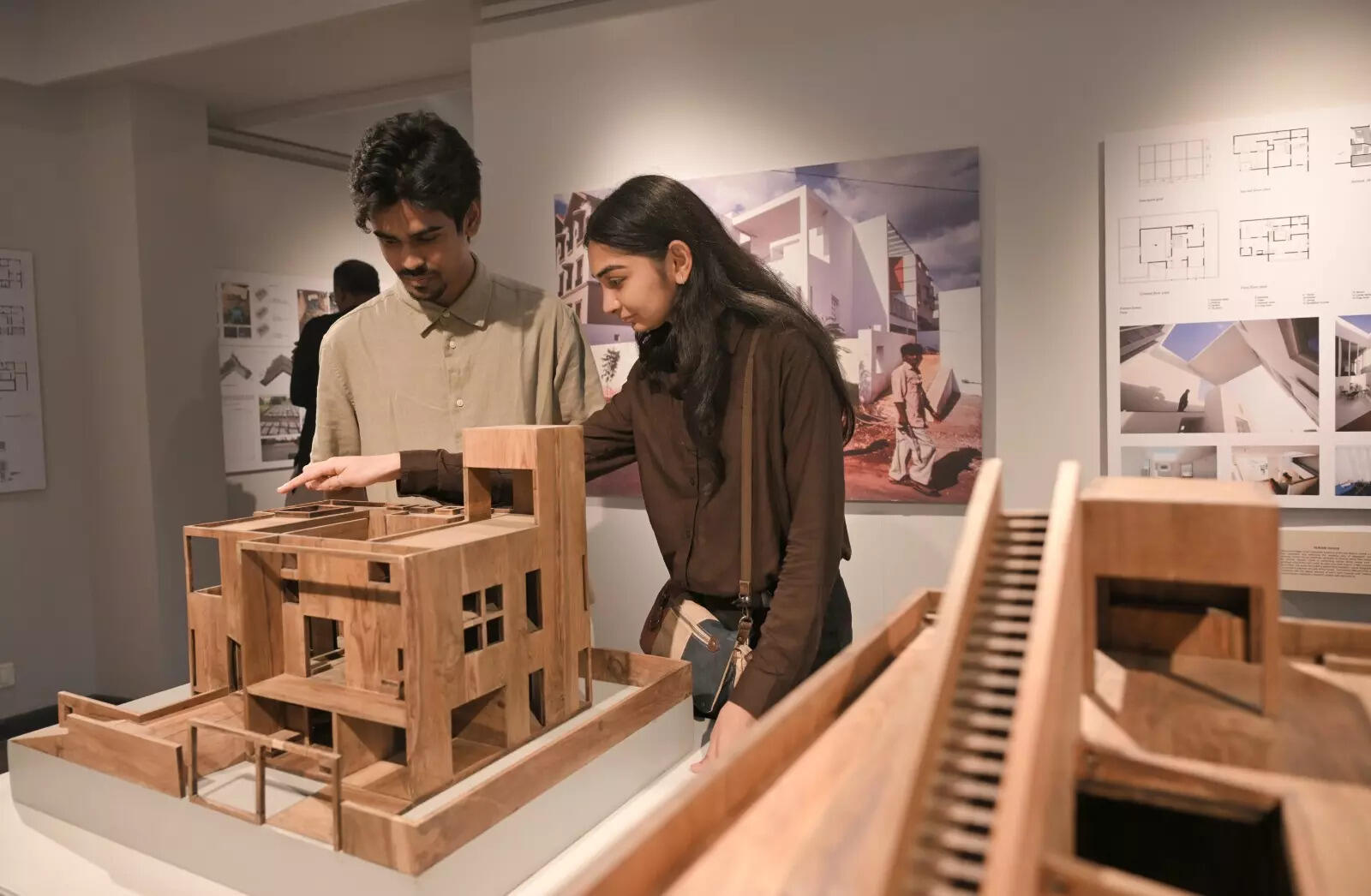
Voices from the exhibition
The evening also became a dialogue, with visitors deeply engaging with the architect’s philosophy.“This is architecture for the common person - humble, context-sensitive, devoid of extravagance. It flows with the city rather than imposing on it” said Shoumujit Kaur, Architect. Another attendee, Pankaj Bhagwatkar, who traveled from Pune exclusively for the event, echoed the sentiment. “These are real, problem-solving spaces that reflect our lifestyles and values. There’s no pretense, just common-sense architecture that understands people. What stands out is how thoughtfully these homes are planned, respecting both dreams and budgets”, he said
A city with soul
This year marked the first time Doshi’s body of work has been brought together under one roof , and Kolkata was the chosen stage.“Kolkata holds the charm of an old city that I deeply admire,” Doshi said. “It’s not just another metro , it has soul. Walking through its streets, you can feel the stories, the layers. That’s what architecture should always do — belong.”As guests lingered in quiet conversation, moving through drawings, models, and sketches spanning four decades, one thing was clear: this was more than an exhibition. It was a journey.The show will run for 15–17 days, offering students, practitioners, and enthusiasts a rare chance to experience the life and legacy of a practice grounded in humility and timeless relevance.
End of Article
Follow Us On Social Media










Tired of too many ads?go ad free now
entertainment videos
Featured In Movies

Tired of too many ads?go ad free now
Hot on the Web
LongevityCharlie Kirk Net WorthTamannaah BhatiaSonarika BhadoriaHeart HealthSoha Ali KhanFish Oil SupplementsAmitabh BachchanPublic Hand DryersShah Rukh KhanBaking Soda Water For HealthLiver Detox FoodsKidney ProblemsToilet TipsHigh Blood Pressure SymptomsSoha Ali KhanKidney HealthHeart HealthMustard Oil For HairPrediabetes SymptomsBlood PressurePest Control TipsThings That Attract SnakesFatty Liver SymptomsAshneer GroverVitamin D DeficiencyBlind SnakesThe Bengal Files Box Office CollectionThe Conjuring: Last Rites Box Office CollectionBaaghi 4 Box Office CollectionDon't Use Public Hand DryersPink Guava Vs White GuavaCross River GorillaIdeal Weight For Your HeightBaking Soda Water For HealthTrick To Improve SleepThroat Cancer SymptomsNano Banana TrendYellow Stains On PillowsOvarian Cancer SymptomsTips To Keep Chapatis Soft
Trending Topics
Latest MoviesBollywood MoviesHollywood MoviesTamil Movies 2025Telugu Movies 2025Malayalam Movies 2025Kannada Movies 2025Marathi Movies 2025Bengali Movies 2025Top Rated Movies 2025Best Hindi MoviesBest English MoviesBest Telugu MoviesBest Tamil MoviesBest Malayalam MoviesBest Kannada MoviesBest Bengali MoviesUpcoming Hindi MoviesBest Movies Of All TimeBest Hindi Movies of All TimeLatest English MoviesLatest Malayalam MoviesEnglish TV NewsTamil TV NewsTelugu TV NewsMalayalam TV NewsKannada TV NewsMovie ReviewsBhojpuri Cinema NewsGujarati Cinema News
Popular Categories
Viral NewsK Pop NewsWeb Series NewsAnime NewsUpcoming English MoviesUpcoming Tamil MoviesUpcoming Telugu MoviesUpcoming Malayalam MoviesUpcoming Kannada MoviesFashion TipsTravel NewsEntertainment NewsBollywood NewsTollywood NewsKollywood NewsMollywood NewsFood NewsLatest Hindi MoviesLatest Tamil MoviesParenting TipsHome RemediesWeight LossBeauty TipsParenting TipsHindi VideosHindi Video SongsBhojpuri Music VideosLatest Telugu MoviesBhojpuri Music VideoHindi TV News
Latest News
Probashis gear up for a musical PujoBadshah makes his debut at New York Fashion WeekGST reforms: FM Nirmala Sitharaman hails tax cuts as a huge victory; rejects critics’ ‘Gabbar Singh Tax’ jibeDan Campbell’s faceoff against his friend Ben Johnson in Detroit Lions vs Chicago Bears matchup“Writing love songs to his ex boyfriend" - Rapper Drake dissing DeMar DeRozan in leaked song leaves fans amused‘Illegal and hostile’: Venezuela claims US warship detained fishing vessel, crew for eight hours; accuses US of provoking conflictOnline betting app case: ED summons actor Urvashi RautelaBigg Boss Malayalam 7: Mohanlal slams Lakshmi for disrespectful remarks against Adhila and Noora, says “I will welcome them to my home”How does frequent hair colouring affect your hair texture and strength?Is black seed oil effective in reducing inflammation? Here's what research saysWeekly Vastu remedies for all zodiac signs; September 14 to September 20, 2025Will Aaron Rodgers play tonight against the Seahawks? Latest injury update on Steelers star QBSonia gave me courage: Mrunal Thakur marks 7 years of Love SoniaIPO windfall: IFC set to reap 13x gains in Tata Capital listing; World Bank arm trims stakeRiyadh Season 2025-26: What’s new this year in Saudi Arabia’s biggest cultural and entertainment festivalJalen Hurts, Josh Allen, Travis Kelce or Aaron Rodgers did not donate $300K to Charlie Kirk’s family, fact check revealsRRB NTPC answer key 2025 expected soon: Check when and how to download, once releasedKL Rahul's father-in-law Suniel Shetty backs India playing Pakistan in Asia Cup: 'You can't blame anybody'