- News
- entertainment
- events
- hyderabad
- Pujo in Hyderabad transports Bengalis back home to Kolkata
Trending
This story is from October 5, 2019
Pujo in Hyderabad transports Bengalis back home to Kolkata


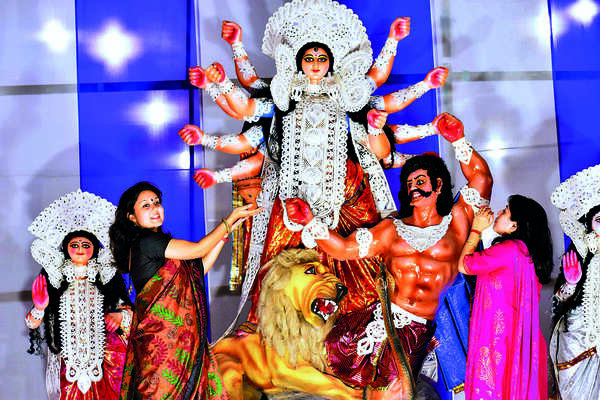
A SLICE OF KOLKATA, RIGHT HERE IN HYDERABAD
Talking about what gives their pujo festivities that Bangla touch, Sumit Sen, general secretary of Hyderabad Bangalee Samity, a 78-year-old Bengali organisation in the city, says, “Our Thakur (idol) is brought all the way from Kumartuli in West Bengal. We do this to ensure that the idol is made of asli polimati (clay), that’s eco-friendly, unlike the PoP ones we get here usually. But more importantly, for us Bengalis, Kumartuli for Durga pujo is like what Dhoolpet is for Hyderabad’s Ganesh puja. The idols there are made by the artisans who’ve been doing this for generations. that’s what adds an emotional, homely-flavour to our celebrations.”
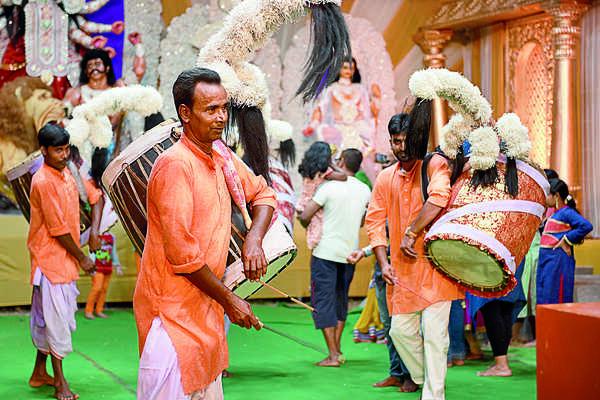
GRAND CELEBRATIONS FOR A DIVINE EXPERIENCE
Bangiya Sanskritik Sangha’s pujo celebrations held at Keyes high school, Secunderabad is an affair that every Bengali in Hyderabad looks forward to each year. And without fail, the association makes sure the devotees have an experience that they will cherish all year-long, with their grand celebrations, larger-than-life thakur and a pandal that gets talked about. “Every year we model our Durga puja pandal after one of the famous temples in the country. From the famous Dakshineswar temple in Kolkata to Kedarnath temple in Uttarakhand, we have replicated them all. This year, the pandal is a replica of the Ambika Devi temple of Rajasthan. This gives devotees a special experience and the joy of worshipping Maa Durga in a serene setting of a sacred temple-like pandal,” says Subrata Ganguly, the general secretary of the organisation, which is celebrating its 54th Durga puja in the city.
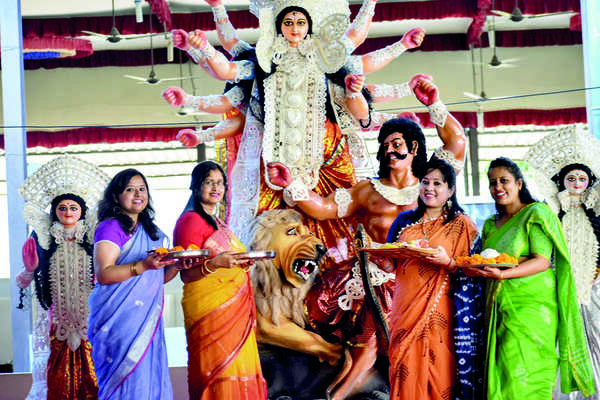
KEEPING AGE-OLD BENGALI TRADITIONS ALIVE
Come Durga pujo and you will get to witness an array of traditional performances, be it chhau or baul, thanks to the vibrant cultural nights organised by the various samitis in the city. “I believe that we Bengalis in Hyderabad are much more culturally rooted. Through the cultural programmes held by our samitis, we are also reviving the lost art forms and traditions of Bengal. In fact, I’d say we do a lot more to keep our celebrations authentic than what many people in Kolkata do these days,” observes Deepak Bhattacharya, president of the Bangiya Sanskritik Sangha in Hyderabad. They take great pride in organising the Jatra, a kind of Bengali folk theatre, every year during the pujo. “But it’s not just about Bengali culture alone. These pujos are an assimilation of many cultures. Even the food counters offer everything from luchi, kochuri, kosha-mangsho and roshogolla to Punjabi, Maharashtrian and South Indian delicacies,” adds Deepak.
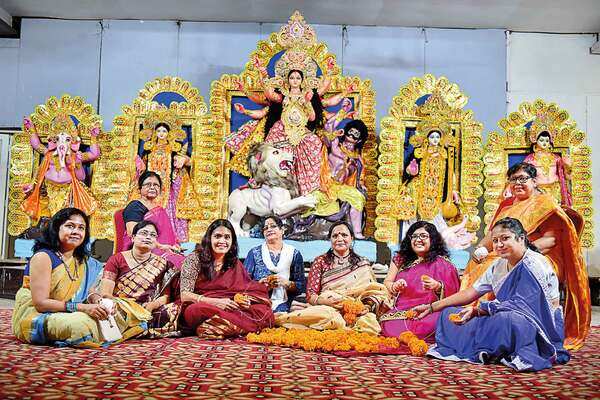
MAA ESHE GACHE! AND BENGALIS COME TOGETHER TO WELCOME HER
What makes the celebrations all the more special is the fact that it’s always a community affair. Anita Dasgupta, the vice president of the Bengali Cultural Association in Masab Tank, says, “We bring the idol to the venue early morning on Panchami and the artisan draws the eyes of Maa Durga at the pandal and gives his finishing touches, before the ladies perform the bodhon (welcome aarti).” Once the pratima is set up, the aartis commence every morning, with the purohit chanting mantras loudly, while the devotees repeat after him. This is followed by the bhog where everyone is welcome to eat. “We feed almost 10,000 people every day, on all four days of the festival. And the grains and pulses for the bhog are donated by devotees; nothing is bought from the market,” says Anita, adding, “It is one of the most fulfilling experiences of Pujo.”

End of Article
FOLLOW US ON SOCIAL MEDIA









Photostories
Featured In Movies

Popular Categories
Entertainment NewsBollywood NewsTollywood NewsKollywood NewsMollywood NewsMovie ReviewsLatest Hindi MoviesLatest Tamil MoviesMX PlayerParenting TipsHome RemediesWeight LossBeauty TipsParenting TipsHindi VideosHindi Video SongsBhojpuri Music VideosLatest Telugu MoviesBhojpuri Music VideoHindi TV News
Trending in Entertainment
Latest MoviesBollywood MoviesHollywood MoviesTamil Movies 2024Telugu Movies 2024Malayalam Movies 2024Kannada Movies 2024Marathi Movies 2024Bengali Movies 2024Top Rated Movies 2024Best Hindi MoviesBest English MoviesBest Telugu MoviesBest Tamil MoviesBest Malayalam MoviesBest Kannada MoviesBest Bengali MoviesUpcoming Hindi MoviesBest Movies Of All TimeBest Hindi Movies of All Time
Trending in Etimes
Horoscope TodayNumerology Predictions TodayWalz Vs VanceJD VanceKamala HarrisPopulated Indian CitiesAlcohol Cancer RiskNational Boyfriend Day 2024Sunita WilliamsDepression RiskNepal FloodBarbra StreisandSnoring Prevention TipsDonald TrumpMagnesium DeficiencyRelationship TipsLake Michigan DiscoveryRelationship TipsEkadashi in October 2024
Trending in TV
Trending in Lifestyle
Trending in Regional
Movie Reviews
Binny And Family ReviewLove, Sitara ReviewWill & Harper ReviewWolfs ReviewYudhra ReviewJo Tera Hai Woh Mera Hai ReviewKahan Shuru Kahan Khatam ReviewHis Three Daughters ReviewNever Let Go ReviewDancing Village: The Curse Begins ReviewTransformers One ReviewFirst Love ReviewBerlin ReviewThe Buckingham Murders Review
Upcoming Hindi Movies
Upcoming Regional Movies
Latest News
Any EU countries can grant asylum to Afghan women based on nationality and gender, Europe's top court rulesReport card of Rahul Gandhi's 100 days as leader of opposition courtesy CongressThe day Israel was caught off guard: How Hamas overran a key Israeli military base on October 7ISL: Borja’s left foot to Goa’s rescuePer capita income to nearly double in 5 years: Finance minister SitharamanManju Pavagada gets engaged in a close affair; pictures go viral on social mediaCommunity Connect: Hungry for connectionInsider Claims Nick Sirianni Plays 'Madden' with Eagles, While AJ Brown Is Celebrated as Jalen Hurts' SaviorKremlin accuses Ukraine of 'playing with fire' after reported attack near Kursk nuclear plantGuns, firecrackers on display during Afghanistan star Rashid Khan's marriage. WatchZodiac Signs Most Likely to SucceedMysuru all set for a glittering Dasara'Disappointing, condemnable but not ... ': India on fugitive Zakir Naik's Pakistan visitTechnological advancements have revolutionized cancer treatment, say doctorsPakistan seals off capital, suspends internet ahead of rally by Imran Khan's supportersAmazon to increase the individual contributor to manager ratio by 15% through layoffs: How many reportees can a manager can effectively oversee?Bigg Boss 18: Salman Khan begins shooting for the new season; First look from the sets revealed'Brand of ISPL is growing': League's head of selection Jatin Paranjape
Other Group Sites -
ETimes is an Entertainment, TV & Lifestyle industrys promotional website and carries advertorials and native advertising.