- News
- entertainment
- events
- hyderabad
- Love for food blurs boundaries at this Tamil home in Hyderabad
Trending
This story is from October 3, 2019
Love for food blurs boundaries at this Tamil home in Hyderabad
Every Hyderabadi household has a signature family dish, or two, and every such dish has a story behind it. Over the next few months, we will immerse ourselves in family legacies passed down through food as we unearth stories behind what Hyderabadis are eating and how these dishes came to be.
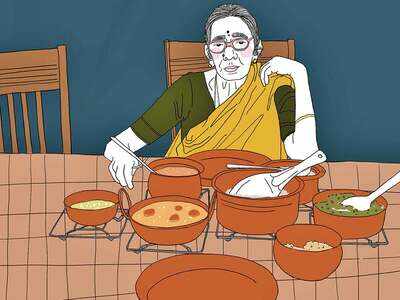
As we drove to Shamirpet, carrying a home- baked cake, to meet Suganda Narsimhan on her 77th birthday, we were excited to speak to her. She has lived in Hyderabad since before the Indian independence and we imagine this was a completely different place then, compared to the city we’ve grown up in. When we walked in to her daughter Usha’s house where Suganda is currently staying, she greeted us warmly, clad in a checked silk saree, in the hues of a beautiful sunset. She sat us down at the dining table and smiled shyly, unsure of how to start the conversation.
While we tried to make Suganda comfortable, we spoke to her son-in-law Raghavan, who has also lived in Hyderabad for most of the 63 years of his life. He reminisced fondly about the double ka meetha that his mom made for him every year on his birthday and the meticulous process she followed — from air-drying the slices of bread to frying them in ghee, dipping them in full cream milk, to finally dunking them in sugar syrup. Our mouths watered just hearing him describe it, wishing we could have been eating it as we spoke. “The recipe was given to my mother by a police officer named Ramzan, who worked with my father. it has now been so fully assimilated into the family, that it is passed down generations. It is this recipe that still gets used whenever anyone in the family makes double ka meetha,” Raghavan informs.
This was an incredibly heart-warming story for us because it is stories like these that we believe prove how a city works its way into your life and your food habits, blurring boundaries of who you are and where you are from, to create a wonderful amalgamation of cultures and cuisines.

Being raised by her grandparents meant that Suganda did not learn to cook till she got married and moved to Chennai, when her influences became more Tamilian, because of her husband’s family. She soon returned to Hyderabad though, when her husband was posted here and a lot of the dishes in her repertoire, she learned from her neighbours. We ask her what home for her is, and she whispers, “Hyderabad daan enakku (It is Hyderabad only for me),” and chuckles naughtily, saying her husband who is sitting in the next room, won’t be happy if he hears her say this.
Suganda starts talking about her love for food and cooking, switching seamlessly between Tamil and Telugu, “Naaku vanta ante chaala ishtam,” she says, her eyes lighting up. She goes on to tell us that even today, when she tastes something she likes, she cannot help herself from finding out how it was made so she can replicate it in her own kitchen. Even after cooking every day for over 60 years, she still has a burning desire to explore new ways to cook up delicious meals, follows food bloggers on YouTube and even cuts out recipes from Tamil magazines she
subscribes to. She reminisces about the time she lived with her son in Mehdipatnam, when her neighbour introduced her to the wonderful ways in which people of Andhra Pradesh transformed vegetables into chutneys and pickles. She mentions her famous tomato chutney, which is a firm favourite among her grandchildren. We ask if this was a recipe she learnt from her neighbour. “Ledu, adi naa recipe (No, that is my recipe),” she says, giggling coyly as she leads us into the kitchen. It’s almost time for her to have lunch and we need to start cooking. The dishes she had planned to cook for us were a sutta kathirikai thogayal (roasted brinjal chutney) and paruppu urandai kozhambu (steamed lentil balls in a tamarind gravy).
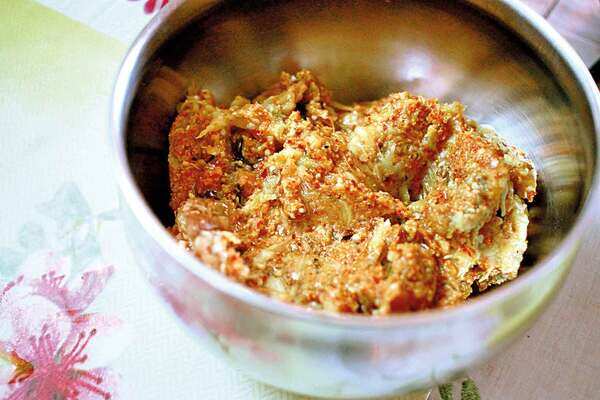
We watched in awe as Suganda and Usha move around the kitchen opening cupboards and jars, roasting spices, grinding, steaming and stirring pots with the easy grace of dancers who know their partners’ every move and respond almost instinctively. Both dishes come together in minutes and the aromas of freshly roasted and ground spices fill the kitchen. I notice the cumin is not roasted and ask why; Suganda says in her kitchen cumin is never roasted as the flavour and fragrance of the spice is better when kept raw. The only job we were trusted with was to mash the flame-roasted brinjal and even that I was too heavy-handed with. “Porum, porum” Suganda reprimanded me, asking me to stop mashing the roasted brinjal between my fingers, because we needed to retain some of the texture and be able to feel the brinjal in the mouth. She quickly tosses in the roasted ground spices and asks me to use a spoon instead of my fingers to mix it together, because I had already taken it too far at the previous stage.
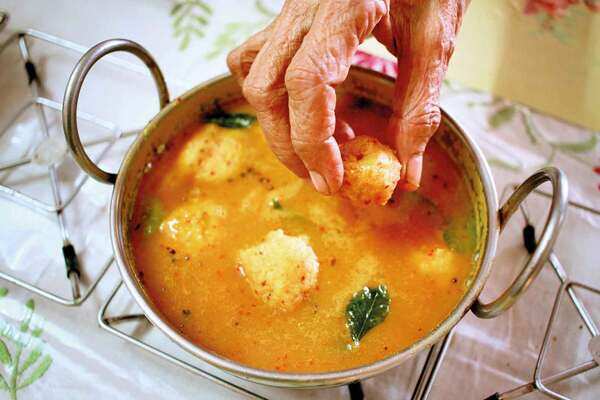
As we lay the table for Suganda and her husband to eat first, she immerses the steamed lentil dumplings into the simmering tamarind gravy and calls me over to have a taste. The tang of the tamarind against the subtle kick of chilli in the dumpling is magic and we would not have believed how simple this was to make if we had not seen it ourselves. It will taste better tonight for dinner she says, after the dumplings have soaked in the gravy for a few hours. We sit down to eat this meal with the softest white rice with a generous dollop of ghee, which is the perfect blank canvas to the wonderful smoky kick of the thogayal and the tangy smack of the kuzhambu. We were smiling blissfully and licking our fingers when we realised our smiles were being mirrored on Suganda’s face. As we were getting ready to leave, barely able to keep our eyes open, Jini asked her “Meeku idi nachchinda?” to know if she had liked cooking with us and she nodded happily and said “Naaku nuvvu kooda chaala nacchavu (I liked you also very much)”. We could have asked for nothing more!
SUGANDA NARASIMHAN'S STORY
“I love cooking. Even after cooking for 60 years, I try to come up with new recipes and try to improve my dishes.”
PARUPPU URUNDAI KUZHAMBU
Ingredients
SUTTA KATHIRIKKAI THOGAYAL
IngredientsMethod
While we tried to make Suganda comfortable, we spoke to her son-in-law Raghavan, who has also lived in Hyderabad for most of the 63 years of his life. He reminisced fondly about the double ka meetha that his mom made for him every year on his birthday and the meticulous process she followed — from air-drying the slices of bread to frying them in ghee, dipping them in full cream milk, to finally dunking them in sugar syrup. Our mouths watered just hearing him describe it, wishing we could have been eating it as we spoke. “The recipe was given to my mother by a police officer named Ramzan, who worked with my father. it has now been so fully assimilated into the family, that it is passed down generations. It is this recipe that still gets used whenever anyone in the family makes double ka meetha,” Raghavan informs.
This was an incredibly heart-warming story for us because it is stories like these that we believe prove how a city works its way into your life and your food habits, blurring boundaries of who you are and where you are from, to create a wonderful amalgamation of cultures and cuisines.
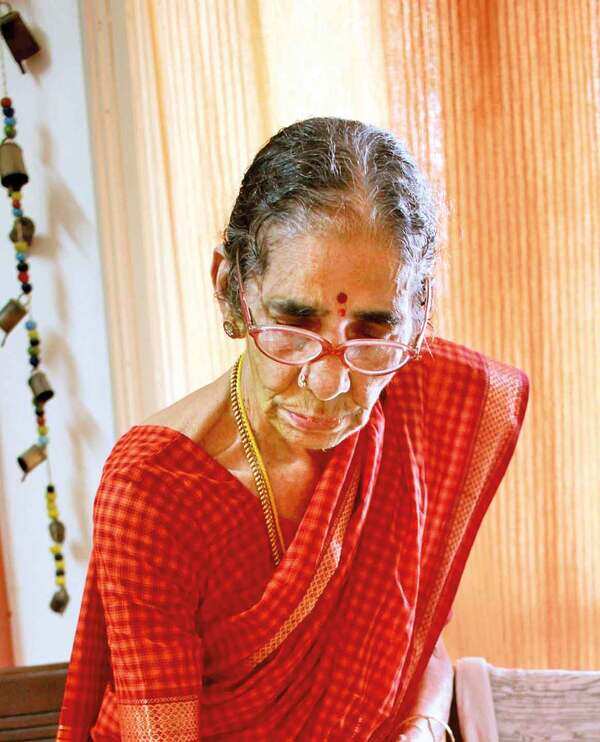
The collective drooling over the double ka meetha broke the ice in the most wonderful way and Suganda opened up about growing up in Marredpally. Having lost her mother at an early age, she was raised by her grandparents. Suganda is a Tamilian by birth but she speaks flawless Telugu and talks to us about studying in Keyes High School from 1946 to 1957. We naively ask her about the after-school street food that she and her friends indulged in and she says,
“Appo adhellam kaadu”, implying that the areas surrounding the school were just trees, and there were no shops or restaurants from where they could eat anything. Meals were mostly had at home. she recalls, as a special treat her grandfather would bring home masala dosa from Taj Mahal hotel. And then there were those special Sunday lunches that were made of sambar made with baby onions and potato fry.
Being raised by her grandparents meant that Suganda did not learn to cook till she got married and moved to Chennai, when her influences became more Tamilian, because of her husband’s family. She soon returned to Hyderabad though, when her husband was posted here and a lot of the dishes in her repertoire, she learned from her neighbours. We ask her what home for her is, and she whispers, “Hyderabad daan enakku (It is Hyderabad only for me),” and chuckles naughtily, saying her husband who is sitting in the next room, won’t be happy if he hears her say this.
Suganda starts talking about her love for food and cooking, switching seamlessly between Tamil and Telugu, “Naaku vanta ante chaala ishtam,” she says, her eyes lighting up. She goes on to tell us that even today, when she tastes something she likes, she cannot help herself from finding out how it was made so she can replicate it in her own kitchen. Even after cooking every day for over 60 years, she still has a burning desire to explore new ways to cook up delicious meals, follows food bloggers on YouTube and even cuts out recipes from Tamil magazines she
subscribes to. She reminisces about the time she lived with her son in Mehdipatnam, when her neighbour introduced her to the wonderful ways in which people of Andhra Pradesh transformed vegetables into chutneys and pickles. She mentions her famous tomato chutney, which is a firm favourite among her grandchildren. We ask if this was a recipe she learnt from her neighbour. “Ledu, adi naa recipe (No, that is my recipe),” she says, giggling coyly as she leads us into the kitchen. It’s almost time for her to have lunch and we need to start cooking. The dishes she had planned to cook for us were a sutta kathirikai thogayal (roasted brinjal chutney) and paruppu urandai kozhambu (steamed lentil balls in a tamarind gravy).
We watched in awe as Suganda and Usha move around the kitchen opening cupboards and jars, roasting spices, grinding, steaming and stirring pots with the easy grace of dancers who know their partners’ every move and respond almost instinctively. Both dishes come together in minutes and the aromas of freshly roasted and ground spices fill the kitchen. I notice the cumin is not roasted and ask why; Suganda says in her kitchen cumin is never roasted as the flavour and fragrance of the spice is better when kept raw. The only job we were trusted with was to mash the flame-roasted brinjal and even that I was too heavy-handed with. “Porum, porum” Suganda reprimanded me, asking me to stop mashing the roasted brinjal between my fingers, because we needed to retain some of the texture and be able to feel the brinjal in the mouth. She quickly tosses in the roasted ground spices and asks me to use a spoon instead of my fingers to mix it together, because I had already taken it too far at the previous stage.
As we lay the table for Suganda and her husband to eat first, she immerses the steamed lentil dumplings into the simmering tamarind gravy and calls me over to have a taste. The tang of the tamarind against the subtle kick of chilli in the dumpling is magic and we would not have believed how simple this was to make if we had not seen it ourselves. It will taste better tonight for dinner she says, after the dumplings have soaked in the gravy for a few hours. We sit down to eat this meal with the softest white rice with a generous dollop of ghee, which is the perfect blank canvas to the wonderful smoky kick of the thogayal and the tangy smack of the kuzhambu. We were smiling blissfully and licking our fingers when we realised our smiles were being mirrored on Suganda’s face. As we were getting ready to leave, barely able to keep our eyes open, Jini asked her “Meeku idi nachchinda?” to know if she had liked cooking with us and she nodded happily and said “Naaku nuvvu kooda chaala nacchavu (I liked you also very much)”. We could have asked for nothing more!
SUGANDA NARASIMHAN'S STORY
“I love cooking. Even after cooking for 60 years, I try to come up with new recipes and try to improve my dishes.”
PARUPPU URUNDAI KUZHAMBU
Ingredients
- 1 cup toor dal
- 4 dried red chillies
- 2 tsp turmeric powder
- 1 tsp red chilli powder
- A pinch asafoetida
- 1 lemon-sized ball of tamarind
- 2 tsp oil
- 2 tsp sambar powder (store bought is perfectly fine)
- 1 tsp urad dal
- ½ tsp chana dal
- 1 tsp mustard seeds
- 1 sprig curry leaves
- Salt, to taste
- Soak the toor dal and red chillies in warm water for an hour till the dal has softened.
- Soak the tamarind in 1 cup of hot water.
- Drain the soaked dal; add turmeric powder and salt to it and grind into a smooth paste. You should be able to form it into balls. If not, add a bit of water to be able to do this.
- Once the balls are formed, place them in an idli cooker and steam for 15 minutes. You can test to see if they are done by pricking the balls with a knife; it should come out clean. Once done, set aside.
- To prepare the kozhambu, squeeze tamarind pulp to extract as much of the flavour into the water and discard the seeds and skin that is remaining.
- Heat a heavy bottomed container on low heat, add 1 tsp oil and the sambar powder and roast for a few seconds, till fragrant. Be careful not to burn it.
- Now, add the tamarind water, turmeric and chilli powder. Turn up the heat and bring to a boil.
- Once boiling, gently immerse the steamed dumplings into the liquid and turn down the heat.
- Let the dumplings soak up the juices for about five minutes and turn off the heat.
- For the tempering, in a separate pan, heat oil, add mustard seeds and let them splutter. then add the urad dal, chana dal and curry leaves along with the asafoetida. Once nice and toasty, pour it into the prepared kozhambu.
- Serve with hot steamed rice topped with ghee.
SUTTA KATHIRIKKAI THOGAYAL
Ingredients
- 1 big brinjal
- 2 tsp urad dal
- 1 tsp cumin seeds
- 3 dried red chillies
- 3 tsp oil
- Salt, to taste
- Rub 1 tsp oil on the brinjal and roast on an open flame till the skin is charred and the pulp inside feels soft. It should smell wonderfully smoky. Set aside to cool
- Roast the urad dal and red chillies in the remaining oil till the dal takes on a colour.
- Coarsely grind the roasted dal and chillies with the cumin seeds. Don’t make a fine powder.
- Peel and mash the brinjal, making sure you retain some of the texture. It should not be a smooth pulp.
- Mix the ground powder into the pulp using your fingers; add salt to taste.
- Serve with steamed white rice.
End of Article
FOLLOW US ON SOCIAL MEDIA









Photostories
entertainment videos
Featured In Movies
Popular Categories
Entertainment NewsBollywood NewsTollywood NewsKollywood NewsMollywood NewsMovie ReviewsLatest Hindi MoviesLatest Tamil MoviesMX PlayerParenting TipsHome RemediesWeight LossBeauty TipsParenting TipsHindi VideosHindi Video SongsBhojpuri Music VideosLatest Telugu MoviesBhojpuri Music VideoHindi TV News
Trending in Entertainment
Latest MoviesBollywood MoviesHollywood MoviesTamil Movies 2024Telugu Movies 2024Malayalam Movies 2024Kannada Movies 2024Marathi Movies 2024Bengali Movies 2024Top Rated Movies 2024Best Hindi MoviesBest English MoviesBest Telugu MoviesBest Tamil MoviesBest Malayalam MoviesBest Kannada MoviesBest Bengali MoviesUpcoming Hindi MoviesBest Movies Of All TimeBest Hindi Movies of All Time
Trending in Etimes
Horoscope TodayNumerology Predictions TodayDinner With TrumpTim WalzIvanka TrumpJose LopezKristina JoksimovicJoe WilsonTrump Eating The Dogs SongGermany NewsKamala HarrisPrince HarryPatriot Day 2024Diabetes RiskHappy Mindfulness Day 2024Trump Vs HarrisJoe JonasPositive Thinking Day 2024Dave Bautista
Trending in TV
Trending in Lifestyle
Trending in Regional
Movie Reviews
Berlin ReviewThe Buckingham Murders ReviewSpeak No Evil ReviewVisfot ReviewThalapathy Is The G.O.A.T ReviewRebel Ridge ReviewDetective Conan vs. Kid the Phantom Thief ReviewBeetlejuice Beetlejuice ReviewPad Gaye Pange ReviewA Wedding Story ReviewThe Diary Of West Bengal ReviewTikdam ReviewKinds Of Kindness ReviewAfraid Review
Upcoming Hindi Movies
Upcoming Regional Movies
Latest News
Kaun Banega Crorepati 16: Can you guess the answer for this Rs 3,20,000 question on Navy, which contestant Naman Jain incorrectly answered?Edible oil import duty hiked by 20%'Calling all Swifties for Trump': Donald's new campaign merch imitates Eras Tour shirtsWWE Hall of Famer Watches 15 Hours Of Wrestling Each WeekDallas Cowboys Set to Defend AT&T Stadium in Week 2 Clash with New Orleans SaintsTovino on training for Kalaripayattu in ‘ARM’: I practiced every single day, even if I had a hectic day on set8 animals that reproduce without matingDelhi Police Files FIR for Firecracker Celebration Outside CM Kejriwal's ResidenceThrowback: When Alia Bhatt responded to insecurity questions about Ranbir Kapoor, shut down gossipIndia's T20I captain Suryakumar Yadav turns 34: A glimpse into his stellar T20 careerThe 3 Strongest Zodiac Signs: Powerhouses of the Zodiac Wheel'Forgive me, I don't belong ...' : Tamil Nadu hotelier's apology to FM Nirmala Sitharaman over GST remark triggers political rowRakul Preet Singh reveals Bollywood stylists charge from Rs 15000 to Rs 1 lakh for one event, one outfit: 'Living in Mumbai requires a lot of PR'September 14, 2024: Flying creatures and how their wings workThrashed for 'molesting' kid on train, rail staffer diesKejriwal walks out of jail, says morale is up by 100 timesDhruv Kapila's health setback shatters Indian pair's Vietnam Open semifinal hopesFormer Titans Cheerleader Danielle Sekelsky Begins WWE NXT Training
Other Group Sites -
ETimes is an Entertainment, TV & Lifestyle industrys promotional website and carries advertorials and native advertising.