
- News
- entertainment
- english
- music
- 'Hips Don’t Lie' and 'Waka Waka': Top 10 Shakira pop songs that defined her global sound and chart dominance
'Hips Don’t Lie' and 'Waka Waka': Top 10 Shakira pop songs that defined her global sound and chart dominance

Shakira’s selected pop catalog
Shakira built a global pop career by blending Latin rhythm, sharp songwriting, and fearless performance energy. From chart-topping dance hits to emotionally charged crossovers, her music connects across languages and borders. Each of these ten songs captures a key moment in her rise from international breakthrough to mainstream pop dominance. The hooks are bold, the production is tight, and her voice remains instantly recognizable. Together, these tracks highlight her versatility and staying power in modern pop. They show why Shakira continues to shape radio, streaming charts, and global music culture year after year.

Hips Don’t Lie
Released in 2006, this single became Shakira’s first and only No. 1 hit on the Billboard Hot 100. It also topped the Pop Airplay chart and dominated international rankings. The song appeared on the reissue of her album Oral Fixation, Vol. 2, and helped boost sales worldwide. It finished the year among Billboard’s top songs of 2006 and remains one of the best-selling digital singles of its era. Beyond the numbers, the track plays like a nonstop burst of rhythm. It hits fast, stays upbeat, and leaves little room for a slow moment. It also helped define how her pop sound could feel both mainstream and unmistakably hers.

Beautiful liar
This 2007 duet with Beyoncé debuted at No. 94 and jumped to No. 3 on the Billboard Hot 100 in its second week, setting a then-record for the largest upward move on the chart. It also topped Billboard’s Dance Club Songs chart. The collaboration expanded her mainstream visibility and delivered strong global sales. That rapid climb is the kind of chart story that signals a real surge in attention. It suggests fast-growing airplay, demand, and conversation. The Dance Club Songs' peak also shows how well it translated into nightlife and remix culture. As a pop moment, it kept her in the center of mainstream visibility and connected her brand to a high-profile collaboration cycle that drove pop radio during that period.

Whenever, Wherever
This 2001 crossover hit peaked at No. 6 on the Billboard Hot 100 and reached No. 1 on the Hot Latin Songs chart. It introduced Shakira to mainstream English-language pop radio in the United States. The song also topped charts across Europe and Latin America. It helped her album Laundry Service become a major commercial success in the U.S. market. The song’s impact goes beyond chart peaks because it marked a clear turning point in visibility. It announced her as a global pop presence, not a niche success. The hook is easy to spot, and her vocal tone stays front and center, which helped audiences connect quickly.

Underneath your clothes
This 2002 ballad reached No. 9 on the Billboard Hot 100 and performed strongly on the Adult Contemporary and Mainstream Top 40 charts. It helped sustain the commercial momentum of Laundry Service in the U.S. The song also charted across Europe and Australia, reinforcing her crossover status beyond dance-driven singles. Its success mattered because it proved her appeal was not limited to high-energy records. It held attention with a softer approach and a clear emotional core. The strong showing on Adult Contemporary also widened her audience, pulling in listeners who preferred slower, melody-led pop. That range helped her album cycle last longer and gave radio another side of her sound to program.

She Wolf
Released in 2009, the single peaked at No. 11 on the Billboard Hot 100. It performed strongly on the Dance Club Songs chart, reaching the Top 10. The track led the rollout of her She Wolf album and marked a stylistic shift toward electropop. It received significant airplay on pop radio and strengthened her presence in the late 2000s dance-pop wave. The song also signaled that she could change lanes without losing momentum. It felt current for its time, yet still carried her personality through the delivery and attitude. That combination helped it land across formats, from radio play to club rotation, while keeping her name active in the pop conversation.

La Tortura
Released in 2005, this Spanish-language hit spent a record-setting 25 weeks at No. 1 on Billboard’s Hot Latin Songs chart at the time. It also crossed over to the Billboard Hot 100. The track earned Latin Grammy recognition and became one of the most impactful Latin pop songs of the decade. It strengthened her dual-language market power. The long run at the top reflected more than hype. It showed staying power, consistent airplay, and real listener demand week after week. The song also helped normalize Spanish-language hits as major events in pop spaces, not side stories. It worked as both a radio staple and a cultural talking point, which helped deepen her influence in multiple markets.

Can’t remember to forget you
Released in 2014, the single duet with Rihanna debuted in the Top 20 of the Billboard Hot 100 and topped the Latin Pop Songs chart. It also performed well on digital sales rankings. The track helped introduce her self-titled album and generated strong streaming numbers during its release cycle. The early Top 20 debut mattered because it delivered a clear opening statement for that album era. It showed immediate audience interest and quick traction across platforms. The Latin Pop Songs result reinforced her strength in that lane even while targeting a broad pop audience. It also fit the release climate of the time, when digital sales and streaming helped define momentum. The song’s fast start supported press coverage, playlisting, and sustained attention around the album.

Loca
This 2010 single reached No. 32 on the Billboard Hot 100 and climbed to No. 1 on the Hot Latin Songs chart. It also topped Billboard’s Latin Pop Songs chart. Internationally, it performed strongly across Europe. The song reinforced her ability to balance English and Spanish releases while maintaining chart impact. The chart split tells the story clearly. In the U.S., it landed as a solid pop hit, while in Latin formats it became a top-tier success. That pattern reflects her crossover model at its best, with one track feeding multiple audiences at once. The European strength adds another layer of proof that her dance-ready singles traveled well. It also kept her visible in the post-World Cup period, showing she could sustain momentum beyond one major global event.
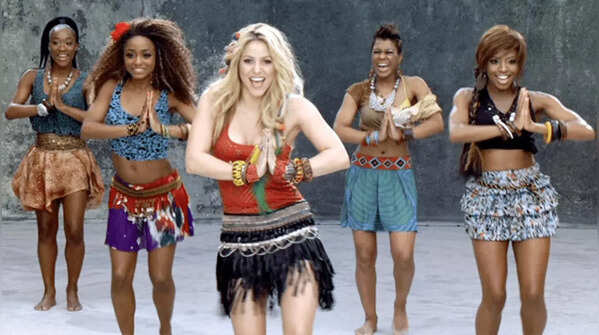
Waka Waka
Though tied to the 2010 FIFA World Cup, the song also charted in the United States. It reached the Top 40 on the Billboard Hot 100 and performed well on digital sales charts. Globally, it topped multiple international rankings. It became one of the best-selling World Cup songs in history and significantly expanded her global streaming footprint. The track’s reach came from how quickly it builds a shared mood. It is upbeat, easy to follow, and built for big group moments. That made it travel well across markets and languages. It also kept its power after the event window because listeners kept returning to the chorus and the high-energy feel.

Don’t bother
Released in 2005, the single peaked at No. 42 on the Billboard Hot 100 but found stronger traction internationally. It charted within the Top 10 in several European territories. While it did not match her biggest U.S. hits, it supported album sales for Oral Fixation, Vol. 2, and showed her willingness to push pop-rock influences. The song’s value is partly in what it reveals about her choices. She did not chase a single formula. Instead, she leaned into a tougher tone and let the track speak with more bite. Its stronger international performance also highlights how her fan base moved differently across regions. Even without a huge U.S. peak, the song helped keep her era active and visible.
Featured In entertainment

