- News
- entertainment
- bengali
- music
- 118th Birth Anniversary: Remembering Ustad Bade Ghulam Ali Khan, the Tansen of 20th century
Trending
This story is from April 2, 2020
118th Birth Anniversary: Remembering Ustad Bade Ghulam Ali Khan, the Tansen of 20th century
One of the most common epithets used to describe Ustad Ghulam Ali Khan is ‘Tansen of the 20th century’. Often called Bade Ghulam Ali Khan to differentiate him from other icons of the same name, the maverick musician was one of the legendary thumri vocalists of all time, who guided the Patiala Gharana, one of the schools of Hindustani classical music, to a new height.
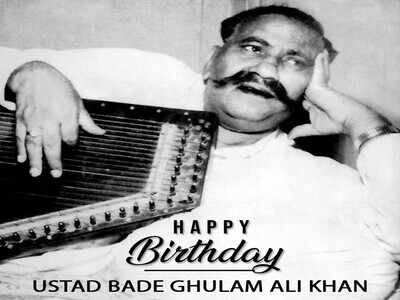

Born in undivided Punjab, Bade Ghulam Ali Khan ended up at his home in India many years after Partition — he then lived in Mumbai, Kolkata and Hyderabad, where he eventually breathed his last.
Many of today’s youngsters may not know his heritage, but those who are well aware of their music call him as one of the greatest vocalists in modern Indian history.
Starting young
Born on 2 April 1902 in Kasur (now in Pakistan), Bade Ghulam Ali Khan was from a family of musicians. He received his early training in vocals from his uncle Kale Khan who was a court singer in the princely state of Jammu and Kashmir. He also started his training in sarangi. Subsequently, he was taught by his father Ali Baksh Khan as well.
His musical brilliance first became evident when he found an audience for his all-night riyaaz in Kasur. His brothers Ustad Mubarak Ali Khan,
Ustad Bharat Ali Khan and Ustad Amanat Ali Khan are also known to be well-known contributors to the Kasur-Patiala gharana. He married Ali Jiwai, but she died at a young age in 1932.
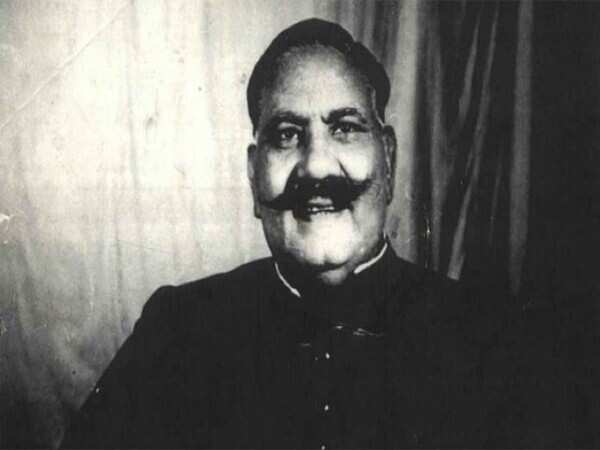
A thumri legend
In his book ‘Thumri in Historical and Stylistic Perspective, Peter Manuel once wrote of Ustad Bade Ghulam Ali Khan as an artist whose “vocal range and technique were extraordinary in themselves, but his greatest virtue was his brilliant sense of melody and nuance; combining these assets, he was able to take thumri to expressive heights which, in the opinion of many, have not been equaled since”.
Manuel said Khan could integrate essence “from different styles and genres in his thumris, giving them a distinctly eclectic flavour”. The Ustad even mastered the art of perfecting music, keeping in mind the audience for whom he used to deliver terrific performances.
Ustad’s trademark was the exceptional emotional work in his singing marked by romance striking a dominant note. Those who knows the intricacies of Hindustani classical music respect him for his
clear rendition of words in his songs.
Such was his grasp that he kept words undistorted even when going for higher pitch levels. He maintained his quality of singing and melody even when others faltered during instances of executing a complex arrangement of consonant sounds in a piece of music.
Bade Ghulam Ali Khan Sahib’s gayaki (the art of vocal music) was the amalgamation of four gharanas — Agra, Jaipur, Kirana and Gwalior. The transcendental and extensive expansion of the swaras in alap was divine in his gayaki. He further augmented it with meru khand taans of Kirana, two swar danas of Jaipur and voice structure and voice akaar of Agra and Gwalior.
Two epic songs for ‘Mughal-e-Azam ’
While he enthralled listeners and viewers at personal and social gatherings, Ustad Bade Ghulam Ali Khan never ever accepted offers to sing in films, until he made one epic exception.
Filmmaker K. Asif requested him to lend his voice for some songs for the cult classic ‘Mughal-e-Azam’ (1960), starring Dilip Kumar and Madhubala. The Ustad crooned two songs for the film after much cajoling — ‘Prem Jogan Ban Ke’ and ‘Shubh Din Aayo’.
However, it came at a huge cost — an extreme price of Rs 25,000 per song. Just to compare, mainstream playback singers like Mohammad Rafi and Lata Mangeshkar used to be paid Rs 500 per song in those days.
The Ustad’s grand daughter-in-law, Samina Ali, once revealed he charged the amount so that no one else could dare to approach him for future film projects.
The legacy
In 1962, four years after he received Indian citizenship, Ustad Bade Ghulam Ali Khan was conferred Padma Bhushan, India’s third highest civilian honour, and then Sangeet Natak Akademi Award.
He passed away on 23 April 1968 in Hyderabad’s Basheer Bagh Palace. He was then buried in Daira Mir Momin graveyard in the city, which was the burial ground of some eminent Sufi saints.
One of the Ustad’s disciples, vocalist Malti Gilani, later set up the Bade Ghulam Ali Yaadgar Sabha in his memory, looking to give financial assistance to musicians and also to promote Indian classical music.
The Ustad’s son, famous Hindustani classical singer Munawar Ali Khan, carried on his father’s legacy until his died in 1989. His grandsons Raza Ali Khan, Mazhar Ali Khan, Jawaad Ali Khan and Naqi Ali Khan, have since then kept the heritage going.
Even composers like A.R. Rahman had paid his tribute to the Ustad in his mainstream work — for instance, in the Rakeysh Omprakash Mehra-directed 2009 film ‘Delhi 6’, singer Shreya Ghoshal, along with Rahman, sang and arranged a beautiful composition of Bade Ghulam Ali Khan in Raga Gurjari Todi, called Bhor Bhaye.
End of Article
FOLLOW US ON SOCIAL MEDIA









entertainment videos
Featured In Movies

Popular Categories
Entertainment NewsBollywood NewsTollywood NewsKollywood NewsMollywood NewsMovie ReviewsLatest Hindi MoviesLatest Tamil MoviesMX PlayerParenting TipsHome RemediesWeight LossBeauty TipsParenting TipsHindi VideosHindi Video SongsBhojpuri Music VideosLatest Telugu MoviesBhojpuri Music VideoHindi TV News
Trending in Entertainment
Latest MoviesBollywood MoviesHollywood MoviesTamil Movies 2024Telugu Movies 2024Malayalam Movies 2024Kannada Movies 2024Marathi Movies 2024Bengali Movies 2024Top Rated Movies 2024Best Hindi MoviesBest English MoviesBest Telugu MoviesBest Tamil MoviesBest Malayalam MoviesBest Kannada MoviesBest Bengali MoviesUpcoming Hindi MoviesBest Movies Of All TimeBest Hindi Movies of All Time
Trending in Etimes
Horoscope TodayNumerology Predictions TodayKamala HarrisBrisk WalkingPrince HarryElon MuskDonald Trump DonationsSayuri DeathHaitian President SpeechElon Musk MotherJD Vance Vs Tim WalzEric AdamsKamala HarrisPeanut Butter Vs Almond ButterMagnesium DeficiencyRelationship TipsSean Diddy CombsAlzheimers DiseaseFunniest Wildlife Photos 2024
Trending in TV
Trending in Lifestyle
Trending in Regional
Movie Reviews
Yudhra ReviewJo Tera Hai Woh Mera Hai ReviewKahan Shuru Kahan Khatam ReviewHis Three Daughters ReviewNever Let Go ReviewDancing Village: The Curse Begins ReviewTransformers One ReviewFirst Love ReviewBerlin ReviewThe Buckingham Murders ReviewSpeak No Evil ReviewVisfot ReviewThalapathy Is The G.O.A.T ReviewRebel Ridge Review
Upcoming Hindi Movies
Upcoming Regional Movies
Latest News
Vineeth Radhakrishnan calls Tovino Thomas a ‘phenomenal performer’ after watching 'ARM'Once in a blue moon: Delhiites breathe easy, AQI drops to 80Kamala Harris pledges to revive bipartisan border security bill blocked by TrumpCease-work at Sagore Dutta Hospital in Kolkata after 'assault' on junior doctorsTop Tory leadership contender pledges ban on UK visas to Indians if India does not accept returnsTapSwap Daily Codes for September 28, 2024: Earn coins and cryptocurrency by completing tasksWrestling Veteran Supports Rikishi's Take on Jacob Fatu's Backstage Meeting with Triple H5 popular North Delhi schools worth considering for quality educationMinimum wages for unorganised sector to rise as variable DA upPremium Soundbars with Dolby Audio: Top Picks OnlineHC ticks off Punjab for not releasing Ayushman funds to private hospitalsMicrosoft CEO Satya Nadella says, for me a true leader is who …Policybazaar eyes new model for mediclaimsVirgo, Daily Horoscope Today, September 28, 2024: Career advancements and new opportunities are likelyCyclists from Poland, Kenya to take part in second Race Across India from October 10PIO judge indicted for bid to influence re-election in USNon-payment of toll charges to reflect on Vahan portal, appSalman Khan's 'Sikandar' shoot comes to a halt due to heavy rains in Mumbai: Report
Other Group Sites -
ETimes is an Entertainment, TV & Lifestyle industrys promotional website and carries advertorials and native advertising.