- News
- entertainment
- bengali
- movies
- Social media stars are not stars of the theatre: Kamaleswar
Trending
This story is from January 20, 2019
Social media stars are not stars of the theatre: Kamaleswar
Kamaleswar-Dev to return in a film on digital surveillance
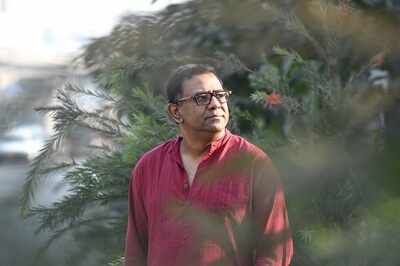
You have a strong Leftist orientation.

aving a political belief and being a party member are two different things. Politics is a mix of ideology and tactics. Ideology is my stronghold. Tactics is my weakest link. So, I wanted art forms to voice my views.
You have already done three films with Trinamool MP Dev. Have you ever discussed politics with him?
Yes, we have argued and peacefully agreed to disagree on political views.
Dev was absent from the Brigade parade grounds on Saturday while poet Srijato was conspicuous with his presence. Your take?
Dev, I’m sure, would have gone had he been in Kolkata. He is shooting a film with Raja Chanda in Dubai. As for Srijato’s presence, it’s his choice in life. Not just Srijato — lots of Bengali poets, directors, theatrical professionals, painters, producers and actors share a different political view than mine. But that’s what democracy is all about. It doesn’t hamper our collaborations.
A few days back, Dev had posted a picture of you with him in Mumbai. What’s brewing?
I am supposed to do a film with Dev. He is also supposed to produce it. The subject of the film is digital surveillance. In the modern world, we all are being watched by someone. The Big Brother is watching. All our movements can be tracked by GPS locators. When we interact on the social media, all the private information can be accessed.
It is said that not all friend requests on social media are just meant for friendship. There might be a spy lurking somewhere. Have you ever faced this?
Yes, I have faced it. In my personal life, many messages come on social media asking me to be friends. I am asked to spend time with the individual. Some political and religious tags are also very dangerous. They want to know how I am reacting to these tagged posts. I am sure this is to understand my political preferences.
That is something people are very aware of…
Well, that’s true. But what about others who don’t openly talk about their political views? They are under watch this way. My film deals with this trend. It is as-yet untitled.
You are again repeating Dev and Rukmini in the film…
Yes. There is another male actor but I haven’t cast him yet. In this film, Dev’s character works as a cop whose privacy has been compromised on social media. Rukimini is supposedly his girlfriend. The other character is of one who tries to intrude into his privacy.

Are you pitching for a Bollywood star?
No. I was in Mumbai for the pre-production work of this film. This will go on the floors in late February.
Digital media presence is big for Tollywood today. How good are you in handling that media?
No, I am not that good there. It eats up a lot of a person’s time. That really hampers your work. I use the social media for canvasing about my films or theatre.
You never share your personal information or photos at premieres. Is it by design?
Yes. I don’t like being sold so cheap. Likes and shares in social media is very misleading. I have 5000 friends and perhaps a couple of thousands waiting for my consent.
But I don’t think that one can have 5000 true friends. Similarly when we post photographs or videos of upcoming movies, the likes and shares don’t convert into ticket sales. That’s why the social media stars are not stars of the theatre. If there was a concept of having to pay Rs 1 per like, I am sure the number of likes per post would have drastically gone down. Since those who like a post don’t have to shell out any money, it is so readily available. However, cinema viewing in theatres costs money. So the same individual who likes a post doesn’t ever buy a ticket for a film or a play. That’s why box-office figures go all haywire despite a trailer getting huge traction on social media.
Will you include all this in your film too?
Yes, of course. That’s reality.
Coming to Mukhomukhi,it’s been a while that the film got ready. Why did you delay the release so much?
I can confidently say that a film like Mukhomukhi has never been made in India. This is an experimental film. In our times, it is unthinkable to forgo the commercial aspect of return and make a film like Mukhomukhi. The film is shot in one set over a period of 18 days. The set is suggestive. An apartment and a city are shown in this set. To make the location universal for all characters, we haven’t gone outside. Gargee (Roychoudhury) plays an author whose doesn’t feel free to write whatever she wants to.
Is it a commentary on the freedom of expression debate?
Yes, it is. Rajatava (Dutta), her partner, listens to the story and starts interpreting it in his own way. The two protagonists of the story — Paayal (Sarkar) and Jisshu (U Sengupta) — enter the scene thereafter. While Jisshu is a struggling musician, Paayal is a civil service aspirant. In today’s time, we often see that narrative. People’s choices are governed by market forces and political dictates. My film is about how Gargee negotiates that.
Do you ever feel that your freedom of expression is gagged in today’s times?
I am privileged. However, at times, I have had to compromise keeping an eye on financial returns.
Does that impact Brand Kamaleswar and the reaction or reception from your core audience?
I don’t believe in branding myself. Yes, sometimes my loyal audience — if I have any — is disheartened.
When you are making a computer graphics based film on a budget that doesn’t support it, does your loyal viewer believe your narrative when you say you made your compromises keeping in mind the commercial interests?
Had I not done that films like Chander Pahar (CP) or Amazon Obhijaan (AO) could never have been made. The producers who made Meghe Dhaka Tara and have attempted doing CP or AO have already taken a lot of risks looking at the current trend of returns. As a director, I feel it is healthy to accept that much of compromise thinking of a bigger leap. I believe my core audience understands me. However, I have never been questioned about my choice of subjects. The questions arise mostly on the treatment of a subject.

About the Author
Ruman GangulyEnd of Article
FOLLOW US ON SOCIAL MEDIA








Photostories
entertainment videos
Featured In Movies
Popular Categories
Entertainment NewsBollywood NewsTollywood NewsKollywood NewsMollywood NewsMovie ReviewsLatest Hindi MoviesLatest Tamil MoviesMX PlayerParenting TipsHome RemediesWeight LossBeauty TipsParenting TipsHindi VideosHindi Video SongsBhojpuri Music VideosLatest Telugu MoviesBhojpuri Music VideoHindi TV News
Trending in Entertainment
Latest MoviesBollywood MoviesHollywood MoviesTamil Movies 2024Telugu Movies 2024Malayalam Movies 2024Kannada Movies 2024Marathi Movies 2024Bengali Movies 2024Top Rated Movies 2024Best Hindi MoviesBest English MoviesBest Telugu MoviesBest Tamil MoviesBest Malayalam MoviesBest Kannada MoviesBest Bengali MoviesUpcoming Hindi MoviesBest Movies Of All TimeBest Hindi Movies of All Time
Trending in Etimes
Horoscope TodayNumerology Predictions TodayAustria ElectionJoe BidenKamala HarrisPopulated Indian CitiesAlcohol Cancer RiskIsrael Beirut WarSunita WilliamsIsrael Hezbollah WarNepal FloodBarbra StreisandSnoring Prevention TipsDonald TrumpMagnesium DeficiencyRelationship TipsLake Michigan DiscoveryElon MuskEkadashi in October 2024
Trending in TV
Trending in Lifestyle
Trending in Regional
Movie Reviews
Binny And Family ReviewLove, Sitara ReviewWill & Harper ReviewWolfs ReviewYudhra ReviewJo Tera Hai Woh Mera Hai ReviewKahan Shuru Kahan Khatam ReviewHis Three Daughters ReviewNever Let Go ReviewDancing Village: The Curse Begins ReviewTransformers One ReviewFirst Love ReviewBerlin ReviewThe Buckingham Murders Review
Upcoming Hindi Movies
Upcoming Regional Movies
Latest News
Zodiac Signs as Romantic Movie CouplesJapanese artist’s tribute to Indian classical dance formAnanya Panday unveils her Amol Palekar-inspired look in quirky BTS PICS from 'CTRL’Sanjay Dutt celebrates 'Gandhigiri', shares a scene from 'Lage Raho Munna Bhai'Women's T20 World Cup 2024: Teams, format, venues, defending champions and more FAQs answeredTriptii Dimri denies skipping the Jaipur event after allegations of charging an appearance feeFormer WWE Champion Jeff Hardy talks about “addiction struggles”Qualifier Yash upsets second seed Manish at Fenesta Open'Scam marathon' under JMM-Congress-RJD rule 'biggest obstacle' to Jharkhand's development: PM ModiPopulation of Hindus & tribals declining in Jharkhand, says PM ModiWHO chief praises PM Modi on 10th anivarsary of Swachh Bharat missionNasa switches off instrument on Voyager 2 spacecraft to save powerIndian cinema has a rich legacy of storytelling: Rana DaggubatiAre 3 senior Karnataka mantris jockeying for chief minister's chair?Best Leather Wallets for Men in 2024: Timeless EleganceArya's film faces controversy for not paying junior artists on timeGomathi Priya and Vetri Vasanth's 'Siragadika Asai' completes 500 episodesCongress leader Jairam Ramesh says 'fierce urgency for peace' in West Asia
Other Group Sites -
ETimes is an Entertainment, TV & Lifestyle industrys promotional website and carries advertorials and native advertising.