- News
- entertainment
- bengali
- movies
- Shopping-mall versions of Swapan Saha movies make money today
Trending
This story is from November 16, 2017
Shopping-mall versions of Swapan Saha movies make money today
Unfazed by the recent controversy pertaining to his associate Premangshu Roy, the thespian spoke about his friendships in the theatre circuit, his perception about Tollywood and his new projects. Read on…
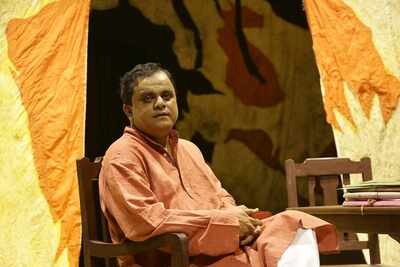
Bratya Basu has very little time for himself. He is busy rehearsing for a new production, Soteroi July, at night. He is staging his directorial project, Boma, the next evening. And the morning after, he is seen acting in a show of Mullyo — the play that brings him back on stage as an actor after several years. “But I never fail to make time for my constituency. I am probably the only MLA in West Bengal who visits each and every ward,” said Bratya. Unfazed by the recent controversy pertaining to his associate Premangshu Roy, the thespian spoke about his friendships in the theatre circuit, his perception about Tollywood and his new projects. Read on…
Do you think that the recent controversy pertaining to your close aide Premangshu Roy’s molestation allegation has affected your image?
I was not even in the country. Later, I heard that Premangshu has taken my name to threaten students. He claims he scolded those children taking my name not as a politically influential person, but as a theatre director. Even if I accept that he misused my name, there is nothing I can do about it. There are more than 200 young directors who are close to me. I can’t take responsibility of someone else’s misbehaviour.
Do you have any real friends in the industry?
You are a playwright, director, actor and politician. You have many competitors in every field you work in. Does this affect you?
See, this is my reality. In each of these fields, I have competitors. Jotokhhon protijogi ba protidwondi bhabchi, totokkhon thik ache. Jokhoni shotru bole bhabte shuru korchi tokhoni mushkil. It doesn’t irritate me anymore because it is a fact that I have to deal with.
People often say that you are particularly helpful to those who are close to you…
I wouldn’t like to drop names, but I often recommend theatre actors I like to my film director friends. I don’t see it as nepotism. I try to support the medium I work in and that is Bengali theatre. In fact, people who allege nepotism usually are the product of nepotism and they don’t want to share their cake.
In the last a few years, you have undertaken many projects to make Bengali theatre a profitable business. From the renovation of Mohit Moitra Mancha to televising theatres...
I want to make Bengali theatre a money-making business. If a film production house makes six films in a year, it doesn’t matter if those films have any positive effect on the quality of Bengali films. However, it has a far-reaching impact because those films end up involving many people who earn their bread and butter from the film industry. Similarly, it is immaterial if the projects I have undertaken have any positive impact on theatre as a whole. But, with these projects, I have involved many people from the Bengali theatre circuit. This, in itself, has a positive effect. Such projects can at least offer some job security and that reflects in their work.
But such initiatives invite a lot of criticism as well...
It is in our mindset. Bengali theatre is still struggling and it is going to remain a place where there will be only struggles and no recognition. It can be a place where you can have work satisfaction but nothing more than that. Also, if you are less successful, you are loved by almost all. But if you are successful and your production runs for long, everyone will see you as a threat.

You have worked in theatre and in cinema. Which medium, according to you, is more rewarding for an artiste?
I don’t think Bengali films are rewarding. First, the big production houses bully other filmmakers. Their advertisements, billboards and influence over media overwhelm and intimidate smaller filmmakers. And secondly, the films that are shopping-mall versions of Swapan Saha movies make money in Bengali film industry. Bengali theatre, on the other hand, is qualitatively superior. It still has some intelligent and intellectual people. I can’t remember watching any good Bengali film apart from those I have acted in (laughs).
Does the quantity of your work affect its quality?
In 2015-16, I produced four plays in one year: Boma, Mumbai Nights, Meghe Dhaka Tara and Awddyo Sesh Rajani. All four are hits and well-appreciated. But can I keep on repeating the trend? No, I can’t. On the other hand, if I produce one play in two years, no one can guarantee that it would be a brilliant piece of work. I have to ensure that I am well prepared and my practise is perfect.
Tell us about your new projects.
I am working on the biopic of Jibonanondo Das called Jhora Palok. It is a film by Sayantan Mukhopadhyay and I am playing the role of the poet. Jaya Ahsan is there in the film. There is another film by Anumita Dasgupta called Missed Call. I am also writing a pulp fiction in the form of kabyonatyo where the characters speak in the language of poetry. From Swapan Kumar to Quentin Tarantino — pulp fictions influence me deeply.
Do you think that the recent controversy pertaining to your close aide Premangshu Roy’s molestation allegation has affected your image?
I was not even in the country. Later, I heard that Premangshu has taken my name to threaten students. He claims he scolded those children taking my name not as a politically influential person, but as a theatre director. Even if I accept that he misused my name, there is nothing I can do about it. There are more than 200 young directors who are close to me. I can’t take responsibility of someone else’s misbehaviour.
Do you have any real friends in the industry?
In the theatre world, I have many friends. I don’t have many friends there in the film circuit. But again, Supriya Dutta, Kanchan Mullick, Biplab Bandyopadhyay also belong to the film industry and they are very close friends of mine. Bengali theatre world is not as glamorous as Tollywood and hence it is less superficial. Also, in hindsight, not everyone can be your friend, right?
You are a playwright, director, actor and politician. You have many competitors in every field you work in. Does this affect you?
See, this is my reality. In each of these fields, I have competitors. Jotokhhon protijogi ba protidwondi bhabchi, totokkhon thik ache. Jokhoni shotru bole bhabte shuru korchi tokhoni mushkil. It doesn’t irritate me anymore because it is a fact that I have to deal with.
People often say that you are particularly helpful to those who are close to you…
I wouldn’t like to drop names, but I often recommend theatre actors I like to my film director friends. I don’t see it as nepotism. I try to support the medium I work in and that is Bengali theatre. In fact, people who allege nepotism usually are the product of nepotism and they don’t want to share their cake.
In the last a few years, you have undertaken many projects to make Bengali theatre a profitable business. From the renovation of Mohit Moitra Mancha to televising theatres...
I want to make Bengali theatre a money-making business. If a film production house makes six films in a year, it doesn’t matter if those films have any positive effect on the quality of Bengali films. However, it has a far-reaching impact because those films end up involving many people who earn their bread and butter from the film industry. Similarly, it is immaterial if the projects I have undertaken have any positive impact on theatre as a whole. But, with these projects, I have involved many people from the Bengali theatre circuit. This, in itself, has a positive effect. Such projects can at least offer some job security and that reflects in their work.
But such initiatives invite a lot of criticism as well...
It is in our mindset. Bengali theatre is still struggling and it is going to remain a place where there will be only struggles and no recognition. It can be a place where you can have work satisfaction but nothing more than that. Also, if you are less successful, you are loved by almost all. But if you are successful and your production runs for long, everyone will see you as a threat.

You have worked in theatre and in cinema. Which medium, according to you, is more rewarding for an artiste?
I don’t think Bengali films are rewarding. First, the big production houses bully other filmmakers. Their advertisements, billboards and influence over media overwhelm and intimidate smaller filmmakers. And secondly, the films that are shopping-mall versions of Swapan Saha movies make money in Bengali film industry. Bengali theatre, on the other hand, is qualitatively superior. It still has some intelligent and intellectual people. I can’t remember watching any good Bengali film apart from those I have acted in (laughs).
Does the quantity of your work affect its quality?
In 2015-16, I produced four plays in one year: Boma, Mumbai Nights, Meghe Dhaka Tara and Awddyo Sesh Rajani. All four are hits and well-appreciated. But can I keep on repeating the trend? No, I can’t. On the other hand, if I produce one play in two years, no one can guarantee that it would be a brilliant piece of work. I have to ensure that I am well prepared and my practise is perfect.
Tell us about your new projects.
I am working on the biopic of Jibonanondo Das called Jhora Palok. It is a film by Sayantan Mukhopadhyay and I am playing the role of the poet. Jaya Ahsan is there in the film. There is another film by Anumita Dasgupta called Missed Call. I am also writing a pulp fiction in the form of kabyonatyo where the characters speak in the language of poetry. From Swapan Kumar to Quentin Tarantino — pulp fictions influence me deeply.
End of Article
FOLLOW US ON SOCIAL MEDIA









Photostories
entertainment videos
Featured In Movies
Popular Categories
Entertainment NewsBollywood NewsTollywood NewsKollywood NewsMollywood NewsMovie ReviewsLatest Hindi MoviesLatest Tamil MoviesMX PlayerParenting TipsHome RemediesWeight LossBeauty TipsParenting TipsHindi VideosHindi Video SongsBhojpuri Music VideosLatest Telugu MoviesBhojpuri Music VideoHindi TV News
Trending in Entertainment
Latest MoviesBollywood MoviesHollywood MoviesTamil Movies 2024Telugu Movies 2024Malayalam Movies 2024Kannada Movies 2024Marathi Movies 2024Bengali Movies 2024Top Rated Movies 2024Best Hindi MoviesBest English MoviesBest Telugu MoviesBest Tamil MoviesBest Malayalam MoviesBest Kannada MoviesBest Bengali MoviesUpcoming Hindi MoviesBest Movies Of All TimeBest Hindi Movies of All Time
Trending in Etimes
Trending in TV
Trending in Lifestyle
Trending in Regional
Movie Reviews
Berlin ReviewThe Buckingham Murders ReviewSpeak No Evil ReviewVisfot ReviewThalapathy Is The G.O.A.T ReviewRebel Ridge ReviewDetective Conan vs. Kid the Phantom Thief ReviewBeetlejuice Beetlejuice ReviewPad Gaye Pange ReviewA Wedding Story ReviewThe Diary Of West Bengal ReviewTikdam ReviewKinds Of Kindness ReviewAfraid Review
Upcoming Hindi Movies
Upcoming Regional Movies
Latest News
Centre to examine EY India worker’s demiseWWE NXT Viewership Skyrockets on 9/17 following CM Punk's appearanceGoogle offers to sell part of its advertising technology business, but why European Union publishers are not happy with the proposal'Unwarranted, unsubstantiated': India reacts strongly to US court summons over pro-Khalistani terrorist Pannun's lawsuit over 'assassination bid'Shraddha Kapoor channels Sridevi's elegance in her latest photoshootKMAT 2024 admit card released at kmatindia.com, exam on Sept 22: Direct link to download hereFoods to include in the Monsoon diet according to AyurvedaDelhi housing society’s letter on ‘receiving too many parcels in a day’ goes viralThe man who wants to 'cancel' Adani from Sri LankaMumbai railway official loses Rs 9 lakh as he dials ‘0’ from his phone; presented before 'judge'On way to Gurgaon pub, 5 students suffer injuries after 'rented' car collides with railing at Delhi's Geeta Colony flyoverHC directs CBFC to decide on 'Emergency' certification by September 25: “You must have the courage to say this film cannot be released”OTET Answer Key 2024 released at bseodisha.ac.in, raise objections till Sept 28: Subject-wise direct links hereThalapathy Vijay’s GOAT is inching towards Rs 15 crore mark in HindiSalman Khan makes a dapper appearance at the Mumbai airportThrowback: When Neetu Kapoor revealed about her playful competition with Alia Bhatt over Raha's first wordsBanks to play important role in making in Viksit Bharat : FM SitharamanTelangana MSME policy: Focus on womenpreneurs, Rs 100 crore Yantram Fund for tech upgrade
Other Group Sites -
ETimes is an Entertainment, TV & Lifestyle industrys promotional website and carries advertorials and native advertising.