- News
- entertainment
- bengali
- movies
- Let’s not get confined to GENDER orbit, talk about the world nobody knows better than us, WOMEN: Director Pritha Chakraborty on Women's Day 2020
Trending
This story is from March 8, 2020
Let’s not get confined to GENDER orbit, talk about the world nobody knows better than us, WOMEN: Director Pritha Chakraborty on Women's Day 2020
The journey from her hometown Ranaghat to Kolkata has been pretty much exciting and enriching. Pritha Chakraborty, the small-town girl, who took up editing at Satyajit Ray Film and Television Institute after completing Mass Communication from Xavier’s made her debut as a feature film director in 2019 with ‘Mukherjee Dar Bou’.
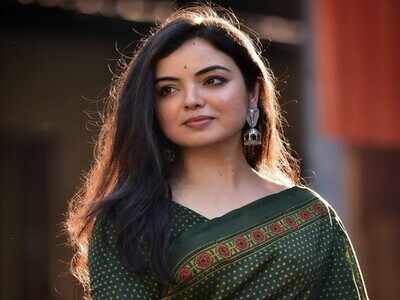
The journey from her hometown Ranaghat to Kolkata has been pretty much exciting and enriching. Pritha Chakraborty, the small town girl, who took up editing at Satyajit Ray Film and Television Institute after completing Mass Communication from Xavier’s made her debut as a feature film director in 2019 with ‘Mukherjee Dar Bou’. It’s been one year of the film’s release which became a massive hit celebrating womanhood. On the occasion of International Women’s Day, we caught up with the young director, who will soon get married to her long-time friend, for an exclusive interview and it turned out to be a no-hold barred adda on a wide range of topics like her filmmaking journey, how things have changed now, the future of woman filmmakers in India, her next film and many more. Here are the excerpts:

It still gives me goosebumps when I remember the days ahead of Mukherjee Dar Bou release. It still feels surreal. The way audience showered their love it was amazing. Yes, things have changed. Now, it has become a lot easier to discuss projects with producers. Now, I don’t have to wait for long. I am ever indebt to each and everyone who has been by our side in this journey.
I grew up in a distant suburb of Kolkata, precisely, in a district township. My social ambiance, since my childhood, had been very close-knit, full of life and buzzing with emotional energy. One would feel there the inadequacy of resources, facilities and entitled amenities – communication, medical or educational. Yet, community found possible solutions to (in spite of potential conflicts) joy and harmony. I found, curiously, this as a philosophical approach to life- full of simplicity and incredible beauty. The way of life was immersive and organic, which always used to sensitize me.
Also, my parents were deeply into the culture of music. Music has been the finer text used to motivate me a lot to churn out diverse emotions. Hence, I seamlessly used to search for right expressions to articulate my emotion, joy and experiences. I was not sure about becoming a filmmaker. After leaving school, I chose Mass Communications as my subject of undergraduate studies at St. Xavier’s College, Kolkata. I got stimulated by the power of motion picture narrative. I recognized that, finally, cinema would be an answer to my questions on life and expressions of my voice. I joined SRFTI as a postgraduate student specializing in Editing, where the teaching was insistently focused on the holistic understanding storytelling.
I always think about my responsibility when I think of expressing myself or addressing my audience. I would love to explore a thousand times, with innumerable layers, issues those are embodied in my work. I don't think that I have found the unique truth that others are not aware of as a filmmaker. I may not be the right voice to represent the majority or even the minority. I am not sure how much my voice rationally raises a legitimate question or drives the viewers to clues of answers!
I look at sensitive assessment of situations and my own emotional responses particular to the content that I am dealing with. At the end of the day Cinema is a tool that allows me to talk freely about the way I see the world. It may not work with the viewers. I just expect my formal body of expression is capable of providing a refreshing insight. I only try to make it engaging and inviting for the audience. I often confront this question – am I valid the way I observe and interpret? Not a happy dynamics. Hence before I propose myself as a filmmaker, I nurture myself as an individual whose comments are transpired to be reflexive and substantial.
I really think discourses emerging from films made by women filmmakers need to be discussed widely. A greater level of critical dialogue is definitely missing. There have been many women filmmakers in Indian Documentary section who have been doing inspiring works.
I don't feel that as a woman filmmaker, I go through unusual obstacles from external forces. Being a woman, our experiences are different. Being a child, our experiences are different. Being an adult, our experiences are different.
As an individual, our experiences, anguish and bliss are very different from each other in a given time and space. Grater question is – are we ready to intervene with objectivity, serenity and compassion to evaluate such fallacies from a larger perspective for a corrective influence? This is the biggest challenge. We know, historically, there has been an extreme level of oppression women are subject to. Though I may not have gone through such things. Even theses disparities are widespread and specific to gender, economic, class, religion, skin color, presence of body and caste. I found so many souls injured for all the colossus aberrations.
As a filmmaker, I only believe in touching upon the truth to sensitize others. Of course, I need to see this complex level of discrepancies factoring all pre-givens, compulsions, general psychological continuity and societal practices. Here I possibly outstep my gender identity for a truthful examination and share with others my own take.
Individuals will have their own observation and take. I simply would suggest, to magistrate our existence realistically and that let’s not get confined to our gender orbit. At the same time, we women feel, internalize, gauge and respond to many situations in our own unique ways. Hence, we see the world deeper and better. Let’s talk about the world that nobody knows better than us.
On a personal front, thamma (grandmother) has been a huge inspiration to me. She is 92 now and still I look for her feedback. I have seen closely being a working lady how she managed everything. I am blessed to have her in my life. I also enjoy Zoya Akhtar and Meghna Gulzar’s works.
Among the contemporary filmmakers from world cinema I like Greta Garwig’s films, especially her first film ‘Lady Bird’. Again her philosophy is quite simple yet deep along with terrific characterization. It feels as an audience I know flesh and soul of each character and none of them are black and white. Complex human emotion has always been my favourite thing to explore.
I should also mention Nandita di’s (Nandita Roy) name. She is such a wonderful woman to be around and I have learnt a lot from her.
Ambar and I have been friends for the past seven years and the relationship took a romantic angle two years ago. His aesthetic sense is something I have admired for years and also he is very practical yet honest. I often look for his feedback. He has been so supportive. Also, I must mention my team as well. I have a close-knit team who has been a big support to me. It’s a fact without them I couldn’t have achieved all these. They are like backbone to me.
For me, feminism is ensuring that my voice reaches to people and that I have equal intellectual rights and opportunities.
I have already drafted the script. It will again be a relationship tale. Dealing with stories on relationships comes naturally to me.
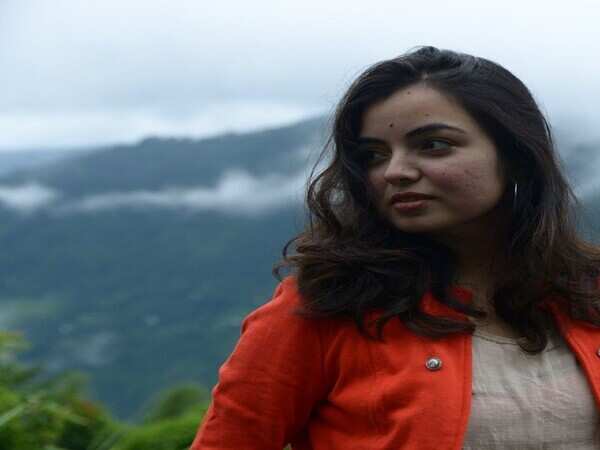
It’s been one year since ‘Mukherjee Dar Bou’ released. How things have changed?
It still gives me goosebumps when I remember the days ahead of Mukherjee Dar Bou release. It still feels surreal. The way audience showered their love it was amazing. Yes, things have changed. Now, it has become a lot easier to discuss projects with producers. Now, I don’t have to wait for long. I am ever indebt to each and everyone who has been by our side in this journey.
How and when did you realize that you should be a filmmaker?
I grew up in a distant suburb of Kolkata, precisely, in a district township. My social ambiance, since my childhood, had been very close-knit, full of life and buzzing with emotional energy. One would feel there the inadequacy of resources, facilities and entitled amenities – communication, medical or educational. Yet, community found possible solutions to (in spite of potential conflicts) joy and harmony. I found, curiously, this as a philosophical approach to life- full of simplicity and incredible beauty. The way of life was immersive and organic, which always used to sensitize me.
Also, my parents were deeply into the culture of music. Music has been the finer text used to motivate me a lot to churn out diverse emotions. Hence, I seamlessly used to search for right expressions to articulate my emotion, joy and experiences. I was not sure about becoming a filmmaker. After leaving school, I chose Mass Communications as my subject of undergraduate studies at St. Xavier’s College, Kolkata. I got stimulated by the power of motion picture narrative. I recognized that, finally, cinema would be an answer to my questions on life and expressions of my voice. I joined SRFTI as a postgraduate student specializing in Editing, where the teaching was insistently focused on the holistic understanding storytelling.
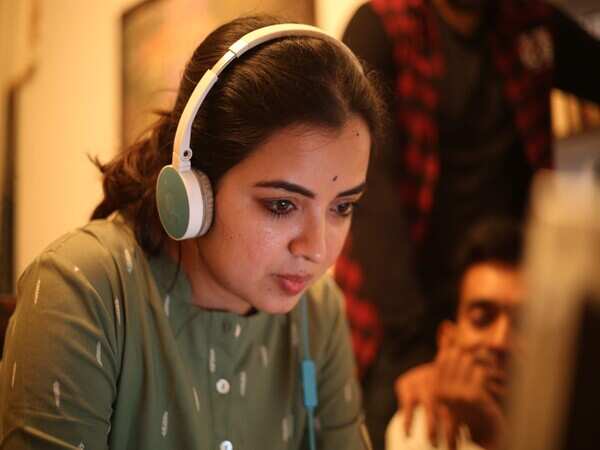
How would you describe your works, your responsibility as a filmmaker?
I always think about my responsibility when I think of expressing myself or addressing my audience. I would love to explore a thousand times, with innumerable layers, issues those are embodied in my work. I don't think that I have found the unique truth that others are not aware of as a filmmaker. I may not be the right voice to represent the majority or even the minority. I am not sure how much my voice rationally raises a legitimate question or drives the viewers to clues of answers!
I look at sensitive assessment of situations and my own emotional responses particular to the content that I am dealing with. At the end of the day Cinema is a tool that allows me to talk freely about the way I see the world. It may not work with the viewers. I just expect my formal body of expression is capable of providing a refreshing insight. I only try to make it engaging and inviting for the audience. I often confront this question – am I valid the way I observe and interpret? Not a happy dynamics. Hence before I propose myself as a filmmaker, I nurture myself as an individual whose comments are transpired to be reflexive and substantial.
How necessary is the discourse about women making films in India? What kind of challenges do today’s women filmmakers face?
I really think discourses emerging from films made by women filmmakers need to be discussed widely. A greater level of critical dialogue is definitely missing. There have been many women filmmakers in Indian Documentary section who have been doing inspiring works.
I don't feel that as a woman filmmaker, I go through unusual obstacles from external forces. Being a woman, our experiences are different. Being a child, our experiences are different. Being an adult, our experiences are different.
As an individual, our experiences, anguish and bliss are very different from each other in a given time and space. Grater question is – are we ready to intervene with objectivity, serenity and compassion to evaluate such fallacies from a larger perspective for a corrective influence? This is the biggest challenge. We know, historically, there has been an extreme level of oppression women are subject to. Though I may not have gone through such things. Even theses disparities are widespread and specific to gender, economic, class, religion, skin color, presence of body and caste. I found so many souls injured for all the colossus aberrations.
As a filmmaker, I only believe in touching upon the truth to sensitize others. Of course, I need to see this complex level of discrepancies factoring all pre-givens, compulsions, general psychological continuity and societal practices. Here I possibly outstep my gender identity for a truthful examination and share with others my own take.
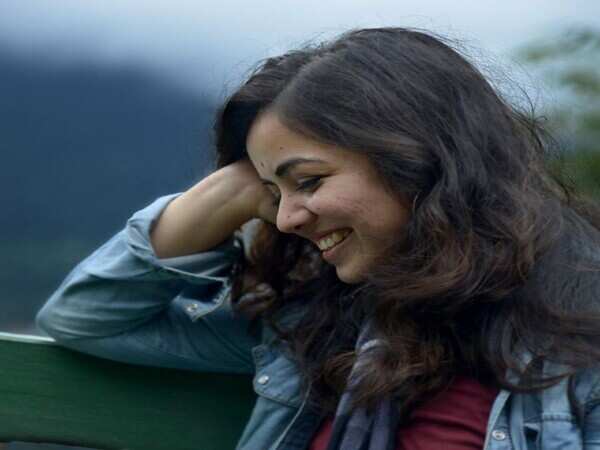
Any advice to the aspiring filmmakers?
Individuals will have their own observation and take. I simply would suggest, to magistrate our existence realistically and that let’s not get confined to our gender orbit. At the same time, we women feel, internalize, gauge and respond to many situations in our own unique ways. Hence, we see the world deeper and better. Let’s talk about the world that nobody knows better than us.
Who has been your inspiration, both in personal and professional life?
On a personal front, thamma (grandmother) has been a huge inspiration to me. She is 92 now and still I look for her feedback. I have seen closely being a working lady how she managed everything. I am blessed to have her in my life. I also enjoy Zoya Akhtar and Meghna Gulzar’s works.
Among the contemporary filmmakers from world cinema I like Greta Garwig’s films, especially her first film ‘Lady Bird’. Again her philosophy is quite simple yet deep along with terrific characterization. It feels as an audience I know flesh and soul of each character and none of them are black and white. Complex human emotion has always been my favourite thing to explore.
I should also mention Nandita di’s (Nandita Roy) name. She is such a wonderful woman to be around and I have learnt a lot from her.
You are getting married to your long-time friend Ambar. How supportive Ambar has been throughout your journey?
Ambar and I have been friends for the past seven years and the relationship took a romantic angle two years ago. His aesthetic sense is something I have admired for years and also he is very practical yet honest. I often look for his feedback. He has been so supportive. Also, I must mention my team as well. I have a close-knit team who has been a big support to me. It’s a fact without them I couldn’t have achieved all these. They are like backbone to me.
What’s the definition of feminism for you?
For me, feminism is ensuring that my voice reaches to people and that I have equal intellectual rights and opportunities.
What’s your next project?
I have already drafted the script. It will again be a relationship tale. Dealing with stories on relationships comes naturally to me.
End of Article
FOLLOW US ON SOCIAL MEDIA
Visual Stories



Photostories
entertainment videos
Featured In Movies
Popular Categories
Entertainment NewsBollywood NewsTollywood NewsKollywood NewsMollywood NewsMovie ReviewsLatest Hindi MoviesLatest Tamil MoviesMX PlayerParenting TipsHome RemediesWeight LossBeauty TipsParenting TipsHindi VideosHindi Video SongsBhojpuri Music VideosLatest Telugu MoviesBhojpuri Music VideoHindi TV News
Trending in Entertainment
Latest MoviesBollywood MoviesHollywood MoviesTamil Movies 2024Telugu Movies 2024Malayalam Movies 2024Kannada Movies 2024Marathi Movies 2024Bengali Movies 2024Top Rated Movies 2024Best Hindi MoviesBest English MoviesBest Telugu MoviesBest Tamil MoviesBest Malayalam MoviesBest Kannada MoviesBest Bengali MoviesUpcoming Hindi MoviesBest Movies Of All TimeBest Hindi Movies of All Time
Trending in Etimes
Horoscope TodayNumerology Predictions TodayElla EmhoffDonald Trump AssassinationIvanka TrumpJose LopezKristina JoksimovicJoe WilsonTrump Eating The Dogs SongGermany NewsKamala HarrisPrince HarryBelly Fat LossDiabetes RiskFull Moon in September 2024Trump Vs HarrisJoe JonasTito Jackson DeathDave Bautista
Trending in TV
Trending in Lifestyle
Trending in Regional
Movie Reviews
Berlin ReviewThe Buckingham Murders ReviewSpeak No Evil ReviewVisfot ReviewThalapathy Is The G.O.A.T ReviewRebel Ridge ReviewDetective Conan vs. Kid the Phantom Thief ReviewBeetlejuice Beetlejuice ReviewPad Gaye Pange ReviewA Wedding Story ReviewThe Diary Of West Bengal ReviewTikdam ReviewKinds Of Kindness ReviewAfraid Review
Upcoming Hindi Movies
Upcoming Regional Movies
Latest News
Who was Illia 'Golem' Yefimchyk, the Belarusian bodybuilder who consumed 2.5 kg of meat and 108 sushi pieces daily before his death at 36?Vempalle Shareef's story is now a lesson for degree students in Andhra PradeshGovt launches programme to tackle glacial lake outburst flood threat in Himalayas, all 190 high-risk lakes to be monitoredKhatron Ke Khiladi 14: Shalin Bhanot hosts a fun party for his co-contestants Krishna Shroff, Abhishek Kumar, KaranVeer Mehra and othersAstrological Influence on Zodiac Signs' Career ChoicesBike rally held to raise voter awareness in Jammu and Kashmir's Doda ahead of assembly electionsFalcons' Predictable Offense and Cousins' Prime-Time Woes Spell Trouble in PhiladelphiaLiza Colon becomes 1st Latina to win Best Supporting Emmy Award'Oh no!': Hilarious goof-up leads to missed catch, leaves bowler in smile. WatchJr NTR on shooting under water scene for 35 days in 'Devara Part 1': It is an important sequence!Top NFL Superstars Who Are Vegan: Derrick Morgan, David Carter, Theo Riddick and moreKSCA Invitational: Arjun Tendulkar takes match haul of 9 wickets in big Goa CA XI winAbhishek Kumar shares selfies with Alia Bhatt; recalls the time when he worked as a crowd artist in ‘Humpty Sharma Ki Dulhaniya’Jessica Gunning wins her 1st Primetime Emmy for 'Baby Reindeer'Shocking! Man celebrates birthday by lying among massive PythonsSohum Shah says 'Tumbbad 2' will be different from 'Munjya' and 'Stree 2': 'They are not making dadi-nani ki kahaniyaan'1031 candidates to contest Haryana Assembly Elections to be held on October 5: CEO J AgarwalSathiyan set to partner Sreeja in mixed doubles
Other Group Sites -
ETimes is an Entertainment, TV & Lifestyle industrys promotional website and carries advertorials and native advertising.