- News
- entertainment
- bengali
- movies
- If she thought a shot was good, Mrs Sen would say 'cut' midway through the 'retake'
Trending
This story is from January 18, 2014
If she thought a shot was good, Mrs Sen would say 'cut' midway through the 'retake'
Ramananda Sengupta, the man who captured Sen in films, on the actress
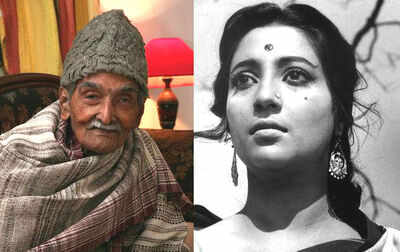
Ramananda Sengupta, the man who captured Sen in films, on the actress
For a celluloid star, it's ultimately about what the camera captures. It's no wonder that, between the hubbub and the hush of a film shooting, there's no missing that special bond between an actor and the cameraman. Shot or shoot done at the director's bark, if halo and histrionics needed another nod of approval, it must come from the one who has seen it all through the lens.
It's not surprising that Ramananda Sengupta, who has worked with Suchitra Sen in only a couple of films, should cherish the time the Tollywood star sought his services for what would have been a third association.
'I was already committed to a film but she said she was willing to accommodate by adjusting her dates. I took that as a compliment,' the 97-year-old reminisced during a chat with CT at his Golf Club Road residence. 'It didn't work out because Uttam Kumar, her costar in the film, was not able to adjust his dates,' recalled the nonagenarian, who has worked with top Indian directors and operated the camera when Jean Renoir, the famous French director, was in the city in 1949 to shoot for The River.
Sengupta recalled her seriousness and ability as an actor and that 'she looked beautiful from any angle'. He hasn't forgotten the impish manner in which she forced the director's hand at times.
'If she thought a shot was good, she would say 'cut' midway through the 'retake' so that the director had little option but to settle for the first shot,' Sengupta said with a chuckle. 'It's something she did often, and not many directors would dare order another 'take'. Also, there were occasions when she would keep chanting 'I want to go home' as we approached pack-up time.'
We too would be tired by then and her singsong appeal was, in a way, on our behalf too. It had directors a trifle concerned. 'One more shot Mrs Sen', they would request. After all these years that childlike plea still rings in my ears,' said Sengupta.
Even as fans went delirious over the Uttam-Suchitra pairing, which was a guaranteed recipe for box office bonanza, Suchitra craved for more. 'She took her acting very seriously and wanted to break out of the mould and prove that she could carry a film without Uttam,' Sengupta remembered. 'She loved working with Asit Sen because the director offered her female-dominated films where she could give full expression to her acting abilities,' he recalled.
Remembering that she didn't allow outsiders to watch her shoot, Sengupta endorses Suchitra as a very capable actor. 'She had beautiful expressive eyes, which she could fill with tears or emotion when she had to. She also carried herself well,' he said, adding: 'There was something special about the Uttam-Suchitra pair. I think they had the perfect rhythm to complement and enhance each other when in the same scene.'
Sengupta remembers that his own relationship with 'Mrs Sen' had a rough start. 'By marriage, she is related to us, but we met for the first time during the making of Shubho Ratri; she was the heroine and I, the cameraman. She used to call me Ram babuand I addressed her as Mrs Sen,' he recalled and went on to narrate an incident.
'Suchitra was anxious to give the last shot and rush to catch a flight to Bombay because her husband was unwell. I was doing the lights when she kept coming in to enquire if we were ready. A trifle ruffled, I told her it would take time. Sushilda (director Sushil Majumdar) screamed at me, but the moment Suchitra left, he hugged me to say sorry. 'I had to shout to keep her on the set,' he explained, and asked me to manage somehow,' Sengupta recalled, adding, 'She was already a big star then.'
By the time Shilpi, an Uttam-Suchitra starrer, brought the star and the cameraman to the same floor again, the bridge had been mended and the actress would actually heed Sengupta's suggestions on at least a couple of occasions.
'During Shilpi's shoot, I had suggested that she use a raised pathway as she walked with Uttam so that I could get a tighter close-up. She was reluctant at first but relented. It was the same when I told her not to use a set of bright silver jewellery because it would take away some of the essence from her character. She thought over it and discarded the jewellery,' he recollected, adding, 'She would see 'rushes' (unedited prints) and often tell me that a particular shot had come out well. That made me feel good.'
Suchitra was concerned that Sengupta was working in the film without fees. 'I told her that as a member of the Technician Studio's board of directors I shouldn't be drawing remuneration. She then told the director that when the film makes money, they should pay me. I was touched by her concern.'
Though their respective stays there was separated by over two-and-a-half decades, Santiniketan was another common ground. Sengupta was a student from 1925-28 ('when I met Rabindranath Tagore many times') while Suchitra's family moved there from Pabna (now Bangladesh) before Partition. 'She learnt singing, dancing and drawing there,' said Sengupta.
Saddened by her passing away, Sengupta said, 'I had hoped she would return home and spend more years in the midst of her near and dear ones. But that was not to be.' If only someone could make her a wait a little longer with 'One more shot please, Mrs Sen'.
For a celluloid star, it's ultimately about what the camera captures. It's no wonder that, between the hubbub and the hush of a film shooting, there's no missing that special bond between an actor and the cameraman. Shot or shoot done at the director's bark, if halo and histrionics needed another nod of approval, it must come from the one who has seen it all through the lens.
It's not surprising that Ramananda Sengupta, who has worked with Suchitra Sen in only a couple of films, should cherish the time the Tollywood star sought his services for what would have been a third association.
'I was already committed to a film but she said she was willing to accommodate by adjusting her dates. I took that as a compliment,' the 97-year-old reminisced during a chat with CT at his Golf Club Road residence. 'It didn't work out because Uttam Kumar, her costar in the film, was not able to adjust his dates,' recalled the nonagenarian, who has worked with top Indian directors and operated the camera when Jean Renoir, the famous French director, was in the city in 1949 to shoot for The River.
Trying to focus through the foggy ruins of time, Sengupta remembers Suchitra's chemistry with Uttam Kumar, but also her yearning to break free of the shackles of that famous pairing and prove that she could produce hits without Tollywood's most charismatic hero by her side.
Sengupta recalled her seriousness and ability as an actor and that 'she looked beautiful from any angle'. He hasn't forgotten the impish manner in which she forced the director's hand at times.
'If she thought a shot was good, she would say 'cut' midway through the 'retake' so that the director had little option but to settle for the first shot,' Sengupta said with a chuckle. 'It's something she did often, and not many directors would dare order another 'take'. Also, there were occasions when she would keep chanting 'I want to go home' as we approached pack-up time.'
We too would be tired by then and her singsong appeal was, in a way, on our behalf too. It had directors a trifle concerned. 'One more shot Mrs Sen', they would request. After all these years that childlike plea still rings in my ears,' said Sengupta.
Even as fans went delirious over the Uttam-Suchitra pairing, which was a guaranteed recipe for box office bonanza, Suchitra craved for more. 'She took her acting very seriously and wanted to break out of the mould and prove that she could carry a film without Uttam,' Sengupta remembered. 'She loved working with Asit Sen because the director offered her female-dominated films where she could give full expression to her acting abilities,' he recalled.
Remembering that she didn't allow outsiders to watch her shoot, Sengupta endorses Suchitra as a very capable actor. 'She had beautiful expressive eyes, which she could fill with tears or emotion when she had to. She also carried herself well,' he said, adding: 'There was something special about the Uttam-Suchitra pair. I think they had the perfect rhythm to complement and enhance each other when in the same scene.'
Sengupta remembers that his own relationship with 'Mrs Sen' had a rough start. 'By marriage, she is related to us, but we met for the first time during the making of Shubho Ratri; she was the heroine and I, the cameraman. She used to call me Ram babuand I addressed her as Mrs Sen,' he recalled and went on to narrate an incident.
'Suchitra was anxious to give the last shot and rush to catch a flight to Bombay because her husband was unwell. I was doing the lights when she kept coming in to enquire if we were ready. A trifle ruffled, I told her it would take time. Sushilda (director Sushil Majumdar) screamed at me, but the moment Suchitra left, he hugged me to say sorry. 'I had to shout to keep her on the set,' he explained, and asked me to manage somehow,' Sengupta recalled, adding, 'She was already a big star then.'
By the time Shilpi, an Uttam-Suchitra starrer, brought the star and the cameraman to the same floor again, the bridge had been mended and the actress would actually heed Sengupta's suggestions on at least a couple of occasions.
'During Shilpi's shoot, I had suggested that she use a raised pathway as she walked with Uttam so that I could get a tighter close-up. She was reluctant at first but relented. It was the same when I told her not to use a set of bright silver jewellery because it would take away some of the essence from her character. She thought over it and discarded the jewellery,' he recollected, adding, 'She would see 'rushes' (unedited prints) and often tell me that a particular shot had come out well. That made me feel good.'
Suchitra was concerned that Sengupta was working in the film without fees. 'I told her that as a member of the Technician Studio's board of directors I shouldn't be drawing remuneration. She then told the director that when the film makes money, they should pay me. I was touched by her concern.'
Though their respective stays there was separated by over two-and-a-half decades, Santiniketan was another common ground. Sengupta was a student from 1925-28 ('when I met Rabindranath Tagore many times') while Suchitra's family moved there from Pabna (now Bangladesh) before Partition. 'She learnt singing, dancing and drawing there,' said Sengupta.
Saddened by her passing away, Sengupta said, 'I had hoped she would return home and spend more years in the midst of her near and dear ones. But that was not to be.' If only someone could make her a wait a little longer with 'One more shot please, Mrs Sen'.
End of Article
FOLLOW US ON SOCIAL MEDIA








Photostories
entertainment videos

Featured In Movies
Popular Categories
Entertainment NewsBollywood NewsTollywood NewsKollywood NewsMollywood NewsMovie ReviewsLatest Hindi MoviesLatest Tamil MoviesMX PlayerParenting TipsHome RemediesWeight LossBeauty TipsParenting TipsHindi VideosHindi Video SongsBhojpuri Music VideosLatest Telugu MoviesBhojpuri Music VideoHindi TV News
Trending in Entertainment
Latest MoviesBollywood MoviesHollywood MoviesTamil Movies 2024Telugu Movies 2024Malayalam Movies 2024Kannada Movies 2024Marathi Movies 2024Bengali Movies 2024Top Rated Movies 2024Best Hindi MoviesBest English MoviesBest Telugu MoviesBest Tamil MoviesBest Malayalam MoviesBest Kannada MoviesBest Bengali MoviesUpcoming Hindi MoviesBest Movies Of All TimeBest Hindi Movies of All Time
Trending in Etimes
Horoscope TodayNumerology Predictions TodayDinner With TrumpTim WalzIvanka TrumpJose LopezKristina JoksimovicJoe WilsonTrump Eating The Dogs SongGermany NewsKamala HarrisPrince HarryPatriot Day 2024Diabetes RiskHappy Mindfulness Day 2024Trump Vs HarrisJoe JonasPositive Thinking Day 2024Dave Bautista
Trending in TV
Trending in Lifestyle
Trending in Regional
Movie Reviews
Berlin ReviewThe Buckingham Murders ReviewSpeak No Evil ReviewVisfot ReviewThalapathy Is The G.O.A.T ReviewRebel Ridge ReviewDetective Conan vs. Kid the Phantom Thief ReviewBeetlejuice Beetlejuice ReviewPad Gaye Pange ReviewA Wedding Story ReviewThe Diary Of West Bengal ReviewTikdam ReviewKinds Of Kindness ReviewAfraid Review
Upcoming Hindi Movies
Upcoming Regional Movies
Latest News
Regina Cassandra calls herself a 'serial dater,' had many relationships :'But I’m taking a break now'Kaun Banega Crorepati 16: Can you guess the answer for this Rs 3,20,000 question on Navy, which contestant Naman Jain incorrectly answered?Exclusive - Has Palak Sindhwani aka Sonu from Taarak Mehta Ka Ooltah Chashmah breached her contract; Neela Film Productions to issue a legal notice to the actress?Ford drives into India for 3rd timePIL: Publicise laws, penalties to curb crimes against womenGrowth potential 7.5% or more: RBI governorHindus take to Bangladesh streets to stop attacks and demand justiceE-commerce speeds up to catch up with Quick commerce'Will take digital public infrastructure stack to 50 nations'Justin Timberlake faces DWI charges: Court-ordered apology, fine and community serviceDonald Trump on another debate with Kamala Harris: 'Maybe, if I got in the right mood ... 'Border Gavaskar Trophy: When Ricky Ponting's on-air analysis of Prithvi Shaw turned into match realitySebi gives clean chit to NSE, ex-executives in co-location caseRusty or Ready? Falcons' Cousins Falls Flat in $180M NFL DebutEdible oil import duty hiked by 20%Lucky houseplants for each Zodiac, as per a renowned astrologerBest Phones Under 35000 To Smoothly Carry Out Multiple Tasks On A BudgetOnam is a time when everyone comes together to celebrate: Manju Warrier
Other Group Sites -
ETimes is an Entertainment, TV & Lifestyle industrys promotional website and carries advertorials and native advertising.