- News
- entertainment
- bengali
- movies
- Everything in our country has gone the way of Bollywood — beyond redemption: Naseeruddin Shah
Trending
This story is from December 28, 2017
Everything in our country has gone the way of Bollywood — beyond redemption: Naseeruddin Shah
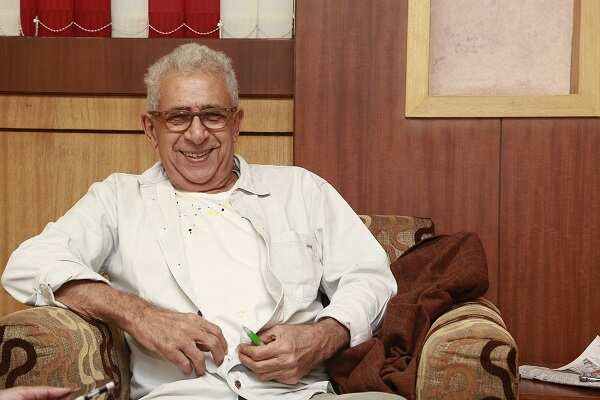
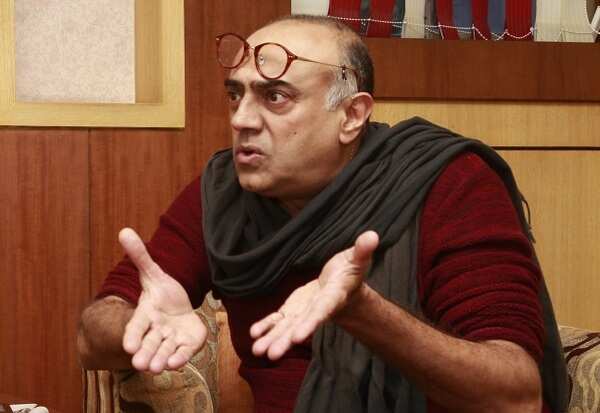
Naseeruddin Shah and Rajit Kapur — two of the finest actors of our generation — were in town with their play, A Walk In The Woods, which closed the Dum Dum National Theatre Festival. The duo’s unapologetic take on artistic freedom in India, the current state of television serials, and the future of cinema in the age of online entertainment led to a lively, impromptu chat. Excerpts:
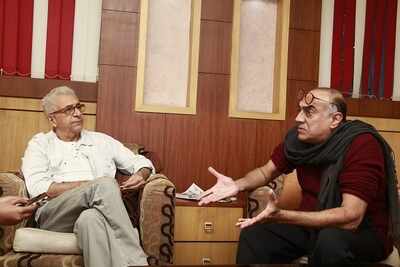

Do you think liberal thoughts and ideas are under threat in India?
Naseeruddin Shah: (Exasperatedly) Why is this question even asked? Isn’t it evident? The place for rational debate has shrunk completely. You can’t say anything without offending someone or the other. The most recent controversy is perhaps Salman Khan saying something innocuous (Salman used the word ‘Bhangi’ to describe his dancing style) and a whole lot of people getting upset. And then we have the Padmavati debate. What is happening is totally and utterly ludicrous. And the government is taking no notice at all.
Rajit Kapur: To second that, you know, we have started personalising everything. Anybody can just get up and say that my sentiments are hurt. What does that mean? So you take the law in your hands? So tomorrow if my sentiments are hurt because you said something today what do I do? Bang your head to the wall? We were far more progressive in the Stone Age because that was a fight for survival and for food.
NS: And this toxic outlet of social media. It is just tapping into people’s worst instincts. I don’t understand why people who make hate speeches should be given so much importance. Why is some idiot who said Virat Kohli and Anushka Sharma should have gotten married in India is in the news? Why is it even reported? He’s a moron who’s making a brain-challenged statement. The fool has become a celebrity nationwide. The media too is responsible.
Censorship — especially in art — has been at the heart of the most heated debates in the country. Take the example of S Durga. Do you think in the age of internet, censorship works?
NS: Censorship exists and it is not a new phenomenon. There was this case during Kissa Kursi Ka. The negatives were burnt by the then government. There was the case of Safdar Hashmi, who was killed by goons sent by the people in power — a theatre activist killed doing a street play. We were the first country to ban Satanic Verses, Jesus Christ Superstar. We’ve always been the moral keeper of the world.
Theatre, right from the time of IPTA, has had a crucial role in pushing the boundaries, questioning established norms. What is your take on the role of theatre in today’s day and age?
NS: Luckily, theatre has not yet become the target of hate-mongers. But I think it is only a matter of time before that happens.
RK: There have been instances though. People took offence to characters being named Ram and Sita. And this is not now. This is 10 years ago. There is this case of Iqbal Khwaja — a young, prolific writer who used to write so well but stopped because he was made to feel he had committed a crime.
NS: It is not just theatre. Bollywood movies, literature. The signs are ominous.
Both of you have worked in television. What do you think of the direction TV has taken in the past decade?
NS: I am very disappointed, but not surprised. Money monsters would take over sooner or later. There used to be literature-based programmes in the early days of Doordarshan. There were serials like Mirza Ghalib, Byomkesh Bakshi, Discovery of India. Gulzar bhai did not get finance to make another serial after Mirza Ghalib as the TRP of that serial was not very high. Over the years, it has become a cult film. I will probably sound like an anti-national when I say this, but we should see the evolution of Pakistani television. They started television much before us. A lot of good writers, it seems, went to Pakistan after the Partition — probably all. What were left here are plagiarists in Mumbai.
RK: There was this channel in India that, until recently, would telecast Pakistani serials. But now it is banned.
NS: Their cinema did not flourish. But their television flourished and the best creative minds went to work in television in Pakistan. And even now, their television production is far superior to ours. And they are not smug about it, because they know it is going to be watched by everybody.
RK: And it is the reverse here. There was an entire generation of directors who started with television and then moved on to directing films. But in the last 12 years, there has not been a director who came out of television. Because the shots are being called by the channel heads and the creative heads who sit in their luxurious offices.
NS: Not just that. They are picking the most regressive kind of values that are being pushed through their programmes. And there is no single director. Every serial has 20 directors or more. Aesthetically, they are ghastly.
RK: Recently someone asked me why I am not working in television of late and I asked him, where is the work? If you are doing a 50-episode series then shouldn’t you get the script months in advance? Even today the scripts are faxed and couriered the night before the shooting.
NS: You are given one script of the pilot episode and you will be told that this is going to run for 200 episodes. If you ask where the scripts are, they will say ‘we will write it as we go along’. Everything in our country has gone the way of Bollywood — beyond redemption.
Do you think the importance of social media — which is always here and now — has reduced our sense of history?
NS: Social media is the equivalent of gossip that would take place in villages around the fire. Now it is an open microphone; the entire world is privy to your conversation. I am sure this kind of malicious conversation has always been there. Now they have got a platform. I think it is one of the most damaging things that have happened to us in terms of technology.
Abroad, actors take time out of their film careers to work on stage — seniors like Al Pacino, young stars like Daniel Radcliffe. Both of you are exceptions, but why don’t we see more cross-sharing of talents and ideas between theatre and cinema here?
RK: Because it is a lot of hard work. We do it because we love doing it. We are ready to take the pressure.
NS: There was a time when a lot of has-been stars were ‘doing great honour to theatre’ by acting in plays and then forgetting their lines. I am glad that phase has ended and it lasted for a year. I don’t blame anybody for not doing theatre. I don’t blame anyone for giving up theatre either. I don’t understand how they gave it up, but I don’t blame them. Also, I believe, someone whose orientation towards acting is through cinema, can’t be a good theatre actor. The reverse is not true. All the best cinema actors in the world come from a theatre background. In the West, the people you just named love stage and that’s why they act in plays. Even in the old days, Richard Burton, Jack Lemmon, Al Pacino all acted on stage. And there are actors who did not. Like Robert De Niro and Jack Nicholson — they did not and they have their reasons.
End of Article
FOLLOW US ON SOCIAL MEDIA









Photostories
entertainment videos

Featured In Movies
Popular Categories
Entertainment NewsBollywood NewsTollywood NewsKollywood NewsMollywood NewsMovie ReviewsLatest Hindi MoviesLatest Tamil MoviesMX PlayerParenting TipsHome RemediesWeight LossBeauty TipsParenting TipsHindi VideosHindi Video SongsBhojpuri Music VideosLatest Telugu MoviesBhojpuri Music VideoHindi TV News
Trending in Entertainment
Latest MoviesBollywood MoviesHollywood MoviesTamil Movies 2024Telugu Movies 2024Malayalam Movies 2024Kannada Movies 2024Marathi Movies 2024Bengali Movies 2024Top Rated Movies 2024Best Hindi MoviesBest English MoviesBest Telugu MoviesBest Tamil MoviesBest Malayalam MoviesBest Kannada MoviesBest Bengali MoviesUpcoming Hindi MoviesBest Movies Of All TimeBest Hindi Movies of All Time
Trending in Etimes
Horoscope TodayNumerology Predictions TodaySean Diddy MotherKarachi Airport ExplosionKamala HarrisJimmy KimmelBelly FatHurricane MiltonSunita WilliamsDepression RiskBelly Fat LossBarbra StreisandSnoring Prevention TipsDonald TrumpElon MuskRelationship TipsLake Michigan DiscoveryRelationship TipsEkadashi in October 2024
Trending in TV
Trending in Lifestyle
Trending in Regional
Movie Reviews
Binny And Family ReviewLove, Sitara ReviewWill & Harper ReviewWolfs ReviewYudhra ReviewJo Tera Hai Woh Mera Hai ReviewKahan Shuru Kahan Khatam ReviewHis Three Daughters ReviewNever Let Go ReviewDancing Village: The Curse Begins ReviewTransformers One ReviewFirst Love ReviewBerlin ReviewThe Buckingham Murders Review
Upcoming Hindi Movies
Upcoming Regional Movies
Latest News
Ranveer Singh: I have a man crush on Tiger ShroffGhum Hai Kisikey Pyaar Meiin: Savi accuses Jigar of misbehaviourYouTube Shorts extends duration to 3 minutes5 must follow rules of Ayurveda to lose 5kg in 30 daysONGC Apprenticeship Recruitment 2024 registration begins: Check direct link hereWWE Hall of Famer Diamond Dallas Page signs new WWE Legends deal'Like a ghost': Manish Sisodia says Arvind Kejriwal has become PM Narendra Modi's 'sole obsession''Singham Again' Trailer: Ranveer Singh kisses wife Deepika Padukone's poster as she skips grand launch eventMy effort in internationalising Shatatantri Veena among the next generation seemingly paying dividends says Tarun Bhattacharya on his return from US TourOptical Illusion: Can you find who's the boss in this picture?'All teams will come to Pakistan for Champions Trophy': PCB chairman on India's participation‘Ke Prothom Kachhe Eshechi’s Mihi aka Radhika Karmakar makes an appearance in ‘Rannaghar’ with her motherVaibhav & Athulya Ravi's 'Chennai City Gangsters' trailerBest Gaming Laptops Under 60000 That Deliver High Performance'Toolkit used to open trunk, paper scanned': CBI gives full details of how UG-NEET paper was leaked'Nervous Nineties': Sachin Tendulkar’s 'unwanted' record in international cricketCleveland Browns coach Kevin Stefanski said the team is “not changing quarterbacks” after Deshaun Watson's poor performanceBigg Boss 18: Chum Darang and Shehzada Dhami lock horns as the latter passes comments on her ethnicity; here’s how she reacted
Other Group Sites -
ETimes is an Entertainment, TV & Lifestyle industrys promotional website and carries advertorials and native advertising.