- News
- entertainment
- bengali
- movies
- Even in death, Mrinalda didn’t compromise what he believed in: Soumitra
Trending
This story is from January 2, 2019
Even in death, Mrinalda didn’t compromise what he believed in: Soumitra
Punascha, Pratinidhi, Akash Kusum and Mahaprithibi — Soumitra Chatterjee had acted in four Mrinal Sen films.
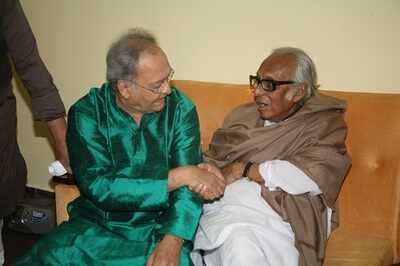
Punascha, Pratinidhi, Akash Kusum and Mahaprithibi — Soumitra Chatterjee had acted in four Mrinal Sen films. Over the years, their bond had only grown in strength. It’s not easy for Soumitra to deal with the bereavement of a person who has been so close to him. Even the recent demise of actor Goutam Dey had deeply impacted him. “I have hardly ever seen my father so disturbed with the news of bereavement. While bapi worked in Mrinal jethu’s films, Goutamda has worked with him in theatre. Bapi can’t accept the fact that someone so younger than him had to leave so early. Though he is a very strong man, death makes him very unsettled. He feels terrible to see a person he loves so dearly lying motionless and still,” said Soumitra’s daughter, Poulami Bose. The consolation, if any, lies in the fact that death can take away a life but it can’t sever a relationship as strong as this. Fond memories linger. Moments spent over long adda sessions on Mrinal’s birthdays return to haunt. As Kolkata bid adieu to the director on Tuesday afternoon, Soumitra revisits the bond that lasted for six decades. Excerpts:
Apart from Satyajit Ray and Tapan Sinha, Mrinalda was one whom I considered as a very dear friend. Our friendship lasted for 60 years. His demise has been a deep personal loss for me. After I heard the news on Sunday, I couldn’t pay a visit to his residence because I had a show scheduled far away from the city. On Tuesday too, I have to go for a shooting of Anindya Dutta’s film to a place close to Santiniketan. Had I been in Kolkata, I would have surely gone over to pay my respect to him.
I must say that this decision also exhibits his honesty. Even in death, he didn’t compromise what he believed in. That’s Mrinalda.
Without a doubt, one will have to acknowledge that he has been one of the most important film directors of his time. Leaving aside Ritwik Ghatak and Manikda (Satyajit Ray), he is the other most important director to have made significant films during the same time period. When I look back and think about his works, I feel his greatest quality was his ideological stance. It was a quality that few directors have cared to exhibit. Mrinalda, of course, was different. Unlike others, he used to consciously allow this ideological stance to percolate into most of his films.

Among Mrinalda’s works, Oka Oori Katha is a personal favourite of mine. So is Matira Manisha. Then, there is Bhuvan Shome. That’s such a delightful film with Utpal Dutt and Suhashini Mulay. I like Akash Kusum too and the reason for it is not just because I had acted in it. Akaler Sandhane, Ek Din Pratidin and the first version of Baishe Srabon too are my favourites. Incidentally, it was after watching my performance in Apur Sansar that Mrinalda first got introduced to me. Since he had liked my performance there, it wouldn’t be wrong to hazard a guess and say that it resulted in him casting me in Punascha.
The journey that began with Punascha continued for decades. There were numerous occasions when Mrinalda and I would sit and discuss politics and national issues. Social infrastructure and political stances would be debated and discussed. With age, when the doctors stopped me from driving on my own, I could no longer go over to his place for our adda sessions. Our interactions became few and far between. Health issues can alone be blamed for playing the spoilsport and ensuring a dip in our meetings.
I don’t know if, during our discussions, I have told Mrinalda how I have often felt that Ray and Ghatak shared a similarity when they made cinema while he took a different path. Both Ray and Ghatak had a heightened sense of basic cinema and were accurate with their shot division. They usually made social films. One could find their individual political viewpoints through their cinema but the films were not essentially political in nature. Mrinalda, on the contrary, went on to direct so many political films. One after the other, his films strongly expressed his political views and were stylistically and ideologically very different from those of Ray and Ghatak. Another contrasting feature between them and Mrinalda was that while most of their films ended on an optimistic note, Mrinalda has been more didactic in
his approach.
Mrinalda’s greatest strength was his ability to write dialogues. He may not have shown the economy or restrain that Ray had when writing screenplays. He may not have been as disciplined or planned a director like Ray. He may not have had a ‘kheror khata’ where every sequence was drawn. But he did have a script and it was only later on that he ventured out to spontaneous improvisations. Those who have read his scripts will know that one of his greatest assets was his dialogue-writing skills. It wouldn’t be too stretched to say that his ability to pen dialogues has remained almost unmatched. Through his dialogues, he captured the essence of Bengali life. Sadly enough, this aspect of his is hardly spoken about in any discourse.
But what is often spoken about is how his ideological stance filtered into almost all his works. In most occasions, he consciously allowed that to happen. Did it get tad boring to find him repeat that? I’m afraid that may have happened too. Yet, Mrinalda didn’t change. One found him following the same track in the Kolkata trilogy. There are shades of it in Mahaprithibi too. It was as if he was consistently and persistently allowing that process to continue. In the final analysis, one can’t help but appreciate his sheer persistence.
It’s not that I always took a liking to all his political films. As a film, Calcutta 71 didn’t appeal to me a lot. Yet, in the long run, I have to appreciate his insistence on having his ideological stance and world view seep into his movies. I haven’t been able to ignore the doggedness of his pursuit. In fact, it’s something that I have started cherishing
as well.
Apart from Satyajit Ray and Tapan Sinha, Mrinalda was one whom I considered as a very dear friend. Our friendship lasted for 60 years. His demise has been a deep personal loss for me. After I heard the news on Sunday, I couldn’t pay a visit to his residence because I had a show scheduled far away from the city. On Tuesday too, I have to go for a shooting of Anindya Dutta’s film to a place close to Santiniketan. Had I been in Kolkata, I would have surely gone over to pay my respect to him.
I must say that this decision also exhibits his honesty. Even in death, he didn’t compromise what he believed in. That’s Mrinalda.
Without a doubt, one will have to acknowledge that he has been one of the most important film directors of his time. Leaving aside Ritwik Ghatak and Manikda (Satyajit Ray), he is the other most important director to have made significant films during the same time period. When I look back and think about his works, I feel his greatest quality was his ideological stance. It was a quality that few directors have cared to exhibit. Mrinalda, of course, was different. Unlike others, he used to consciously allow this ideological stance to percolate into most of his films.
But before analysing this talent of his, I would like to share an anecdote. I think this incident had occurred sometime around 1977-78. I had gone over to Ray’s residence. That day, Ray had seemed particularly excited. It didn’t take me long to realise that the reason for his excitement was a film that he had watched the night before. Referring to Mrinalda’s Telugu film Oka Oori Katha, Ray had told me, “Last night, Mrinal showed me a film that he has directed. It is such a gem. I feel jealous that he has made such a good film!” Clearly, the film had overwhelmed Manikda. It’s rare to come across a comprehensive filmmaker like Ray. To have directed a movie that impressed Manikda to an extent that he spontaneously admitted to feeling jealous of him speaks a lot about how accomplished a maker Mrinalda has been!
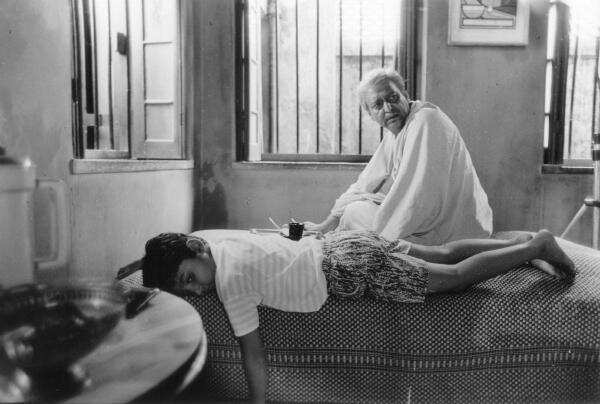
Among Mrinalda’s works, Oka Oori Katha is a personal favourite of mine. So is Matira Manisha. Then, there is Bhuvan Shome. That’s such a delightful film with Utpal Dutt and Suhashini Mulay. I like Akash Kusum too and the reason for it is not just because I had acted in it. Akaler Sandhane, Ek Din Pratidin and the first version of Baishe Srabon too are my favourites. Incidentally, it was after watching my performance in Apur Sansar that Mrinalda first got introduced to me. Since he had liked my performance there, it wouldn’t be wrong to hazard a guess and say that it resulted in him casting me in Punascha.
The journey that began with Punascha continued for decades. There were numerous occasions when Mrinalda and I would sit and discuss politics and national issues. Social infrastructure and political stances would be debated and discussed. With age, when the doctors stopped me from driving on my own, I could no longer go over to his place for our adda sessions. Our interactions became few and far between. Health issues can alone be blamed for playing the spoilsport and ensuring a dip in our meetings.
I don’t know if, during our discussions, I have told Mrinalda how I have often felt that Ray and Ghatak shared a similarity when they made cinema while he took a different path. Both Ray and Ghatak had a heightened sense of basic cinema and were accurate with their shot division. They usually made social films. One could find their individual political viewpoints through their cinema but the films were not essentially political in nature. Mrinalda, on the contrary, went on to direct so many political films. One after the other, his films strongly expressed his political views and were stylistically and ideologically very different from those of Ray and Ghatak. Another contrasting feature between them and Mrinalda was that while most of their films ended on an optimistic note, Mrinalda has been more didactic in
his approach.
Mrinalda’s greatest strength was his ability to write dialogues. He may not have shown the economy or restrain that Ray had when writing screenplays. He may not have been as disciplined or planned a director like Ray. He may not have had a ‘kheror khata’ where every sequence was drawn. But he did have a script and it was only later on that he ventured out to spontaneous improvisations. Those who have read his scripts will know that one of his greatest assets was his dialogue-writing skills. It wouldn’t be too stretched to say that his ability to pen dialogues has remained almost unmatched. Through his dialogues, he captured the essence of Bengali life. Sadly enough, this aspect of his is hardly spoken about in any discourse.
But what is often spoken about is how his ideological stance filtered into almost all his works. In most occasions, he consciously allowed that to happen. Did it get tad boring to find him repeat that? I’m afraid that may have happened too. Yet, Mrinalda didn’t change. One found him following the same track in the Kolkata trilogy. There are shades of it in Mahaprithibi too. It was as if he was consistently and persistently allowing that process to continue. In the final analysis, one can’t help but appreciate his sheer persistence.
It’s not that I always took a liking to all his political films. As a film, Calcutta 71 didn’t appeal to me a lot. Yet, in the long run, I have to appreciate his insistence on having his ideological stance and world view seep into his movies. I haven’t been able to ignore the doggedness of his pursuit. In fact, it’s something that I have started cherishing
as well.
About the Author
Priyanka DasguptaEnd of Article
FOLLOW US ON SOCIAL MEDIA









Photostories
entertainment videos
Featured In Movies
Popular Categories
Entertainment NewsBollywood NewsTollywood NewsKollywood NewsMollywood NewsMovie ReviewsLatest Hindi MoviesLatest Tamil MoviesMX PlayerParenting TipsHome RemediesWeight LossBeauty TipsParenting TipsHindi VideosHindi Video SongsBhojpuri Music VideosLatest Telugu MoviesBhojpuri Music VideoHindi TV News
Trending in Entertainment
Latest MoviesBollywood MoviesHollywood MoviesTamil Movies 2024Telugu Movies 2024Malayalam Movies 2024Kannada Movies 2024Marathi Movies 2024Bengali Movies 2024Top Rated Movies 2024Best Hindi MoviesBest English MoviesBest Telugu MoviesBest Tamil MoviesBest Malayalam MoviesBest Kannada MoviesBest Bengali MoviesUpcoming Hindi MoviesBest Movies Of All TimeBest Hindi Movies of All Time
Trending in Etimes
Trending in TV
Trending in Lifestyle
Trending in Regional
Movie Reviews
Berlin ReviewThe Buckingham Murders ReviewSpeak No Evil ReviewVisfot ReviewThalapathy Is The G.O.A.T ReviewRebel Ridge ReviewDetective Conan vs. Kid the Phantom Thief ReviewBeetlejuice Beetlejuice ReviewPad Gaye Pange ReviewA Wedding Story ReviewThe Diary Of West Bengal ReviewTikdam ReviewKinds Of Kindness ReviewAfraid Review
Upcoming Hindi Movies
Upcoming Regional Movies
Latest News
Odisha to join Ayushman plan; Delhi, Bengal to be only holdouts4 types of tea to improve gut health and ease digestive issuesWhen Shah Rukh Khan performed 'Kanyadaan' at Farah Khan's wedding- See PICSFather-son duo Eugene and Dan Levy's dazzling entrance at the Emmys'Will hug my kids extra tight tonight': JD Vance after Trump 'assassination attempt'Bengal govt blames junior docs for logjam but sends fresh offer for talksLodi-era mosque collapses in AgraVineet Kumar Singh calls Superboys of Malegaon standing ovation at TIFF a 'magical experience': 'I can still hear the clapping and whistling" - ExclusiveLast Lunar Eclipse of 2024: What it means for your zodiac signKavin and Nelson's fan moment with Ajith KumarAce product management with IIM Lucknow’s Executive Programme in Data-Driven Product Management'India best bet in 21st Century': PM Modi inaugurates 4th Global Renewable Energy Investor's meet in GujaratKejriwal says he will quit as CM in 2 days, wants aam aadmi's 'honesty certificate'Jessica Gunning wins her 1st Primetime Emmy for 'Baby Reindeer'‘Stree 2’ star Shraddha Kapoor to reveal her character name! But there’s a catchSathiyan set to partner Sreeja in mixed doubles'Seven varsities in Odisha have potential to be in top 100'Capricorn, Daily Horoscope Today, September 16, 2024: Harmonious relationships with partners are likely
Other Group Sites -
ETimes is an Entertainment, TV & Lifestyle industrys promotional website and carries advertorials and native advertising.