- News
- entertainment
- bengali
- movies
- Ek Din Pratidin was my favourite: Adoor Gopalakrishnan
Trending
This story is from December 31, 2018
Ek Din Pratidin was my favourite: Adoor Gopalakrishnan
He stays in Trivandrum but his heart is in Kolkata where, on Sunday morning, his “elder brother” Mrinal Sen breathed his last.
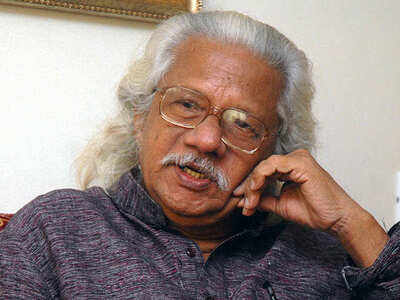
He stays in Trivandrum but his heart is in Kolkata where, on Sunday morning, his “elder brother” Mrinal Sen breathed his last. It takes some time for legendary director Adoor Gopalakrishnan to collect his thoughts about his mentor. The demise of Sen’s wife — actor Geeta Sen — had come as a shock for him. The last Sunday of 2018 was the day when he said Indian cinema lost the last of the “formidable trinity”. Excerpts from an interview with the director.
You have shared a long association with Mrinal Sen…
Mrinal Sen was one of the greatest of Indian filmmakers. In his demise, we have lost the last of the formidable trinity of our cinema. He was a humanist to the core and a film-maker par excellence. He was never shy of experimenting with the medium. He, of course, had to fight a long battle to be noticed as opposed to the early recognition that came to Ray in abundance from the beginning. But he never gave up. His films were greatly inspired by the hapless and the downtrodden. His concerns for the have nots and the uprooted in several films of his served as a leitmotif. For me, he was a guide and an elder brother who always took a keen interest in my work. Every time, I made a film, I was particular to show it to him and get his response. Fortunately, he had been indulgently generous with his comments. Cinema was his passion. He dreamed cinema, breathed cinema and lived cinema.
It’s difficult to choose. But can you select one film of Sen that has left a lasting impression on you?
Why do you say that?
This film deals with the middle-class morale, mentality of life, how it is outdated and needs to be challenged. When somebody who earns the livelihood of a family returns home late, all kinds of questions are raised. Their anger, their bitterness — everything comes up. It is a remarkable film. Probably, this establishes him as a real master. The other film I really like is
Even today the subject of Kharij is so contemporary…
Yes. In the film when the father comes, both the audience and the head of the family are so afraid that he might ask so many questions. But, he doesn’t ask anything. He is so poor and innocent. The film is such a great treatment of human situation.
Do you think the subjects that he was dealing with and the reaction of society that he saw in his films are still very contemporary? Even today if a working woman returns late at night, she might be asked all sorts of questions...
Yes, of course. These reactions are true for all times. It even holds true in case of a film like Interview.
How did you get introduced to his cinema?
I saw his films at the Film and Television Institute of India. He never visited the institute when I was there. After I left the institute, he used to come there. Before him, Ritwik Ghatak was there at the institute.
Were you a student of Ghatak?
Yes. He had a different kind of an aura. I have never studied under Sen directly. I still remember our good relations started when we saw Swayamvaram. Since then, he liked my work. He and his wife, Geetadi, were family. It is difficult to have lost both in such close proximity.
When was the last time you met him?
After Geetadi left, I saw him once. When Geetadi was alive, I had gone to their house. They would lie in two adjacent beds. The next time I saw him, he was up and seated at the dining table. We were all there talking to us. I used to always tell him, ‘Mrinalda, you can’t grow old. We won’t let you do that. You are young. Always young.’
Do you find anyone who can truly carry forward his legacy?
There are one or two directors. Mrinalda had a thirst for life. We are all inspired by him and the spirit he had. He never gave up.
You have shared a long association with Mrinal Sen…
Mrinal Sen was one of the greatest of Indian filmmakers. In his demise, we have lost the last of the formidable trinity of our cinema. He was a humanist to the core and a film-maker par excellence. He was never shy of experimenting with the medium. He, of course, had to fight a long battle to be noticed as opposed to the early recognition that came to Ray in abundance from the beginning. But he never gave up. His films were greatly inspired by the hapless and the downtrodden. His concerns for the have nots and the uprooted in several films of his served as a leitmotif. For me, he was a guide and an elder brother who always took a keen interest in my work. Every time, I made a film, I was particular to show it to him and get his response. Fortunately, he had been indulgently generous with his comments. Cinema was his passion. He dreamed cinema, breathed cinema and lived cinema.
It’s difficult to choose. But can you select one film of Sen that has left a lasting impression on you?
That would be Ek Din Pratidin.
Why do you say that?
This film deals with the middle-class morale, mentality of life, how it is outdated and needs to be challenged. When somebody who earns the livelihood of a family returns home late, all kinds of questions are raised. Their anger, their bitterness — everything comes up. It is a remarkable film. Probably, this establishes him as a real master. The other film I really like is
Kharij. That comes second in my list of favourites. Calcutta 71 comes third.
Even today the subject of Kharij is so contemporary…
Yes. In the film when the father comes, both the audience and the head of the family are so afraid that he might ask so many questions. But, he doesn’t ask anything. He is so poor and innocent. The film is such a great treatment of human situation.
Do you think the subjects that he was dealing with and the reaction of society that he saw in his films are still very contemporary? Even today if a working woman returns late at night, she might be asked all sorts of questions...
Yes, of course. These reactions are true for all times. It even holds true in case of a film like Interview.
How did you get introduced to his cinema?
I saw his films at the Film and Television Institute of India. He never visited the institute when I was there. After I left the institute, he used to come there. Before him, Ritwik Ghatak was there at the institute.
Were you a student of Ghatak?
Yes. He had a different kind of an aura. I have never studied under Sen directly. I still remember our good relations started when we saw Swayamvaram. Since then, he liked my work. He and his wife, Geetadi, were family. It is difficult to have lost both in such close proximity.
When was the last time you met him?
After Geetadi left, I saw him once. When Geetadi was alive, I had gone to their house. They would lie in two adjacent beds. The next time I saw him, he was up and seated at the dining table. We were all there talking to us. I used to always tell him, ‘Mrinalda, you can’t grow old. We won’t let you do that. You are young. Always young.’
Do you find anyone who can truly carry forward his legacy?
There are one or two directors. Mrinalda had a thirst for life. We are all inspired by him and the spirit he had. He never gave up.

About the Author
Priyanka DasguptaEnd of Article
FOLLOW US ON SOCIAL MEDIA







entertainment videos
Featured In Movies
Popular Categories
Entertainment NewsBollywood NewsTollywood NewsKollywood NewsMollywood NewsMovie ReviewsLatest Hindi MoviesLatest Tamil MoviesMX PlayerParenting TipsHome RemediesWeight LossBeauty TipsParenting TipsHindi VideosHindi Video SongsBhojpuri Music VideosLatest Telugu MoviesBhojpuri Music VideoHindi TV News
Trending in Entertainment
Latest MoviesBollywood MoviesHollywood MoviesTamil Movies 2024Telugu Movies 2024Malayalam Movies 2024Kannada Movies 2024Marathi Movies 2024Bengali Movies 2024Top Rated Movies 2024Best Hindi MoviesBest English MoviesBest Telugu MoviesBest Tamil MoviesBest Malayalam MoviesBest Kannada MoviesBest Bengali MoviesUpcoming Hindi MoviesBest Movies Of All TimeBest Hindi Movies of All Time
Trending in Etimes
Horoscope TodayNumerology Predictions TodayDinner With TrumpTim WalzIvanka TrumpJose LopezKristina JoksimovicJoe WilsonTrump Eating The Dogs SongGermany NewsKamala HarrisPrince HarryPatriot Day 2024Diabetes RiskHappy Mindfulness Day 2024Trump Vs HarrisJoe JonasPositive Thinking Day 2024Dave Bautista
Trending in TV
Trending in Lifestyle
Trending in Regional
Movie Reviews
Visfot ReviewThalapathy Is The G.O.A.T ReviewRebel Ridge ReviewDetective Conan vs. Kid the Phantom Thief ReviewBeetlejuice Beetlejuice ReviewPad Gaye Pange ReviewA Wedding Story ReviewThe Diary Of West Bengal ReviewTikdam ReviewKinds Of Kindness ReviewAfraid ReviewThe Deliverance ReviewBlue Lock: Episode Nagi ReviewDaddio Review
Upcoming Hindi Movies
Upcoming Regional Movies
Latest News
7. Hindi becomes officialSalman Khan surrounded by bodyguards as he arrives at Malaika Arora's mother's house to offer his condolences - WATCHJulie Chen to miss Big Brother live eviction for first time, taps Jerry O'Connell to hostBonedi baris hope for a peaceful start to PujoNIA raids pro-Khalistan preacher Amritpal Singh's relative's house in AmritsarA vision unfolds: How Levitation is crafting tomorrow’s enterprise solutionsPreschools turn nursing homes, retirement age raised: China's demographic crisis explodesTovino Thomas praises Prithviraj Sukumaran as director: "One of the brilliant directors I have ever worked with"Tragedy strikes at fundraiser: Mother of two dies after marshmallow-eating competitionMan shot near Delhi's Greater Kailash-I gym, gang war suspected8 animals that reproduce without matingHow a balanced pH helps maintain your skin’s youthful appearance'Cops stood as mute spectators': Protesting doctors write to President over RG Kar impasseStree 2 box office collection: Shraddha Kapoor and Rajkummar Rao starrer clocks Rs 539 croreISL-11 opener: Familiar foes back in businessFatal crash in Australia's Netherby claims life of ToddlerBiden to host fourth quad summit with PM Modi, Albanese, and Kishida in Delaware on September 21: White HouseNASA to establish New Lunar Time Standard with Coordinated Lunar Time (LTC) initiative
Other Group Sites -
ETimes is an Entertainment, TV & Lifestyle industrys promotional website and carries advertorials and native advertising.