- News
- entertainment
- bengali
- movies
- Bengalis have been more angsty about Sourav getting dropped than Netaji not getting his due: Srijit
Trending
This story is from January 23, 2021
Bengalis have been more angsty about Sourav getting dropped than Netaji not getting his due: Srijit
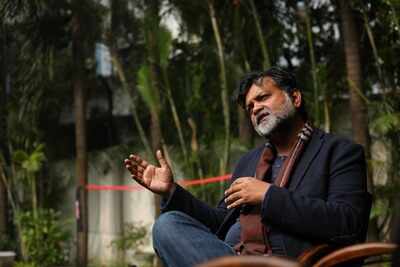
Srijit Mukherji’s Gumnaami, starring Prosenjit Chatterjee as Subhash Chandra Bose has stoked controversy ever since it released in 2019. While On the occasion of Netaji’s 125th Birth Anniversary, CT spoke to the filmmaker about the film, the many challenges that he faced and why he thinks Bengalis may have failed their greatest national hero. Excerpts:
Is Gumnaami an expression of the angst that Bengalis have always felt about Netaji not getting his due in Indian history?
Srijit: I generally feel the angst and not-getting-our-due kind of sentiments work majorly with Bengalis. But unfortunately that has expressed itself much more strongly and violently in the case of Sourav Ganguly than Subhash Chandra Bose. That sentiment came out whenever Sourav was unfairly dropped. In the case of Subhash Bose, apart from the undying sentiment that he is going to return, politically he was considered to be a tragic hero — that is all. In terms of unfairness or not getting his due, these are phrases I would have liked our previous generations to come up with, and act upon and position themselves strongly. I have not seen evidence of that happening.
Bengal has always been very, very reverential about Gandhiji and ahimsa — doctrines that were the polar opposite of what Bose stood for. We have unquestioningly admitted that ahimsa was what gave us freedom. Generally, the angst and heartburn about Netaji not getting his due in Indian history should have been much more.
I often thought about how we have made biopics of so many people, but why on a national level there has not been much about Netaji ever made. Barring Shyam Benegal’s film, which was more of a documentary kind of approach, had state intervention.

My narrative was very simple. Questions needed to be asked, uncomfortable questions, theories needed to be discussed, truth is something which we can come to later. We need to ask the questions first. Systematically over the last few decades, questions have been muffled, people have been misled, commissions made in a makeshift kind of manner, not with the rigour one of our greatest national heroes deserves.
Ad hoc decisions have been taken, parties and successive governments that have not found commission reports to their liking have suppressed them. All political parties, maybe, have something to hide. As a result, the common Indian who breathes free India’s air, he/she is pushed away further and further away from the truth. My narrative was about asking those questions.
What was the reaction of those who you seem to have rattled when you raised these questions?
I raised questions which were not nice and faced roadblocks, death threats, high court injunctions, was trolled, bullied. There were Harvard professors on national platforms attacking me personally, rambling without logic, with total lack of reasoning and just resorting to emotional tickling. When these happen, you know you are on the right track. Because these questions put a lot of committee, parties, their fundings, certain lobbies, factions of Netaji’s family under the scanner.
It was not an easy journey. But we owed this as a collective populace of a free country to a person who probably is the most important reason why we are free. So, the angst that you talk about is for real. But Gumnaami is not an imposition of any belief but an emphasis on the fact that we need to ask these questions. The angst is for real, and it finds its way through Gumnaami. All the three theories - the plane crash, death in Russia and his return to India as Gumnaami need to be known and discussed. Sides need to be taken. And I have taken a side.
Why did you call your film Gumnaami and not Gumnaami Baba?
At the end of the day, whatever belief I might have, I was not there when it happened. I will still like to keep an element of doubt - it is very important because you cannot say for sure, but only ‘most probably.’ It is different when you say Baba.
Gumnaami means the unknown, which fits beautifully with all the theories. We don’t know what happened in the plane crash or in Russia or his return. So moment you put a Baba to Gumnaami, you are imposing and pushing. Taking a stand is something and forcing something down someone’s gullet is something else.
When I was making the film, there was a lot of controversy because I was basing it on Anuj and Chandrachur’s hypothesis. I spent half the film on the plane crash, little bit on Russian theory since I had the resources to shoot there. It is important to acknowledge that there are other theories, questions are asked. Yes, Gumnaami Baba has most evidence going in favour, but I am still not 100 per cent certain. All the evidences are circumstantial, so “most probably” is the best way to address the loopholes, the two schools of thought, the missing DNA - since the plane crash theory has long been debunked.
You have said in your film that Netaji was man of contradictions. Is that why he is a prime candidate for cultural and ideological appropriation?
Netaji had a misunderstanding or fallout with Congress and chose his own path, so technically he was anti-Congress. That makes him easy material for a particular party to appropriate. The same person has also written extensively in favour of secularism and categorically taken the names of religiously fundamental outfits as ‘dangerous for communal harmony.’ This aspect of him has been appropriated by those who are anti-right wing.
He was also a religious and spiritual person who worshipped the mother goddess, and that made him attractive for any outfit where religion was an adorning principle. So, here we have a devout Hindu who worshipped idols, but who is extremely secular, whose right-hand man was a Muslim, who is also intensely secular in the sense, with an army full of Muslim generals, and yet the party which he formed eventually became a part of the Left combine. His venn diagram is incredible!
On top of that he was a stupendous political strategist, a braveheart and a selfless son of India. He was a giant in every sense — with a certain charisma and imposing presence if you look at the footage and the photographs available. It is but natural for everyone to come and pick what is convenient for them and appropriate Netaji for themselves.
How do you wish for the conversation that you started with Gumnaami, to continue?
We should keep the awareness going. Ask those questions, discuss theories. We should also get into the details of what Azad Hind Fauj actually did. The few paras we had been gifted is not enough. The contribution goes right up to the Red Fort trials, naval mutiny. Most British spies came back and said that the fire that Bose lit is going to multiply. So let us get out of this country in a hurry and let’s not tempt them anymore. Or else it will be 1857 into five. We need to study this in detail, even if it undermines the state sponsored narrative of ahimsa. I mean, look at Gandhi, the film. How can we show a film about Gandhi without Bose? You need to understand, why a film with blessings and fundings of the Indian government does not have a single shot of Netaji. Despite their differences, they were intrinsically entwined in the freedom struggle. You have to mention both if you have to be fair.
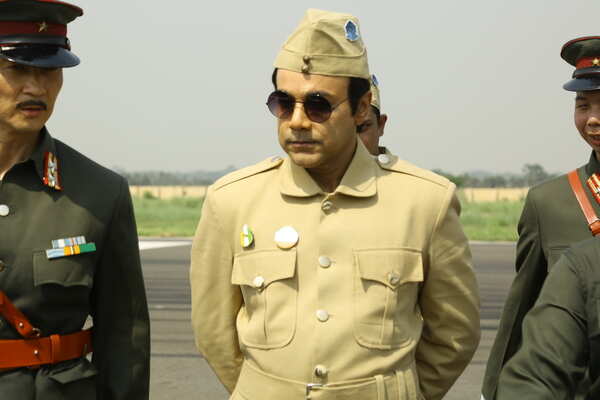
Prosenjit himself was not convinced about portraying Netaji. Why were you convinced about him being the perfect fit?
Yes, there were structural dissimilarities between him and Netaji. But I could not think of any other actor with the shoulders to carry the mantle of Netaji. Netaji comes with such a legacy that it is very, very important for a person to have a certain kind of presence on screen. Bumbada has a certain strength of his own, which would help. Also it needed a lot of hard work - hours of makeup, shooting in sweltering heat, prosthetics and dubbing. It needs tremendous physical and mental strength and I had already seen it in Prosenjit. He has gone to incredible lengths to get under the skin of the characters he plays. My job was to convince him that I had my reasons for casting him. It was a difficult role to cast, a difficult pitch, and I went with one of my best batsmen.
How would you describe the Gumnaami experience in a line?
It is the closest I would ever come to serving my country.
Is Gumnaami an expression of the angst that Bengalis have always felt about Netaji not getting his due in Indian history?
Srijit: I generally feel the angst and not-getting-our-due kind of sentiments work majorly with Bengalis.
Bengal has always been very, very reverential about Gandhiji and ahimsa — doctrines that were the polar opposite of what Bose stood for. We have unquestioningly admitted that ahimsa was what gave us freedom. Generally, the angst and heartburn about Netaji not getting his due in Indian history should have been much more.
Srijit, you based your film on the various commissions, hypotheses, some facts and some hearsay. A lot of things were fictionalised as well. How did you sift through all this to arrive at your narrative?
I often thought about how we have made biopics of so many people, but why on a national level there has not been much about Netaji ever made. Barring Shyam Benegal’s film, which was more of a documentary kind of approach, had state intervention.
My narrative was very simple. Questions needed to be asked, uncomfortable questions, theories needed to be discussed, truth is something which we can come to later. We need to ask the questions first. Systematically over the last few decades, questions have been muffled, people have been misled, commissions made in a makeshift kind of manner, not with the rigour one of our greatest national heroes deserves.
Ad hoc decisions have been taken, parties and successive governments that have not found commission reports to their liking have suppressed them. All political parties, maybe, have something to hide. As a result, the common Indian who breathes free India’s air, he/she is pushed away further and further away from the truth. My narrative was about asking those questions.
What was the reaction of those who you seem to have rattled when you raised these questions?
I raised questions which were not nice and faced roadblocks, death threats, high court injunctions, was trolled, bullied. There were Harvard professors on national platforms attacking me personally, rambling without logic, with total lack of reasoning and just resorting to emotional tickling. When these happen, you know you are on the right track. Because these questions put a lot of committee, parties, their fundings, certain lobbies, factions of Netaji’s family under the scanner.
It was not an easy journey. But we owed this as a collective populace of a free country to a person who probably is the most important reason why we are free. So, the angst that you talk about is for real. But Gumnaami is not an imposition of any belief but an emphasis on the fact that we need to ask these questions. The angst is for real, and it finds its way through Gumnaami. All the three theories - the plane crash, death in Russia and his return to India as Gumnaami need to be known and discussed. Sides need to be taken. And I have taken a side.
Why did you call your film Gumnaami and not Gumnaami Baba?
At the end of the day, whatever belief I might have, I was not there when it happened. I will still like to keep an element of doubt - it is very important because you cannot say for sure, but only ‘most probably.’ It is different when you say Baba.
Gumnaami means the unknown, which fits beautifully with all the theories. We don’t know what happened in the plane crash or in Russia or his return. So moment you put a Baba to Gumnaami, you are imposing and pushing. Taking a stand is something and forcing something down someone’s gullet is something else.
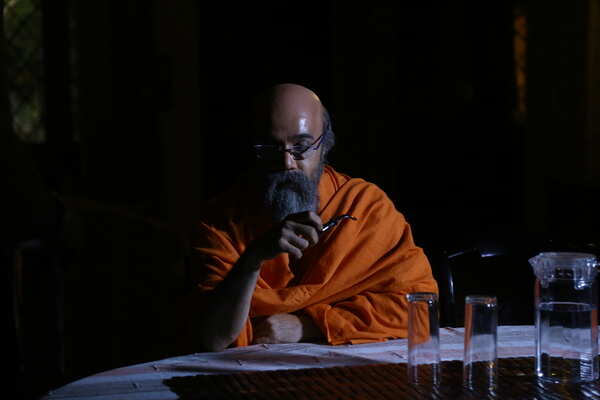
When I was making the film, there was a lot of controversy because I was basing it on Anuj and Chandrachur’s hypothesis. I spent half the film on the plane crash, little bit on Russian theory since I had the resources to shoot there. It is important to acknowledge that there are other theories, questions are asked. Yes, Gumnaami Baba has most evidence going in favour, but I am still not 100 per cent certain. All the evidences are circumstantial, so “most probably” is the best way to address the loopholes, the two schools of thought, the missing DNA - since the plane crash theory has long been debunked.
You have said in your film that Netaji was man of contradictions. Is that why he is a prime candidate for cultural and ideological appropriation?
Netaji had a misunderstanding or fallout with Congress and chose his own path, so technically he was anti-Congress. That makes him easy material for a particular party to appropriate. The same person has also written extensively in favour of secularism and categorically taken the names of religiously fundamental outfits as ‘dangerous for communal harmony.’ This aspect of him has been appropriated by those who are anti-right wing.
He was also a religious and spiritual person who worshipped the mother goddess, and that made him attractive for any outfit where religion was an adorning principle. So, here we have a devout Hindu who worshipped idols, but who is extremely secular, whose right-hand man was a Muslim, who is also intensely secular in the sense, with an army full of Muslim generals, and yet the party which he formed eventually became a part of the Left combine. His venn diagram is incredible!
On top of that he was a stupendous political strategist, a braveheart and a selfless son of India. He was a giant in every sense — with a certain charisma and imposing presence if you look at the footage and the photographs available. It is but natural for everyone to come and pick what is convenient for them and appropriate Netaji for themselves.
How do you wish for the conversation that you started with Gumnaami, to continue?
We should keep the awareness going. Ask those questions, discuss theories. We should also get into the details of what Azad Hind Fauj actually did. The few paras we had been gifted is not enough. The contribution goes right up to the Red Fort trials, naval mutiny. Most British spies came back and said that the fire that Bose lit is going to multiply. So let us get out of this country in a hurry and let’s not tempt them anymore. Or else it will be 1857 into five. We need to study this in detail, even if it undermines the state sponsored narrative of ahimsa. I mean, look at Gandhi, the film. How can we show a film about Gandhi without Bose? You need to understand, why a film with blessings and fundings of the Indian government does not have a single shot of Netaji. Despite their differences, they were intrinsically entwined in the freedom struggle. You have to mention both if you have to be fair.
Prosenjit himself was not convinced about portraying Netaji. Why were you convinced about him being the perfect fit?
Yes, there were structural dissimilarities between him and Netaji. But I could not think of any other actor with the shoulders to carry the mantle of Netaji. Netaji comes with such a legacy that it is very, very important for a person to have a certain kind of presence on screen. Bumbada has a certain strength of his own, which would help. Also it needed a lot of hard work - hours of makeup, shooting in sweltering heat, prosthetics and dubbing. It needs tremendous physical and mental strength and I had already seen it in Prosenjit. He has gone to incredible lengths to get under the skin of the characters he plays. My job was to convince him that I had my reasons for casting him. It was a difficult role to cast, a difficult pitch, and I went with one of my best batsmen.
How would you describe the Gumnaami experience in a line?
It is the closest I would ever come to serving my country.
End of Article
FOLLOW US ON SOCIAL MEDIA







Photostories
entertainment videos
Featured In Movies
Popular Categories
Entertainment NewsBollywood NewsTollywood NewsKollywood NewsMollywood NewsMovie ReviewsLatest Hindi MoviesLatest Tamil MoviesMX PlayerParenting TipsHome RemediesWeight LossBeauty TipsParenting TipsHindi VideosHindi Video SongsBhojpuri Music VideosLatest Telugu MoviesBhojpuri Music VideoHindi TV News
Trending in Entertainment
Latest MoviesBollywood MoviesHollywood MoviesTamil Movies 2024Telugu Movies 2024Malayalam Movies 2024Kannada Movies 2024Marathi Movies 2024Bengali Movies 2024Top Rated Movies 2024Best Hindi MoviesBest English MoviesBest Telugu MoviesBest Tamil MoviesBest Malayalam MoviesBest Kannada MoviesBest Bengali MoviesUpcoming Hindi MoviesBest Movies Of All TimeBest Hindi Movies of All Time
Trending in Etimes
Horoscope TodayNumerology Predictions TodayKamala HarrisHezbollah Pager ExplosionBarron TrumpElon MuskTupperware BankruptcyJustin TrudeauTrump Town Hall Key TakeawaysGermany NewsDonald TrumpPrince HarryBelly Fat LossSituationship TipsFull Moon in September 2024Relationship TipsSean DiddyMiley CyrusAtishi Marlena
Trending in TV
Trending in Lifestyle
Trending in Regional
Movie Reviews
Berlin ReviewThe Buckingham Murders ReviewSpeak No Evil ReviewVisfot ReviewThalapathy Is The G.O.A.T ReviewRebel Ridge ReviewDetective Conan vs. Kid the Phantom Thief ReviewBeetlejuice Beetlejuice ReviewPad Gaye Pange ReviewA Wedding Story ReviewThe Diary Of West Bengal ReviewTikdam ReviewKinds Of Kindness ReviewAfraid Review
Upcoming Hindi Movies
Upcoming Regional Movies
Latest News
Throwback: When Aishwarya Rai said that dignity is 'extremely precious' to her; 'The way I have been brought up.....'Shilpa Shetty just rolled out the latest sari trend 'a rainbow sari''Could restore sight': FDA grants 'breakthrough status' to Musk’s Neuralink 'Blindsight' implant. What it meansCM Punk to Step In as Guest Referee for NXT Title Match at WWE NXT Chicago EventWaterborne disease cases spiked after flood in VadodaraThe man who wants to 'cancel' Adani from Sri LankaSuriya to play the antagonist in 'Dhoom 4', here's what we know11 get new lease of life with organs from two in SuratMrBeast aka Jimmy Donaldson, Amazon sued by ‘Beast Games’ contestants over sexual harassment and chronic mistreatment allegations - reportsAmazon India appoints new country headBigg Boss Tamil 8: Actress Sachana Namidass to participate in the upcoming season?India 'very big abuser' of trade ties with US, says Donald TrumpJr NTR's 'Devara: Part 1' to have early morning showsGrieving mom's heart-wrenching letter blames toxic culture for daughter’s deathRicky Ponting is new Punjab Kings head coach: SourceA lot at stake as Mohun Bagan get ready for Asian footballWhy am I feeling irritable? Common causes of mood swings and how to manage themPoonam Kaur calls out MAA over inaction on Trivikram complaint amid Jani Master allegations
Other Group Sites -
ETimes is an Entertainment, TV & Lifestyle industrys promotional website and carries advertorials and native advertising.