- News
- entertainment
- bengali
- movies
- 65 years of ‘Pather Panchali’: These off-screen facts you didn’t know about the Satyajit Ray classic
Trending
This story is from August 27, 2020
65 years of ‘Pather Panchali’: These off-screen facts you didn’t know about the Satyajit Ray classic
Indian cinema's identity in international arena changed the day ‘Pather Panchali’ released inb1955. Based on Bibhuti Bhushan Bandopadhyay's novel on the same title, Satyajit Ray’s cult classic showed the plight of a lower-middle-class family with Apu being the protagonist with his sister Durga, mother Sarbajaya, father Harihar and grandmother Indir Thakrun.
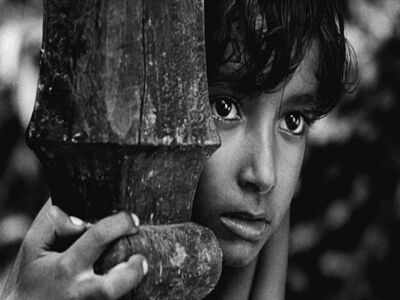

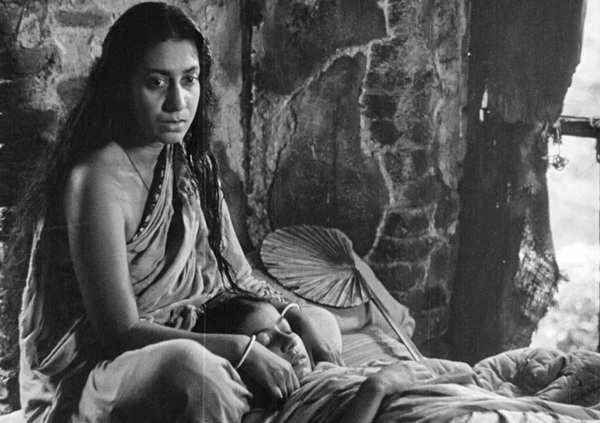
Halfway through filming, Ray ran out of funds. The Government of West Bengal loaned him the rest, allowing him to complete the film. This loan is listed in public records at the time as "roads improvement", a nod to the film's translated title.
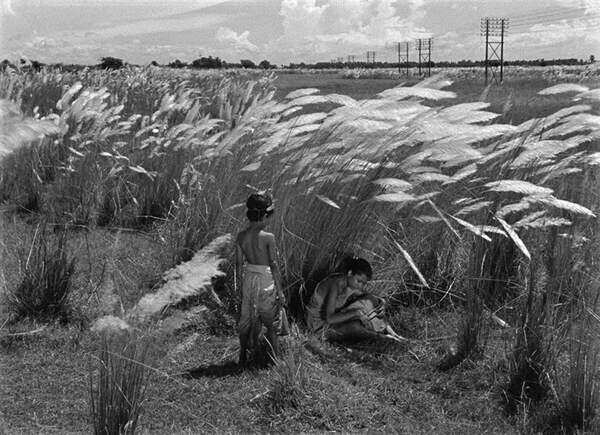
Because of all the many delays in this film's nearly three-year production, director Satyajit Ray became increasingly apprehensive that some event might occur to prevent his finishing it. In fact, he attributed his success in that regard to three miraculous occurrences (or rather non-occurrences), referring to his cast by their character names: "One, Apu's voice did not break. Two, Durga did not grow up. Three, Indir Thakrun did not die."
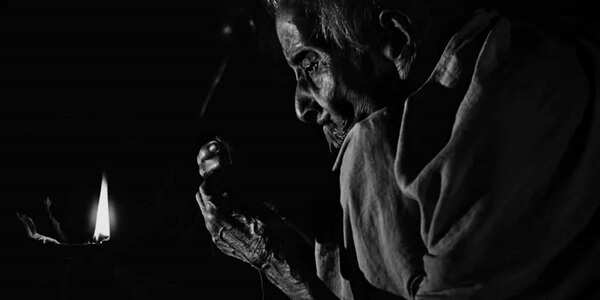
Legend has it that on the first day of shooting, Satyajit Ray had never directed a scene, his cameraman Subrata Mitra had never photographed one and none of his child actors had even been screentested for their roles.

Made on a shoestring budget, even to the extent that Ray sold some of his beloved LPs as well as his life insurance policy while his wife Bijoya was convinced to pawn her jewels.

The original negative for the film was burned in a fire in 1993. Amazingly, the damaged film was restored as the negative was rehydrated, repaired and scanned in 4K resolution.
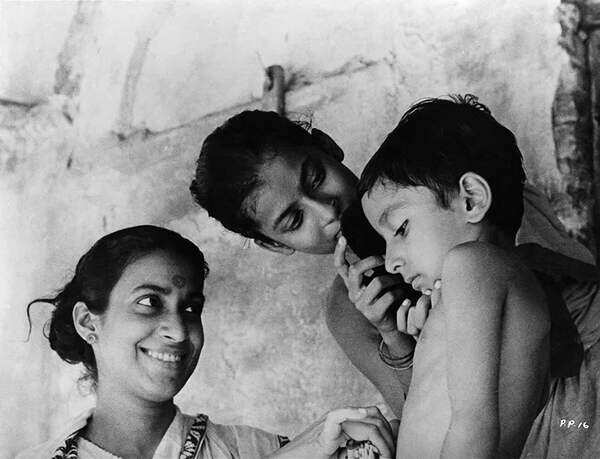
Panther Panchali is the first film from independent India to attract major international critical attention. It not only won India's "National Film Award for Best Feature Film" in 1955; but, also, the "Best Human Document" award at the 1956 Cannes Film Festival, and several other awards and accolades.
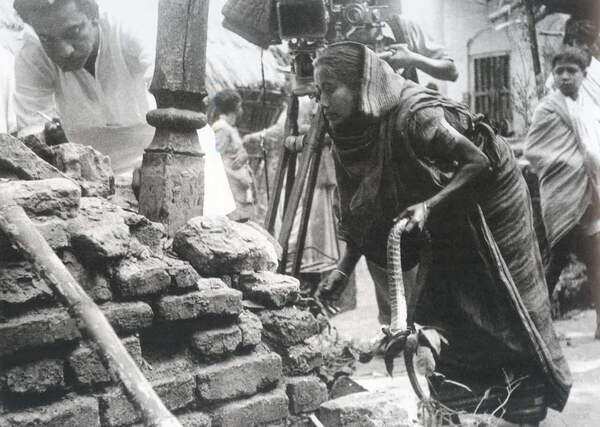
Most of the music for the film was composed by Ravi Shankar. While composing the score, Shankar was only able to see about half the film. He ended up recording most of the music for the film in one 11 hour session. The film's cinematographer Subrata Mitra, who like Shankar played the sitar, provided additional music for the remaining score.
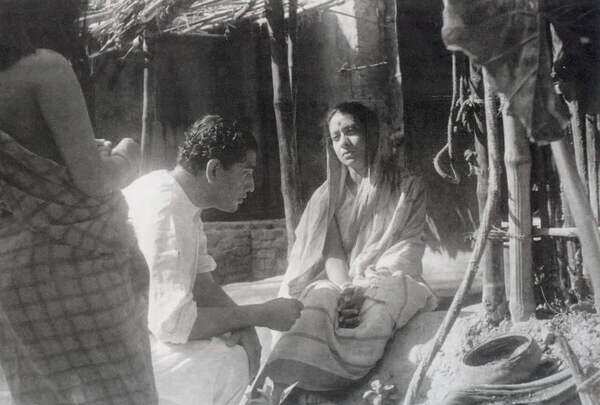
The film never had a complete screenplay. The cast took most of their cues from Ray's drawings and notes.
Satyajit Ray, although he allegedly received a verbal promise of payment for his work as director from the Government of West Bengal after it took over production of this film, in fact received absolutely no compensation of any kind, despite having worked on it (often at his own expense) for almost three years. Ray was philosophical about this, as he much preferred the international fame the film brought him to any monetary reward.

Incidentally, the Mother "Sarbojaya Ray" - Karuna Bannerjee (as Karuna Bandopadhyay) and the younger "Durga" - Runki (Shampa) Banerjee (as Runki Bandopadhyay) are actual mother and daughter.
Oddly enough, the film’s premiere actually took place at New York's Museum of Modern Art (MOMA) on May 3, 1955 - in conjunction with the museum's "Textiles and Ornamental Arts of India" exhibition. It was then released later that same year in Calcutta, India. It was not released to a wide audience in the USA, until three years later, on September 22, 1958.
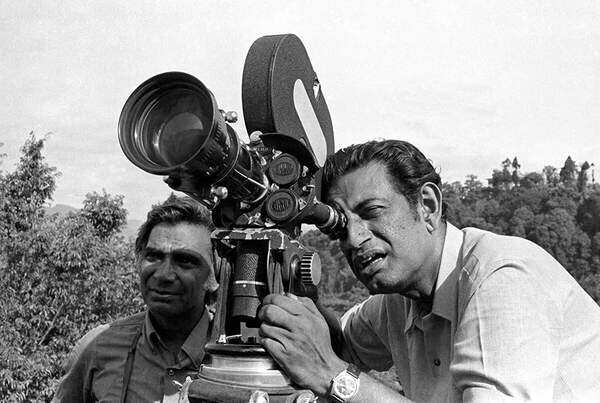
This film was shot piecewise over five years; often, production was halted due to lack of funds. Eventually, the West Bengal Government provided enough money for Satyajit Ray to complete the film.
Ray's adaptation of Bibhutibhushan Bandopadhyay’s semi-autobiographical novel differs significantly from its source. Ray restructured the entire story and threw out elements that he felt were unnecessary.
All Image credits: IMDB
End of Article
FOLLOW US ON SOCIAL MEDIA







Photostories
entertainment videos
Featured In Movies

Popular Categories
Entertainment NewsBollywood NewsTollywood NewsKollywood NewsMollywood NewsMovie ReviewsLatest Hindi MoviesLatest Tamil MoviesMX PlayerParenting TipsHome RemediesWeight LossBeauty TipsParenting TipsHindi VideosHindi Video SongsBhojpuri Music VideosLatest Telugu MoviesBhojpuri Music VideoHindi TV News
Trending in Entertainment
Latest MoviesBollywood MoviesHollywood MoviesTamil Movies 2024Telugu Movies 2024Malayalam Movies 2024Kannada Movies 2024Marathi Movies 2024Bengali Movies 2024Top Rated Movies 2024Best Hindi MoviesBest English MoviesBest Telugu MoviesBest Tamil MoviesBest Malayalam MoviesBest Kannada MoviesBest Bengali MoviesUpcoming Hindi MoviesBest Movies Of All TimeBest Hindi Movies of All Time
Trending in Etimes
Horoscope TodayNumerology Predictions TodayWalking BenefitsBreast Cancer DiagnosisYung Filly Rape CaseTaylor Rousseau GriggBelly FatSean Diddy CombsOzempic PersonalityDepression RiskBelly Fat LossDurga Visarjan 2024Toxic FriendshipDonald TrumpElon MuskDussehra 2024Durga Ashtami 2024Multitasking TipsSaraswati Visarjan 2024
Trending in TV
Trending in Lifestyle
Trending in Regional
Movie Reviews
Binny And Family ReviewLove, Sitara ReviewWill & Harper ReviewWolfs ReviewYudhra ReviewJo Tera Hai Woh Mera Hai ReviewKahan Shuru Kahan Khatam ReviewHis Three Daughters ReviewNever Let Go ReviewDancing Village: The Curse Begins ReviewTransformers One ReviewFirst Love ReviewBerlin ReviewThe Buckingham Murders Review
Upcoming Hindi Movies
Upcoming Regional Movies
Latest News
Book review: 'The Scientist Entrepreneur' by Dr Kalpana Sankar is a nuclear scientist’s inspiring journey of women’s empowermentAccused did recce of Baba Siddiqui's house, monitored him for months: Mumbai PoliceParas Mhambrey joins Mumbai Indians as bowling coachSalman Khan’s security beefed up after Baba Siddiqui’s murder; ‘Sultan’ star looked uncomfortable after visiting the late politician’s family at 3 amBaba Siddique may have died prior to hospitalisation, says doctorsReading the Stars and Your Hands: How Astrology and Palmistry Complement Each OtherTaurus, Weekly Horoscope, October 13 to October 19, 2024: Focus on gains and accomplishmentsRoblox dismisses claims made by Hindenburg report: "...don't support their agenda"'Procrastination greatest thief of time': HC junks 'belated case'RSS chief Mohan Bhagwat: Hindus must take lessons from Bangladesh violence2 flee Uttarakhand jail. Did they escape as Ramlila ‘vanars’ looking for Sita?Scorpio, Weekly Horoscope, October 13 to October 19, 2024: Health and self-care are essentialNumerology Predictions Today, October 13, 2024: Read your personalised forecast for numbers 1 to 9Ashton Kutcher and Mila Kunis consider leaving Hollywood amid Sean 'Diddy’ Combs' arrest fallout: ReportVijay celebrates 'GOAT' success as Venkat Prabhu's directorial earns 100 crore share in Tamil NaduLoneliness across generations: Why is it important to address this hidden danger?For 500 years, this village in Madhya Pradesh worships Ravan as ‘Kul Devta’'Little people dressed like dolls': Guest at Sean 'Diddy' Combs' 'freak off' party shares disturbing details
Other Group Sites -
ETimes is an Entertainment, TV & Lifestyle industrys promotional website and carries advertorials and native advertising.