
- News
- Elections News
- TRS representation harps on water, Centre-state issues
This story is from March 18, 2019
TRS representation harps on water, Centre-state issues
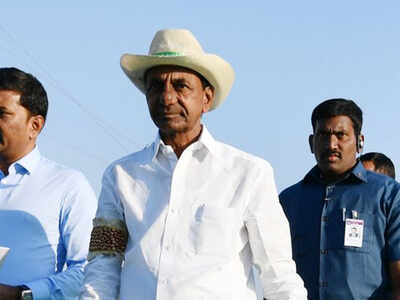
While no official shape has been given to the federal front proposed by chief minister K Chandrasekhar Rao, the party’s national agenda is reflected in the representation given earlier this year to the 15th Finance Commission by KCR.
The representation, with all talking points, includes the scrapping of water tribunals for resolving disputes. The four-page document speaks of national issues, including Centre-state relations, interstate disputes, need for a change of economic models, and more flexibility for states.
The representation focuses on inter-state river water dispute tribunals, saying that they take decades to give their verdict. “After the formation of Telangana in 2014, the government of India was requested to refer the matter of determining river water rights of the newly-formed state to the tribunal under Section 3 of Inter-State River Water Disputes Act, 1956. Even after so many years, the matter has not been referred to the tribunal,” the CM questioned in the document.
It may be mentioned that a proposal over a permanent river water dispute tribunal is under consideration by the Union government for quite sometime, but without any tangible progress. “If legal process is time-consuming and insensitive to the national concerns, what about setting up an alternative dispute resolution mechanisms for this purpose?” KCR said. Telangana resolved the dispute with Maharashtra regarding Kaleswaram project by way of an agreement.
The Federal Front will have few pointers for economic growth and will point at China’s growth in the past 30 years. “China’s stellar economic growth in the past four decades can be attributed to the proactive and visionary approach of its government,” the document says.
On the relation between states and the Centre, the document talks about better planning and flexibility on subjects like agriculture, education, health, urban development, rural development, housing, drinking water, sanitation, and women and child welfare.
End of Article
FOLLOW US ON SOCIAL MEDIA

Hot Picks
TOP TRENDING
Popular Categories
Hot on the Web
Top Trends
Trending Topics
Devara CollectionBigg Boss Kannada 11 Launch Live UpdatePawan KalyanJungle SafariStree 2 OTT ReleaseRose GardenDevara CollectionOTT Release MovieMasala OmeletteEmergencyDevaraTaaza Khabar 2 Twitter ReviewDevara Movie ReviewHealthy RaitasSwatantrya Veer SavarkarColdplay India tour 2025Smartphone DealsApple Macbook Air M1Amazon SaleWordle Answer
Living and entertainment
Latest News
TN: Sri Lankan Navy apprehends 17 fishermen off Rameswaram coast, seizes 2 boatsIndia shooter reports late for final, misses potential medal at Junior World ChampionshipsExclusive - A sneak peek into Zain Imam aka Teerth’s makeup room on the set of Suman IndoriTumbbad re-release box office: The Sohum Shah starrer mints Rs 95 lakhs on third SaturdayAir Arabia launches early bird promotion on 500,000 seats from INR 5,727!‘Devara’ stars Jr. NTR and Saif Ali Khan try their hand at Punjabi and BhojpuriAir Canada fined for breaching restricted Iraqi airspace"Is Taylor Swift Gonna Be in the Stands for the Chiefs vs. Chargers Showdown?"Stress could be your heart's worst enemyHost Kiccha Sudeep to Bigg Boss Kannada 11 contestant Aishwarya Shindogi: Come back as a stronger personKhatron Ke Khiladi 14 winner: Karan Veer Mehra lifts the trophy and Krishna Shroff becomes the first runner-upWhat to expect after a facelift procedureColleagues remember braveheart Delhi Police constable Sandeep: 'Would rush to crime scene alone'Baloch Human Rights slam Pakistan and China, call it 'a failed state'With $3.16 Million Lost in Game Checks, Can Haason Reddick Afford to Keep Holding Out?Haryana polls: Explain the 'compelling' circumstances, CEO asks authorities on Dera Sacha Sauda chief Ram Rahim's plea for temporary releaseUnion minister Nitin Gadkari invites Sachin Tendulkar for coffee at newly inaugurated bird park in Maharashtra's JamthaDrake Hogestyn, beloved 'Days of Our Lives' star, passes away at 70
Copyright © 2024 Bennett, Coleman & Co. Ltd. All rights reserved. For reprint rights: Times Syndication Service