
- News
- Misuse of PDS rice still a concern in Tamil Nadu poll
This story is from May 11, 2016
Misuse of PDS rice still a concern in Tamil Nadu poll
Rice has once again taken centre stage in the political discourse in the state, thanks to Prime Minister Narendra Modi's comment at a public meeting in Nagercoil on Sunday that despite his government providing 27 per kg of rice as subsidy, the Centre was not putting stickers with his face on ration rice. He was apparently alluding to many state government-sponsored welfare schemes reaching the people in Tamil Nadu with chief minister J Jayalalithaa's photograph on the cover.
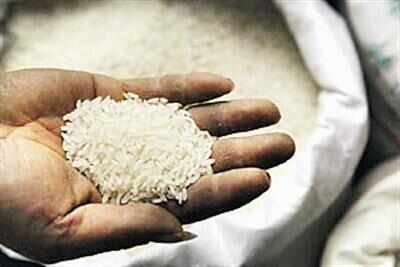
TRICHY: 'Rice politics', which dominated poll manifestoes of DMK and AIADMK, resulting in even regime changes in the past elections, seems to have lost steam now as nothing more can be expected of this staple when 20 kg of it is provided free of cost to every ration card-holding family in the state.
Still, rice has once again taken centre stage in the political discourse in the state, thanks to Prime Minister Narendra Modi's comment at a public meeting in Nagercoil on Sunday that despite his government providing 27 per kg of rice as subsidy, the Centre was not putting stickers with his face on ration rice.
It was rice politics - promise to supply 3kg rice for 1 - that ensured a decisive victory for the rainbow alliance led by the DMK in 1967 against the mighty Congress. Later, in 2006, DMK returned to power with the promise of supplying ration rice at 2 per kg. The rate was further slashed to 1 per kg.
Tamil Nadu has been following a universal public distribution system, in variance with the Centre's targeted food subsidy plan aimed below the poverty line only. Analysts say voters in the state are developing an aversion towards freebies as expectations, especially among the youth, have moved on to more pressing issues like development, infrastructure and jobs. Time is up for competitive populism as people have started viewing it with scepticism, said M Kasinathan, a political analyst. 1967 onwards, there was a gradual decrease in the announcement of freebies in poll manifestoes, he said, adding that over the decades, the price of ration rice was also increased several times. The trend was finally reversed in 2006, said Kasinathan.
Nevertheless, misuse of TN's public distribution system is a matter of concern. Many shops buy ration rice from consumers at 3-5 per kg and sell it in the open market in neighbouring states at a higher price. There are instances of bulk diversion of ration rice to other states.
Still, rice has once again taken centre stage in the political discourse in the state, thanks to Prime Minister Narendra Modi's comment at a public meeting in Nagercoil on Sunday that despite his government providing 27 per kg of rice as subsidy, the Centre was not putting stickers with his face on ration rice.
He was apparently alluding to many state government-sponsored welfare schemes reaching the people in Tamil Nadu with chief minister J Jayalalithaa's photograph on the cover.
It was rice politics - promise to supply 3kg rice for 1 - that ensured a decisive victory for the rainbow alliance led by the DMK in 1967 against the mighty Congress. Later, in 2006, DMK returned to power with the promise of supplying ration rice at 2 per kg. The rate was further slashed to 1 per kg.
Tamil Nadu has been following a universal public distribution system, in variance with the Centre's targeted food subsidy plan aimed below the poverty line only. Analysts say voters in the state are developing an aversion towards freebies as expectations, especially among the youth, have moved on to more pressing issues like development, infrastructure and jobs. Time is up for competitive populism as people have started viewing it with scepticism, said M Kasinathan, a political analyst. 1967 onwards, there was a gradual decrease in the announcement of freebies in poll manifestoes, he said, adding that over the decades, the price of ration rice was also increased several times. The trend was finally reversed in 2006, said Kasinathan.
"But now the state has reached a saturation point in supply of rice, because it is given free," said analyst Gnani Sankaran.
Nevertheless, misuse of TN's public distribution system is a matter of concern. Many shops buy ration rice from consumers at 3-5 per kg and sell it in the open market in neighbouring states at a higher price. There are instances of bulk diversion of ration rice to other states.

About the Author
K Sambath KumarEnd of Article
FOLLOW US ON SOCIAL MEDIA
Hot Picks
TOP TRENDING
Trending Stories
In Section
Entire Website
- UPS vs NPS Calculator: Is A Switch From National Pension Scheme to Unified Pension Scheme Really A No-Brainer? Check Calculations, Benefits - Top Points
- Monster vs Monster: WWE announced massive match for this week's Monday Night Raw
- UPI transaction limit to change from September 16! Here are the new limits for various UPI payments
- File movement linked to weight of money: Nitin Gadkari
- Apple's biggest 'iPhone update' for year 2024, iOS 18, rollout starts today - September 16: India time and how to prepare your iPhone for iOS 18 download
- Arvind Kejriwal's resignation: Who will be next Delhi CM? Atishi seen as top choice
- UP medical aspirants converting religion to secure MBBS seats: A look at NEET UG admission criteria around minority reservation rules
- Protests against students wearing hijab in school play, principal forced to apologize for promoting religious harmony
- Pitru Paksha 2024 Date and Time: Know Significance of Shradh Paksha
- Andhra suspends 3 IPS officers for 'framing', arresting Mumbai actress
- BJP allies JD(U), LJP come out in support of one nation, one poll
- In PDP's battle for survival, south Kashmir holds the key
- Did doctors humiliate Mamata, or did she make it an ego issue?
- Modi govt will bury bid to revive 90s-like terrorism in J&K: Amit Shah
- Second assassination attempt on Trump triggers outrage, suspicion on all sides
- Rohit Sharma on brink of huge Sachin Tendulkar, Virat Kohli, Virender Sehwag records
- Will Kejriwal pass the agni pariksha like Indira did in 1971?
- Apple's biggest 'iPhone update' for year 2024 rollout starts today
- Polarisation in Manipur within govt too: Retd General
- UPS vs NPS Calculator: Switch a no-brainer? Not really! Check top points

Popular Categories
Hot on the Web
Top Trends
Prince HarryWho is Ryan RouthUPI Transaction LimitArvind Kejriwal ResignationNEET UG Admission CriteriaKolkata Doctor Rape CaseUS Presidential ElectionsRohit SharmaSports Stars Turned Power CouplesIBPS RRB Clark PO ResultDonald TrumpCristiano RonaldoIndia vs Korea HighlightsBMW Accident Madhya PradeshUPS vs NPS CalculatorMiami Dolphins OwnerLive Cricket Score
Trending Topics
Living and entertainment
Latest News
Best Power Banks to Buy in India During the Big Billion Days SaleShooting after NFL game leaves 2 dead; suspect remains in custodyGovt launches programme to tackle glacial lake outburst flood threat in Himalayas, all 190 high-risk lakes to be monitoredHow Disney+Hotstar’s new AI feature can help users save internet dataKhatron Ke Khiladi 14: Shalin Bhanot hosts a fun party for his co-contestants Krishna Shroff, Abhishek Kumar, KaranVeer Mehra and othersAstrological Influence on Zodiac Signs' Career ChoicesFalcons' Predictable Offense and Cousins' Prime-Time Woes Spell Trouble in PhiladelphiaTaurus, Daily Horoscope Today, September 17, 2024: Anxiety and stress diminishAnkit Arora opens up about being typecast in television industry; says ‘it can be a creative challenge for many actors’Aditi Rao Hydari-Siddharth get married secretly, Sandeep Reddy Vanga wants to do a biopic on Michael Jackson, Aishwarya Rai-Aaradhya Bacchan's PDA catches eyeballs: Top 5 entertainment news of the day“Words really fall short”- Lyra Valkyria confesses love for her fiancé in a social media postKSCA Invitational: Arjun Tendulkar takes match haul of 9 wickets in big Goa CA XI winTaylor Swift's mom steals the show with a heartfelt hug for Donna Kelce at Chiefs GamePitra Paksha 2024: Significance of Urad Dal and Rice in Shraadh ritualsSohum Shah says 'Tumbbad 2' will be different from 'Munjya' and 'Stree 2': 'They are not making dadi-nani ki kahaniyaan'1031 candidates to contest Haryana Assembly Elections to be held on October 5: CEO J AgarwalKevin Jonas’ post for the birthday boy Nick Jonas ft. Malti Marie is all things adorable, but we do miss Priyanka Chopra in the frameSathiyan set to partner Sreeja in mixed doubles
Copyright © 2024 Bennett, Coleman & Co. Ltd. All rights reserved. For reprint rights: Times Syndication Service