
- News
- Education News
- News
- One education policy for all states not viable, says expert
Trending
This story is from August 16, 2020
One education policy for all states not viable, says expert
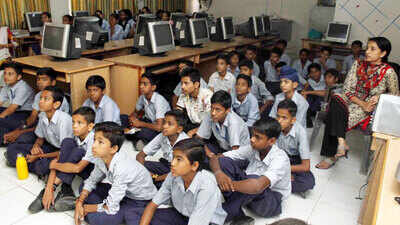
Image used for representational purpose only
KOLKATA: Thrusting oneeducation systemon all students across states, irrespective of their socio- economic status, is not a viable idea, one of the panelists of a six-member committee, formed by the Bengal government to study and share views on the new educationpolicy, said.
The committee member, who did not wish to be named, also said that a "voluminous report" has been prepared, after carefully considering all aspects of the policy, and it will be submitted to the state government in a couple of days.
"We have almost readied the report, which will be submitted to the government in a couple of days. I am of the view that in a country of 130 crore population, you cannot thrust a uniform educationpolicy on allstates, regardless of their needs and economic status. What can be applicable in Manipur may not make sense in Bengal," he said.
Certain facets of the New EducationPolicy (NEP 2020), such as redesigning of Class 10 board exams and reforms in primary school, "lack clarity", he said, insisting that the Centre should have taken the states into confidence before giving its approval.
He claimed that the panel had a difficult time understanding the implications of certain recommendations made
"This policy opens doors for foreign universities to set up base in the country. That is also not a welcome move as we already have top-class higher educational institutions in the country," he said.
According to NEP 2020, students will have to undertake school examinations in grades 3, 5 and 8, which will be conducted by appropriate authority. Board exams for Grades 10 and 12 will be redesigned, it said.
The policy has also advocated a "broad-based, multi- disciplinary, holistic undergraduate education with flexible curricula, creative combinations of subjects, integration of vocational education and multiple entry and exit points with appropriate certification".
The state government had earlier this month formed the six-member committee to study and share observations on the new policy, which was approved by the Union Cabinet in July.
Among others, Jadavpur University Vice-Chancellor Suranjan Das, retired professor and TMC MP Sougata Roy, educationist Pabitra Sarkar and oncologist Nrisingha Prasad Bhaduri are members of the committee.
State education minister Partha Chatterjee had two weeks ago slammed the policy, calling it a "copy of the system prevalent in western countries".
He had also said that the TMC government would convey its opinion on the policy to the Centre after the six-member team submits its report
The committee member, who did not wish to be named, also said that a "voluminous report" has been prepared, after carefully considering all aspects of the policy, and it will be submitted to the state government in a couple of days.
"We have almost readied the report, which will be submitted to the government in a couple of days. I am of the view that in a country of 130 crore population, you cannot thrust a uniform educationpolicy on allstates, regardless of their needs and economic status. What can be applicable in Manipur may not make sense in Bengal," he said.
Certain facets of the New EducationPolicy (NEP 2020), such as redesigning of Class 10 board exams and reforms in primary school, "lack clarity", he said, insisting that the Centre should have taken the states into confidence before giving its approval.
"The prevailing educationpolicy where each state has its own board to conduct exams up to the tenth standard cannot be altogether replaced by a new policy without any alternative mechanism in place. These things might not have been considered before ratification of the policy. I have pointed that out in the report," the committee member told PTI.
He claimed that the panel had a difficult time understanding the implications of certain recommendations made
for the country's higher education system, and maintained that the "reason for abolishment of MPhil for research scholars was not very clear".
"This policy opens doors for foreign universities to set up base in the country. That is also not a welcome move as we already have top-class higher educational institutions in the country," he said.
According to NEP 2020, students will have to undertake school examinations in grades 3, 5 and 8, which will be conducted by appropriate authority. Board exams for Grades 10 and 12 will be redesigned, it said.
The policy has also advocated a "broad-based, multi- disciplinary, holistic undergraduate education with flexible curricula, creative combinations of subjects, integration of vocational education and multiple entry and exit points with appropriate certification".
The state government had earlier this month formed the six-member committee to study and share observations on the new policy, which was approved by the Union Cabinet in July.
Among others, Jadavpur University Vice-Chancellor Suranjan Das, retired professor and TMC MP Sougata Roy, educationist Pabitra Sarkar and oncologist Nrisingha Prasad Bhaduri are members of the committee.
State education minister Partha Chatterjee had two weeks ago slammed the policy, calling it a "copy of the system prevalent in western countries".
He had also said that the TMC government would convey its opinion on the policy to the Centre after the six-member team submits its report
End of Article
FOLLOW US ON SOCIAL MEDIA
Visual Stories








Hot Picks
TOP TRENDING
Trending Stories
In Education
Entire Website
- KEA KCET, NEET UG 2024 Round 2 Provisional Seat Allotment Results Released at kea.kar.nic.in
- RPSC RAS 2024 Registration Open: Apply at rpsc.rajasthan.gov.in Before October 18, Check Direct Link Here
- Tripura NEET UG 2024 counselling round 2 provisional merit list released: Check direct link here
- OTET Answer Key 2024 released at bseodisha.ac.in, raise objections till Sept 28: Subject-wise direct links here
- WB NEET UG 2024 counselling schedule revised: Check important dates here
- NEET MDS Revised Cut-off 2024: Ministry of Health reduces qualifying cut-off by 21.692 percentile, NBEMS to release revised results
- Amid Junior Doctors' Strike, West Bengal Appoints New Directors for Medical Education and Health Services
- JSSC CGL Admit Card 2024 released at jssc.nic.in, direct link to download JGGLCCE Call Letter here
- JSSC CGL Admit Card 2024 expected today at jssc.nic.in: Where and how to download JGGLCCE Call Letter
- CGBSE 10th Supplementary Result 2024: CG board High School 2nd Main, Attempt Exam results out, direct link here
- Bombay HC strikes down Centre's fact check unit
- Supreme Court slams CBI for calling Bengal courts 'hostile'
- How first Indian astronaut in 40 years is prepping for space visit in 2025
- Stuck in Lebanon for 23 years, Punjab man back home
- SC objects to HC judge calling Bengaluru locality 'Pakistan'
- Man killed on Kanpur road as sis stays firm on testifying against goon
- Karnataka HC asks couple to seek spiritual guru's help to save marriage
- Ex-Google employee looking for job in Canada: 'I've been reducing ...'
- Post ‘worst 1st class’ flight from US, Air India refunds flyer
- Strong emotions over Article 370 unite youths in Valley

Popular Categories
Hot on the Web
Top Trends
AppleGurgaon Bike AccidentTirupati Laddu RowIsraeli Strikes on HezbollahIND vs BAN LiveJacoby BrissettIIT Companies WFH PolicyOdisha Bharatpur Police Station NewsRhea RipleyIsrael Hezbollah WarKerala Lottery ResultAssembly ElectionTirupati PrasadamEY Pune EmployeeSean DiddySandip GhoshLive Cricket Score
Trending Topics
Stree 2 CollectionRuksana BanoAbdu RozikYudhra ReviewJayamSana Khan HusbandTirupati Laddoo ControversyGOAT CollectionVaazha OTT ReviewKozhipannai Chelladurai ReviewCheetahsKangana RanautAditi Rao HydariDalljiet KaurHoliday DestinationVikas SethiBest Selling Earbuds Under 1000Apple iPhone 16 ProVirat KohliWordle Answer
Living and entertainment
Latest News
Stuck in Lebanon for 23 years, Punjab man back homeManu Bhaker at TOI Dialogues, Sep 23: Setting high sports targets. Know moreVivek Ramaswamy hints at Ohio governor run at his Springfield town hallBigg Boss fame Sana Khan on her photos wearing Abayas going viral during her Maldives vacation; says 'people think you can only wear swimwear...'One Nation, one election will curtail sovereignty of states: KanimozhiYour Birthdate May Reveal What Your Soul Didn’t Complete in a Past LifeWhen Sunita Ahuja said, "You have to be very strong to be an actor’s wife"Dove’s #TheBeautyTestStopsWithMe campaign garners 133Mn+ viewsIndia's familiarity with UAE conditions gives them an edge in Women’s T20 World Cup: Mithali RajIIM Tiruchirappalli, Indore under fire as RTI data reveals massive vacancy of reserved category faculty positionsNFL Players Who Use Their Platform for Social GoodTop most expensive athlete divorces: From Michael Jordan to Tiger WoodsJuju Baby Music revives folk with a twist with their latest EP, Folk Outta The BoxKarunaratne, Chandimal fire as Sri Lanka take control of first New Zealand TestGovt caps late fee at Rs 1k for vehicle fitness certificateSalman Khan will NOT make a cameo in Rohit Shetty’s 'Singham Again'; fans say 'disappointed'Not taking EY to court, says dead CA's fatherBombay HC strikes down Centre's fact check unit
Copyright © 2024 Bennett, Coleman & Co. Ltd. All rights reserved. For reprint rights: Times Syndication Service