
- News
- 1911, a very different story
This story is from December 10, 2011
1911, a very different story
Delhi in those days was a scared and scarred city, still struggling to cope with the ravages of 1857.
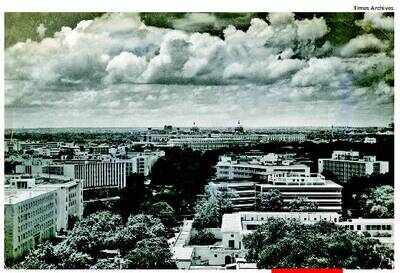
Delhi in those days was a scared and scarred city, still struggling to cope with the ravages of 1857.
It’s been a 100-year race and the outcome is absolutely poetic. Delhi, completing a century as capital of India, is once again its largest and most populous city, ahead of Bombay, Calcutta and Madras — all hand-reared products of the Raj.
But a hundred years ago, few would have put their money on Delhi. Its sunset started in the 18th century, turning into one interminable night after the events of 1857, when the British systematically avenged themselves upon it.
Delhi in 1911 was still a scarred city. Meanwhile, younger rivals were thriving . Bombay, Calcutta and Madras were already the country’s three biggest cities, with Bombay touching the million-mark . Delhi’s erstwhile subject-cities — Lucknow and Hyderabad — had outgrown it too. Delhi lagged in literacy and medical facilities — only 3% of the population could read English. Few foreigners were drawn to it (Meerut had 2,162 while Delhi had 992). Its economy was heavily agrarian, and modern trades like power generation and news publishing had few takers.
As a city, Delhi was way behind its time. For example, one of the occupational heads in the 1911 census is: “Toy, kite, cage, fishing tackle etc makers, taxidermists etc” . The listed products symbolize a medieval-decadent lifestyle. Bombay with 979,445 people had only 61 workers in this trade, while Delhi had 230 for its 232,837 residents.
All that is history. A century on, 1911’s has-been city is happening like never before.
But a hundred years ago, few would have put their money on Delhi. Its sunset started in the 18th century, turning into one interminable night after the events of 1857, when the British systematically avenged themselves upon it.
Delhi in 1911 was still a scarred city. Meanwhile, younger rivals were thriving . Bombay, Calcutta and Madras were already the country’s three biggest cities, with Bombay touching the million-mark . Delhi’s erstwhile subject-cities — Lucknow and Hyderabad — had outgrown it too. Delhi lagged in literacy and medical facilities — only 3% of the population could read English. Few foreigners were drawn to it (Meerut had 2,162 while Delhi had 992). Its economy was heavily agrarian, and modern trades like power generation and news publishing had few takers.
As a city, Delhi was way behind its time. For example, one of the occupational heads in the 1911 census is: “Toy, kite, cage, fishing tackle etc makers, taxidermists etc” . The listed products symbolize a medieval-decadent lifestyle. Bombay with 979,445 people had only 61 workers in this trade, while Delhi had 230 for its 232,837 residents.
All that is history. A century on, 1911’s has-been city is happening like never before.
End of Article
FOLLOW US ON SOCIAL MEDIA
Hot Picks
TOP TRENDING
Trending Stories
In Section
Entire Website
- UPI transaction limit to change from September 16! Here are the new limits for various UPI payments
- GK for students: 7 Fascinating Features of These Unique Birds
- No look shot gone wrong! Pakistan batter hilariously trolled after dismissal. Watch
- Andhra suspends 3 IPS officers for 'framing', arresting Mumbai actress
- UP medical aspirants converting religion to secure MBBS seats: A look at NEET UG admission criteria around minority reservation rules
- Who is Ryan Wesley Routh? Man held for 'apparent assassination attempt' on Trump
- Virat Kohli at his destructive best, shatters Chepauk wall near India dressing room with six
- 'Prince Harry is not even the spare to his wife': Meghan Markle’s treatment of Duke under fire
- Vince McMahon’s Expensive Properties, Bungalows, Villas, Private Jet, Car Collections, and More
- "Miami Dolphins Owner Stephen Ross Eyes Multi-Billion Dollar Deal: The $7 Billion Power Play"
- Assassination bid on Trump: 'Gunman supporter of Ukraine in its war against Russia'
- 'Doesn't sound like the man I know:' Son of assassination attempt accused
- Cow vigilantes killing a Brahmin is the wake-up call India needed
- 'Didn't want to be late for party': BMW speeding down wrong lane kills 2
- Who is Ryan Routh? Man held for 'apparent assassination attempt' on Trump
- 13-year-old sets world record with 800 kg millet portrait of PM Modi
- Will resignation gambit help Kejriwal win Delhi again?
- Apple's biggest 'iPhone update' for 2024: India time, how to prepare
- 'He may have said so, but ...': Pradhan reacts to Anil Vij’s CM claim
- Arvind Kejriwal's resignation: Who will be the next Delhi CM?

Popular Categories
Hot on the Web
Top Trends
Trending Topics
Living and entertainment
Latest News
Challenges won’t stop me from making films that matter: Aditya Kripalani3 Reasons Why Hell in a Cell Tag Team Match Between Cody Rhodes, Roman Reigns and The Bloodline 2.0 Would Be perfect for Bad Blood 2024Odisha to join Ayushman plan; Delhi, Bengal to be only holdoutsRobert's wild encounter with Henry, the world's oldest 124-year old crocodile; internet shocked | Watch videoHooda says Congress coming to power in Haryana, asks criminals to give up crime or leave state‘I Hate Taylor Swift!’: Donald Trump rages after singer endorses Kamala HarrisFather-son duo Eugene and Dan Levy's dazzling entrance at the EmmysBakuchiol: Nature’s answer to youthful skin radianceSaudi Arabia footballer Fahad Al-Muwallad hospitalized after fall from balcony'Will hug my kids extra tight tonight': JD Vance after Trump 'assassination attempt'Bengal govt blames junior docs for logjam but sends fresh offer for talksLodi-era mosque collapses in AgraVineet Kumar Singh calls Superboys of Malegaon standing ovation at TIFF a 'magical experience': 'I can still hear the clapping and whistling" - ExclusiveFoods to pair with dates for boosting immunityLast Lunar Eclipse of 2024: What it means for your zodiac signNeeraj Chopra misses second Diamond League title by an agonising 1 cm; finishes second behind AndersonKejriwal says he will quit as CM in 2 days, wants aam aadmi's 'honesty certificate'Jessica Gunning wins her 1st Primetime Emmy for 'Baby Reindeer'
Copyright © 2024 Bennett, Coleman & Co. Ltd. All rights reserved. For reprint rights: Times Syndication Service