The Special Forces (SF) are considered the cream of the
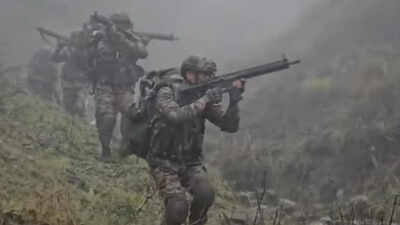
Indian Armed Forces. Each of the three branches of the armed forces have their own SF units. The army has the Para (SF), the navy has the Marine Commandos (MARCOS) and the air force has the Garuds. The members of these Special units are trained to operate deep behind enemy lines to perform different types of covert and overt operations.
Special Forces troops are trained for a wide range of operations ranging from the covert, in which operatives go behind enemy lines to gather intelligence. On the other side of the spectrum, members of special forces are known more for direct kinetic actions, these operations include surgical raids, ambushes, demolition and counter-terror operations. The Americans have also used their special forces to train militias and unconventional forces.
These forces have demonstrated through their operations their ability to shape favourable outcomes. These operatives are trained to act swiftly, precisely and decisively. The special forces of India have since the 1971 war have proven their mettle. In 1971, the army's 10 Para (Commando) battalion captured 3,000 square kilometers of territory in the on the southern borders of Rajasthan.
In the same war, the 9th battalion of the Parachute Regiment destroyed a Pakistani artillery battery in the Poonch sector, one of the key factors in India dominating in that sector.
https://www.thetimesofindia.online/india/operation-mandhol-forced-pakistan-to-change-war-plan/articleshow/27444282.cmsThe Special Forces element of the Indian Peace Keeping Force (IPKF), also known as Operation Pawan, carried out a daring night time heliborne mission to capture the Liberation Tigers of Tamil Eelam (LTTE) supremo Prabhakaran. This mission demonstrated the tenacity, ability to think on the feet and urban fighting capability. Prabhakaran could not be captured in the operation.
A year later in 1988, the Indian government launched an mission, called Operation Cactus, to thwart an attempted coup in Maldives. A Para SF unit was flown to the Maldives, where they rescued President Maumoon Abdul Gayoom, secured Male, and stabilized the island nation. The operation highlighted India’s rapid deployment capability and regional security role.
In 1998, the Navy's elite MARCOS executed a covert strike against armed gunrunners and insurgents in the Andaman and Nicobar Islands. The operation destroyed a major smuggling network that was linked to arms suppliers in the North East. The operation took place on Landfall Island in the Andamans.
During the Kargil War in 1999, the Indian Army's SF units took part in both reconnaisance operations as well as direct assaults on Pakistani positions. The sheer vertical cliff climbing and assault portion featured in the movie Lakshya was carried out by memnbers of the Special Forces.
The very next year in 2000, Indian army's Special Forces carried out a remarkable hostage rescue operation in Sierra Leone, in West Africa, to rescue over 200 Indian soldiers of the Fifth Battalion of the Eighth (5/8) Gurkha Rifles, who were surrounded by rebels. The successful rescue effort was in conjunction with other Indian and foreign countries under the United Nations flag.
In 2011, the Para SF were once again called to carry out an operation across the Line of Control (LoC). This action, termed Operation Ginger, was a punitive cross-border raid against Pakistan army posts. The action was part of India’s ongoing high-intensity operations along the LoC. Indian soldiers inflicted heavy casualties, destroyed bunkers and reinforced the principle of proportionate retaliation.
Following the deadly ambush on Indian army's logistic convoy in Manipur in 2015, Para SF conducted a swift cross-border raid into Myanmar. The commandos destroyed a militant camps with clinical efficiency, demonstrating India’s willingness to act decisively against insurgent sanctuaries beyond its own borders.
In the aftermath of the Uri terror attack, Para SF commandos executed a cross-LoC raid targeting terrorist launch pads in Pakistan-occupied Kashmir. The strikes were marked by stealth, speed, and surgical precision, dismantling multiple camps and sending a clear message of deterrence. This operation redefined India’s counter-terror posture and showcased the credibility of its special operations capability.
Between these major operations the SF of all three services have been taking part in counter-terror operations in J&K, as well as in the North East. Recent operations such as Op Mahadev demonstrated how the Indian Army painstakingly and meticulously hunted down those behind the Pahalgam massacre. Earlier in 2020, during Operation Randori Behak, a team of the Para Special Forces jumped into certain death to reinforce their brothers-in-arms, demonstrating a beyond the call of duty commitment to not only the task at hand, but also to their comrades.
From Maldives to Myanmar, Sierra Leone to Kargil, India’s Special Forces have consistently proven the importance in diverse operational environments ranging from jungles to mountains to tropical islands and urban strongholds. Each operation reflects tactical acumen of these forces. Now these operations especially the cross-border ones have also showcased the strategic impact of these high risk missions. These operations have delivered a message of deterrence to India's enemies and have sent a message of reassurance to Indians.