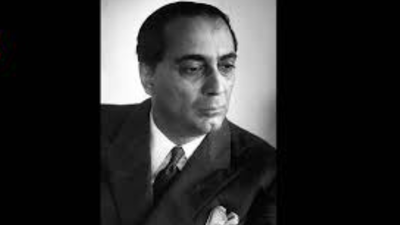
India’s nuclear energy strategy, conceptualised by Homi J. Bhabha in the 1950s, remains one of the most distinctive long-term energy plans in the world. Built around the country’s limited uranium reserves and vast thorium deposits, the three-stage nuclear programme was designed to ensure energy security, technological self-reliance, and sustainability.
At its core, the programme reflects a pragmatic assessment of India’s natural resources. While uranium — the primary fuel for most nuclear reactors — is scarce in India, the country possesses nearly a quarter of the world’s thorium reserves. Bhabha’s strategy was to use available uranium efficiently to eventually unlock the potential of thorium as a long-term fuel.
Stage one: Pressurised heavy water reactors (PHWRs)The first stage focuses on generating electricity using natural uranium in Pressurised Heavy Water Reactors (PHWRs). These reactors use heavy water (deuterium oxide) as both moderator and coolant, allowing the use of natural (unenriched) uranium.
In this process, uranium-238, which constitutes the bulk of natural uranium, absorbs neutrons and gradually converts into plutonium-239 — a key fuel for the next stage. India has successfully built and operated several PHWRs across sites like Rajasthan, Kakrapar, and Narora, establishing a strong domestic capability in reactor design and fuel cycle management.
This stage is crucial because it lays the foundation for fuel generation rather than merely electricity production. The plutonium produced here becomes the bridge to the second phase.
Stage two: Fast breeder reactors (FBRs)The second stage uses plutonium-239 derived from the first stage in Fast Breeder Reactors (FBRs). Unlike conventional reactors, FBRs are designed to produce more fissile material than they consume.
In these reactors, plutonium is used as fuel, while uranium-238 acts as a blanket material. Through neutron capture, more plutonium is generated, effectively “breeding” fuel. Additionally, thorium can also be introduced in the blanket to begin its conversion into uranium-233 — the key fissile material for the third stage.
India’s flagship project in this stage is the Prototype Fast Breeder Reactor (PFBR) at Kalpakkam. Although delays have been a recurring issue, this phase is vital for scaling up fuel availability and reducing dependence on imported uranium.
Stage three: Thorium-based reactorsThe final stage aims to fully utilise thorium reserves by using uranium-233 as fuel in advanced reactors. Thorium itself is not fissile, but when irradiated, it transforms into uranium-233, which can sustain a nuclear chain reaction.
This stage represents the culmination of Bhabha’s vision — a self-sustaining nuclear cycle largely independent of external fuel sources. Advanced Heavy Water Reactors (AHWRs) and other innovative designs are being developed to operationalise this phase.
Thorium-based reactors also offer potential safety advantages and produce less long-lived radioactive waste, making them attractive for long-term deployment.
India’s three-stage nuclear programme is as much about geopolitics as it is about energy. It reduces vulnerability to global fuel supply disruptions and aligns with the country’s clean energy goals.
However, progress has been slower than originally envisioned. Technological complexities, regulatory hurdles, and delays in reactor construction — particularly in the second stage — have pushed timelines forward by decades.
Yet, the vision endures. As India seeks to expand its non-fossil energy capacity, Bhabha’s roadmap continues to guide policy and innovation. The successful transition to thorium-based reactors could place India at the forefront of next-generation nuclear technology, fulfilling a vision that was decades ahead of its time.