
- News
- City News
- visakhapatnam News
- Now, Vizag can boast of 800 heritage trees
Trending
Now, Vizag can boast of 800 heritage trees

The Indian National Trust for Art and Cultural Heritage (INTACH) Vizag chapter is now planning to formalise and document these ancient giants with the expertise of these professors.

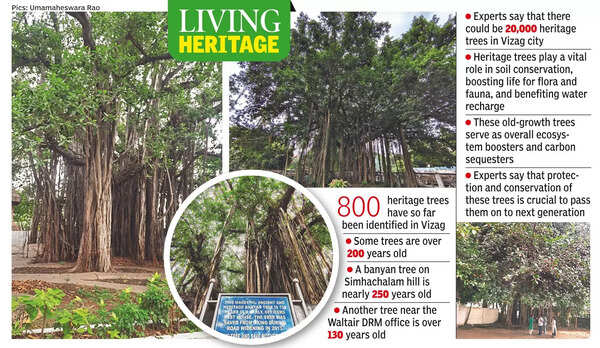
Dr K Kameswara Rao, a retired professor of environmental science at Andhra University who is leading the initiative, told TOI, "These trees, averaging around 50-100 years old, play a crucial role in soil conservation, water recharge, and supporting local flora and fauna. For example, the giant banyan tree inside the Andhra University Directorate of Admissions may sequester around 5,000 tonnes of carbon dioxide over its lifetime. Similarly, the heritage trees located on the campus of Andhra University significantly aid in recharging the water table across nearly 15 to 20 colonies surrounding Andhra University."
Prof. Y Venkateswara Rao, a retired professor and former head of the botany department at Andhra University, is also lending his expertise to the project.
On Sunday, the INTACH Vizag chapter conducted a three-hour heritage tree walk in Visakhapatnam. Chapter convenor Dr D. Rajasekhar Reddy and co-convenor Dr B. Surendra Kumar proposed a comprehensive survey to identify and document these invaluable trees. Several INTACH Vizag chapter members and enthusiastic environmentalists, including Edward Paul, Jayshree Hatangadi, Mayank Kumari Deo, P Venkataramana Reddy, Tanmay Mukhopadhyay, Vivek Rathod, and others, participated in the walk.
The INTACH members discussed the development of tailored conservation plans for each identified tree. A key point raised during the walk was the importance of encouraging local communities to participate in preservation efforts through awareness campaigns and educational workshops. The discussion also suggested enhancing existing laws, such as the AP Biodiversity Act, to provide stronger protection for these heritage trees. They also deliberated on making various school clubs of INTACH part of the initiative.
Prof. Kameswara Rao explained the significance of each tree to the walk participants and how they are contributing to the betterment of the ecology. He said that these trees harbour a lot of microorganisms and support 200 to 300 other species. “While some serve as seed dispersers, others work for ecosystem sustainability, supporting other flora and fauna, and saving rainwater runoff,” said Prof. Rao.

About the Author
Umamaheswara RaoEnd of Article
FOLLOW US ON SOCIAL MEDIA





Hot Picks
TOP TRENDING
Trending Stories
In City
Entire Website
- Amid Shannon Sharpe Viral Video, Former ESPN Host Michelle Beadle Reacts Claiming It Was Not Her
- 2 Army officers thrashed, their female friend gang-raped in Madhya Pradesh
- Ayushman Bharat insurance scheme expanded to cover elderly above 70
- 'Will be demolished if... ': Himachal minister's assurance amid Shimla mosque row
- Mumbai's Haji Ali and Mahim dargahs cancel Eid shamiana
- Garena Free Fire MAX redeem codes for September 11, 2024: Win free room cards, skins, diamonds, pet skins, and more rewards today
- GK for students: Top 8 Largest Mammals in the World
- Glut in milk production leaves Karnataka govt in spot of bother
- A tiny flower nearly killed a tiger habitat, until a snip in time saved it
- 6 failed attempts later, Assam boy cracks CDS; posted in Siachen
- Biryani row: Administration moves boy to new school, to waive Rs 37k in fees
- Mamata govt sends fresh letter to protesting doctors, calls for 5pm meeting
- Why India is now insisting on an immediate ceasefire in Gaza
- 'Society and govt should be ashamed': Rahul after friend of Army officers gangraped
- Over 5,000 Maoists, including 1,000 women ultras, killed in 20 years
- Sensex surges over 1,000 points as bulls charge in
- By endorsing Kamala, Taylor Swift turns the tables on AI abusers
- What Airtel CEO Gopal Vittal wrote in letter to Jio, Vi, Tata Tele and BSNL CEOs
- ACT Hockey: India stay unbeaten, beat Korea 3-1
- Bomb scare: Suspicious bag found at RG Kar Medical College and Hospital

Popular Categories
Hot on the Web
Top Trends
Trending Topics
Alia BhattMalaika Arora Father DeathArbaaz KhanNatasa StankovicMr Bachchan OTT ReleaseNational Parks In IndiaSelena GomezGOAT CollectionVikas Sethi DeathMalayalam ProducersIndia's Best Dancer 4Simi GarewalDilli BabuIndian National ParksLaung BenefitsVikas SethiiPhone 16Dubai Princess Sheikha MahraMG Windsor EvWordle Answer
Living and entertainment
Latest News
Epilepsy medication shows promise of treating sleep apnoea symptoms: StudyDigest this: Unhealthy gut may be linked to Parkinson’s disease'Played a big role in turning the cricket around': Ricky Ponting applauds Virat Kohli’s brilliance as India’s former captainExclusive- Saurabh Gumber reveals joining a new show during Ganeshotsav says, "I consider it as Bappa's small gift and believe he has great plans for me ahead"Trump's claim about sending Taliban leader Abdul his house photo fuels social media frenzyFinding divinity in a world addicted to noiseTovino Thomas praises Prithviraj Sukumaran as director: "One of the brilliant directors I have ever worked with"Border Gavaskar Trophy: When Sourav Ganguly's Brisbane heroics set the tone for an enlivening seriesNTR Jr’s Devara crosses US $1 million mark for its premiere shows in USA with 15 days to release8 animals that reproduce without matingIt will take time to get back to the top: Pakistan coach ZamanThe Luckiest Zodiac Signs: Who's Got the Midas Touch?EXPLAINED: What India need to do in next 10 Tests to qualify for World Test Championship finalWatch: Car stuck in massive crater as road caves in at Mumbai's DadarVirgo, Daily Horoscope Today, September 12, 2024: Experience mental clarity and emotional relief‘Ajayante Randam Moshanam’ actor Tovino Thomas gets emotional: We faced numerous challengesDemocrats claiming Florida Senate seat is in play haven't put money behind the effort to make it soPeru's former president Alberto Fujimori passes away after battle with cancer
Copyright © 2024 Bennett, Coleman & Co. Ltd. All rights reserved. For reprint rights: Times Syndication Service