
- News
- City News
- visakhapatnam News
- Banned DDT found in water samples in Andhra Pradesh: NGRI study
Trending
This story is from December 14, 2020
Banned DDT found in water samples in Andhra Pradesh: NGRI study
A research study by the city-based National Geophysical Research Institute (NGRI) has revealed the presence of banned organochlorine pesticides, DDT and HCH, in the water samples in Chittoor district of Andhra Pradesh.
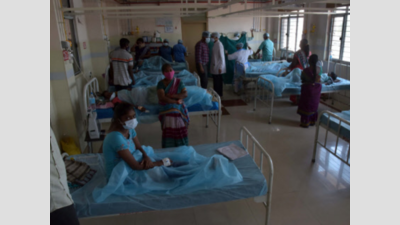
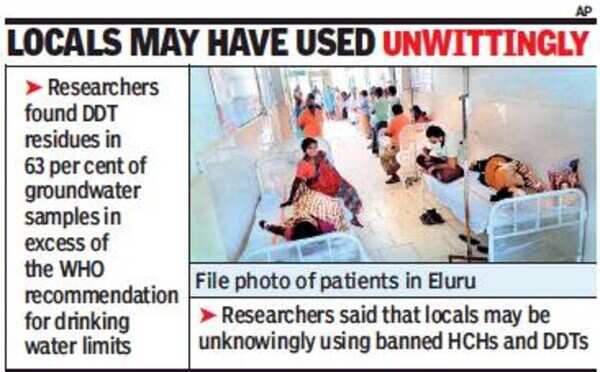
File photo of patients in Eluru
Gajulamandyam region on the banks of Swarnamukhi river was chosen as the study area by the NGRI. Researchers found DDT residues in 63 per cent of groundwater samples in excess of the WHO recommendation for drinking water limits.

The study was published in the International Journal of Environmental Analytical Chemistry by NGRI scientists Rama Mohan Kurakalva and Keshav Krishna Aradhi. It gained significance in the wake of several research institutes finding organochlorides and organophosphates in samples in Eluru recently.
According to NGRI study, the concentration of HCH (hexachlorocyclohexane) was significant in all water samples. A metabolite of DDT (dichloro-diphenyl-trichloroethane) was found in 68.9 percent and 60.5 percent in surface water and groundwater respectively.
“Mean DDT residue levels in groundwater was found in the range of 527.3 ng/L. It exceeded in 63% of samples according to WHO guideline value of 0.001 mg/L for drinking purpose. Similar findings were reported on HCHs and DDTs in surface water and groundwater in other parts of India,” said NGRI scientists.
Researchers observed that that knowingly and unknowingly, people are still using HCHs and DDTs that were banned in India. The source of HCHs in surface water and groundwater might be due to the diverse agricultural practices. The present findings indicate that it is vital to develop a reliable monitoring system for organochlorine pesticide residues in water in order to assess any excess concentrations over environmental quality standards and to take appropriate action.
Organochlorine pesticides can impair the normal functioning of endocrine systems of human beings and animals The highest concentration levels of HCHs were found at the sampling points of Atturu and Papanaidupet area.
Researchers said locals might be using HCHs for agricultural and public health purposes. “Surface water bodies had an average concentration of DDT compounds at 1025 ng/L, 244 ng/L, and 692 ng/L DDE (dichlorodiphenyldichloroethylene, DDD (dichlorodiphenyldichloroethane), and DDT, respectively. The highest concentration levels of DDT was found in Atturu area suspected to be used for vector control purposes with commercial formulations.

About the Author
U Sudhakar ReddyEnd of Article
FOLLOW US ON SOCIAL MEDIA










Photostories
Hot Picks
TOP TRENDING
Popular Categories
Hot on the Web
Top Trends
India Qualifying ScenarioBaba Siddique NewsPakistan Cricket TeamRussell WilsonsSpacex StarshipRahul DravidWho was Baba SiddiqueBabar AzamNTA SWAYAM July RegistrationLawrence BishnoiAmazon LayoffsTaylor SwiftManagement Colleges of IndiaTop Medical Colleges of IndiaTop Engineering Colleges of IndiaTop Pharmacy Colleges of IndiaLive Cricket Score
Trending Topics
Diwali WishesNara RohithDussehra WishesVettaiyan OTT ReleaseVettaiyan CollectionVettaiyan ReviewNatasa StankovicDevara CollectionBigg Boss 18Deepika PadukoneShraddha KapoorRatan Tata Passed AwayJigra Movie ReviewVettaiyan Movie ReviewSwatantrya Veer SavarkarDussehra 2024Star Health Hacker DemandedViral MemesUltimate Football Codes October 2024Wordle Answer
Living and entertainment
Latest News
10 deadliest snakes in Australia and know their venom toxicityOver 70 injured at Devaragattu Banni stick festival during Dussehra celebrationsPassion missing, players don’t want to work hard, lament former intl’sHow tomato, potato, onion influence food inflationBiker’s death ignites village fury in Odisha's Boudh, massive traffic jam on NH-57Reliance Jio sends 'complaint letter' to telecom minister Jyotiraditya ScindiaWomen's T20 World Cup: Why India need Pakistan victory over New Zealand to secure semifinal berthSpaceX's fifth Starship test flight achieves historic booster catchCops probing Bishnoi gang's links to Siddique's murderKrushna Abhishek shares a heartwarming post for mama Govinda; says 'jab body mein adha blood supremely talented actor Govinda ka ho...'News brief: 'Who is listening? Modi?': Kapil Sibal takes a dig at RSS chief Mohan BhagwatPapankusha Ekadashi 2024: Date, Parana Time, Puja Rituals and SignificanceKenya's Ruth Chepngetich breaks women's world record at Chicago MarathonAI’S OppenheimerFormer Pakistan PM Imran Khan's sisters shifted to Jhelum jail on judicial remand'I truly believe ... ': What police said after third assassination attempt on Donald TrumpBaba Siddique murder case: Slum dispute that sparked ED inquest to be part of probeFor 20 years, Thar getting more rain than normal
Copyright © 2024 Bennett, Coleman & Co. Ltd. All rights reserved. For reprint rights: Times Syndication Service