
- News
- City News
- shillong News
- Shillong stares at water scarcity
Trending
This story is from May 4, 2024
Shillong stares at water scarcity
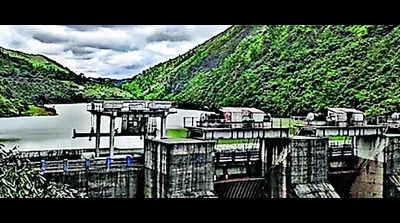
The chief engineer of public health engineering, BM Lyndem, said due to the ongoing dry spell and various other factors, the water level at the Mawphlang dam, the main source of drinking water in Shillong, has decreased notably.
“However, despite this decrease, the storage capacity of the dam still allows for water distribution for another three to four months under the prevailing circumstances,” she said in a statement issued on Thursday.
“In light of this situation, the people are requested to use water judiciously and adopt water-saving practices wherever possible. Conserving water is not just a necessity but a responsibility towards ensuring sustainable water supply for the community,” Lyndem added.
Scarcity of potable drinking water has already hit several parts of the city. The situation is unlikely to get any better as there is no prediction of rainfall by the weather office yet.
We also published the following articles recently
Maharashtra farmers fight water scarcity in villages near Baramati with smile
Water scarcity plagues Baramati villages despite political representation. Residents struggle with minimal water supply, relying on tankers. Promises of water solutions during elections remain unmet in dry regions, forcing some to seek livelihoods in cities due to acute shortage.
Water scarcity plagues Baramati villages despite political representation. Residents struggle with minimal water supply, relying on tankers. Promises of water solutions during elections remain unmet in dry regions, forcing some to seek livelihoods in cities due to acute shortage.
What has PM Modi done to alleviate water scarcity in Maharashtra's Satara, Solapur, asks Congress
Congress's Jairam Ramesh criticizes BJP for ignoring water scarcity in Satara and Solapur, questions PM Modi's response. Highlights various issues including infrastructure projects and water source depletion in the region, urging for concrete solutions to the crisis.
Congress's Jairam Ramesh criticizes BJP for ignoring water scarcity in Satara and Solapur, questions PM Modi's response. Highlights various issues including infrastructure projects and water source depletion in the region, urging for concrete solutions to the crisis.
Treated water not for irrigation
NGT committee found treated effluent from CETPs and STPs unsuitable for irrigation in Buddha Nullah due to high contamination. Proposed connecting effluent to canals instead of rivers, highlighting the need for proper treatment of all outlets.
NGT committee found treated effluent from CETPs and STPs unsuitable for irrigation in Buddha Nullah due to high contamination. Proposed connecting effluent to canals instead of rivers, highlighting the need for proper treatment of all outlets.
End of Article
FOLLOW US ON SOCIAL MEDIA








Photostories

Hot Picks
TOP TRENDING
Explore Every Corner
Across The Globe
Popular Categories
Hot on the Web
Top Trends
India vs EnglandH-1b Visa ReformJasprit BumrahUtah Jazz vs Golden State WarriorsRichest People Educational QualificationWWE Royal Rumble 2025Kurt AngleTax CalculatorSavannah JamesOlivia PontonsIncome Tax SlabsAnthony DavisWho is Samantha McafeeDeepSeek FuelsJason Kelce vs Kylie Kelce Net WorthBudget 2025 Income TaxKeeta VaccaroLive Cricket Score
Trending Topics
Emergency Box Office CollectionGame Changer Box Office CollectionLunar New Year WishesChinese Lunar New YearChinese New Year WishesChinese New Year 2025 ImagesPersonality TestHappy Chinese New Year WishesHappy Chinese New Year MessagesGBS SymptomsDeepseekWildlife SafariDonald TrumpGopalakrishnanemergency Box Office CollectionNYT ConnectionsBill GatesGaurav TanejaTOI News
Living and entertainment
Latest News
Niranj Maniyanpilla Raju clears rumours about father's health: 'Cancer survivor, now returning to normal life’Isro’s 100th rocket launch from Sriharikota successful; GSLV-F15 places navigation satellite NVS-02 in orbit'Emergency' Box Office Collection Day 12: Kangana Ranaut starrer crosses the Rs.17 crore mark as it comes close to completing its two-week theatrical runSA20: Pretoria Capitals stay alive in race to playoffs with big win over Joburg Super KingsISRO's GSLV-F15 rocket carrying navigation satellite NVS-02 lifts off from Sriharikota"People expect women to leave job after giving birth to a child": Sanya Malhotra sheds light on unfair expectations from women in societyParvathy Thiruvothu and Bhagyalakshmi clash over WCC disputeJohnson Charles fires Sharjah Warriorz to a massive nine-wicket win over Dubai Capitals in ILT20Pushpa 2 box office collection Day 55: Allu Arjun starrer mints Rs 15 lakh on 8th TuesdayColdplay on lips, PM Modi says go big on 'gig' economyVeteran TV anchor Jim Acosta announces independent venture after leaving CNN, reacts to Trump’s ‘major loser' comment'Will cause chaos': Trump administration offers 7-month salary to 3 million federal workers if they opt to resign by February 62 days after 8 killed in blast, ordnance unit brass shuntedChinese New Year & Lunar 2025: 50+ Heartfelt wishes, greetings, messages, and quotes for the Festival of LightsHappy Chinese New Year 2025: Top 50 wishes, messages, quotes and images to celebrate lunar New YearHappy Chinese New Year 2025: Best Messages, Quotes, Wishes, and Images to Share on Chinese Lunar New YearWaqf JPC to suggest tweaks in rules for property claim'Sky Force' box office collection day 5: Akshay Kumar, Veer Pahariya starrer inches towards Rs. 100 crore despite the dip in business after the Republic Day weekend
Copyright © 2025 Bennett, Coleman & Co. Ltd. All rights reserved. For reprint rights: Times Syndication Service