
- News
- City News
- raipur News
- Darkness illuminated: Abujmarh's first village to be electrified soon
Trending
This story is from September 21, 2016
Darkness illuminated: Abujmarh's first village to be electrified soon
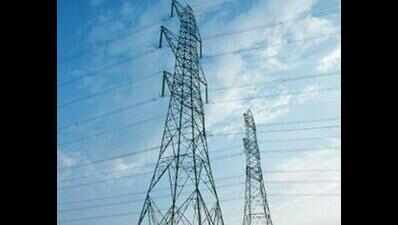
(Representative Image)

Despite years of independence, villages in Abhujhmad remain in darkness due to dominance by Maoists, but taking our reach of development to another step, Chote Dongar village at Abujmarh would be the first to get electricity in that region, CM said.
CM also reviewed the installation of electric sub-stations in various parts of state and asked the department officials to implement the projects on a war-footing.
Elaborating about the project, Singh said, "The 198 electric sub-stations' projects of 33/11 k.v. capacity should be completed by June 2017. They will resolve the low voltage fluctuations issue. Thirty electric sub-stations are likely to come up at Rajnandgaon district, 27 sub-stations at Durg district, 22 sub-stations at Raipur and Raigarh districts, 18 at Mahasamund district, 17 at Surguja district, 15 at Bilaspur district, 14 sub-stations at Janjgir-Champa district, 12 at Bastar district (Jagdalpur) , 11 at Kanker distrct and 10 sub-stations at Korba district." He added that 29 electric sub-stations with 132 k.v. and above capacity are being installed in various parts of the State.
From Raita to Jagdalpur 400k.v. capacity electric lines are being laid. Raman Singh laid stress on completing the projects in two-year duration. The electric sub-stations are being constructed at Narayanpur, Bilaspur, Kawardha, Jagdalpur, Dharsiwha, Parsada, Mohala, Nagari, Wadrafnagar, raipur, Kondatarai, Pakhanjur, Bijapur, Damra, Shivrinarayan, Takatpur, Lormi, Kansabel, Dornapal Berla, Basna, Bhakhara, Charama, Borjhara, Batouli, Indhagaon and Sukma, Jagdalpur and Kurud.
The officials said that nearly five lakh below poverty line families had been given L.E.D. lamps under the 'Ujala Yojana'. Rest of the poor families will be provided with lamps by March-end.
Meanwhile, it's a welcoming move for tribals in Abujmarh region, spread over an area of more than 1,500 square miles — bigger than the geographical area of Goa state —Abujmarh has a dense forest cover, rocky terrain, rivers and rivulets and inaccessible forest villages, mainly inhabited by Gond and Muria tribes.
The population density in its mountain ranges, which falls in Narayanpur, Bijapur and Dantewada districts and also borders with Maharashtra, is less than 10 persons per square mile.
Chief minister had announced to lift movement restrictions in Abujmarh few years back saying that satellite mapping to locate villages in the region is being carried out by the Indian Space Research Organisation for its development.
The movement restrictions in the region was imposed in the early 1980s when a foreign television channel telecast a documentary about the lives of Abujmarh tribals and the traditional "Gotul" system of Muria Gond tribes, allegedly showing them in nude and portraying their 'Gotul' system in poor light.
Chief Secretary Vivek Dhand, Energy Department Additional Chief Secretary N. Baijendra Kumar, Principal Secretary to CM Aman Kumar Singh, Mineral Resources Department Secretary Subodh Singh were among those present.

About the Author
Rashmi DroliaEnd of Article
FOLLOW US ON SOCIAL MEDIA





Hot Picks
TOP TRENDING
Trending Stories
In City
Entire Website
- Breathtaking cosmic catwalk! SpaceX makes history with first-ever private spacewalk
- 2 Army officers thrashed, their female friend gang-raped in Madhya Pradesh
- Bangladesh announce Test squad for India tour
- Top fastest trains in the world: From China's CR Harmony to Germany's ICE
- Amid Shannon Sharpe Viral Video, Former ESPN Host Michelle Beadle Reacts Claiming It Was Not Her
- Ayushman Bharat insurance scheme expanded to cover elderly above 70
- 'Will be demolished if... ': Himachal minister's assurance amid Shimla mosque row
- Mumbai's Haji Ali and Mahim dargahs cancel Eid shamiana
- Garena Free Fire MAX redeem codes for September 11, 2024: Win free room cards, skins, diamonds, pet skins, and more rewards today
- GK for students: Top 8 Largest Mammals in the World
- On Mamata's 'ready to resign' offer, protesting doctors say 'want solution to RG Kar stalemate'
- In the (y)ear of conspiracy theories, Trump hears insults galore
- Your cousin’s poo can now cure your chronic stomach problems
- 'Lady Macbeth of Bengal': CV Ananda Bose to 'socially boycott' Mamata Banerjee
- 2 dead, 20 police officials injured as Assam eviction drive turns violent
- Putin invites 'great friend' PM Modi for talks on sidelines of BRICS summit
- Why are Bangladeshi Hindus in India for 50 yrs still not Indians?
- Planning to buy iPhone 16? How much Apple will give for iPhone 12 & others
- Israel intel unit chief quits over Oct 7 failure, seeks 'forgiveness'
- 'Leading light of the Left': Sitaram Yechury passes away; PM Modi, Rahul condole demise

Popular Categories
Hot on the Web
Top Trends
Trending Topics
Alia BhattMalaika Arora Father DeathArbaaz KhanNatasa StankovicMr Bachchan OTT ReleaseNational Parks In IndiaSelena GomezGOAT CollectionVikas Sethi DeathMalayalam ProducersIndia's Best Dancer 4Simi GarewalDilli BabuIndian National ParksLaung BenefitsVikas SethiiPhone 16Microsoft 365 OutageMG Windsor EvWordle Answer
Living and entertainment
Latest News
Epilepsy medication shows promise of treating sleep apnoea symptoms: StudyDigest this: Unhealthy gut may be linked to Parkinson’s disease'Played a big role in turning the cricket around': Ricky Ponting applauds Virat Kohli’s brilliance as India’s former captainAadhaar card update: Do you have to compulsorily update details on your Aadhaar every 10 years?Single Indians are now choosing slow, meaningful dates over-elaborate outings, reveals an online dating platform’s surveyExclusive- Saurabh Gumber reveals joining a new show during Ganeshotsav says, "I consider it as Bappa's small gift and believe he has great plans for me ahead"Pakistan: Bilawal cautions Shehbaz govt against political victimisation, points to Imran Khan's caseVijay Varma reveals he was DROPPED from 'Sacred Games' at the last minuteMahindra Thar Roxx with VIN 0001 to be auctiond for charity: How to registerVijay Sathya-starrer 'Dhil Raja' to release in SeptemberHarvard University Sees Drop in Black Freshman Enrollment Post-Supreme Court Ruling on Affirmative ActionCMF Buds Pro 2 by Nothing review: Big delivery on a budgetArbaaz Khan spotted outside Malaika Arora's house along with police after the tragic news of her father's demise by alleged suicide - WATCH VIDEOHarvey Weinstein charged with additional crimes during hearing on rape chargesMitchell Schwartz's Cryptic Tweet Stirs Debate About Mahomes' ContractSiddhant Chaturvedi reveals he rejected Ranbir Kapoor, Alia Bhatt and Amitabh Bachchan starrer Brahmastra after father’s advice: 'He asked me, ‘Tujhe kaun dekhega?''EcoR unloads 100 million tons of goods in just 160 daysTovino Thomas praises Prithviraj Sukumaran as director: "One of the brilliant directors I have ever worked with"
Copyright © 2024 Bennett, Coleman & Co. Ltd. All rights reserved. For reprint rights: Times Syndication Service