
Trending
This story is from June 22, 2017
Why inter-faith iftars have been the season’s highlight
Far from the clamour of food bans, a silent movement has gained pace, quite evident from the open-house iftars, food walks and pop-ups over the past Ramzan month...
Far from the clamour of food bans, a silent movement has gained pace, quite evident from the open-house iftars, food walks and pop-ups over the past Ramzan month...

While you grew up among these differences – of language, food, and lifestyles – considering them completely “normal”, times have changed. Thanks to our busy lives, we all seem to be sporting blinders, indifferent to each other’s differences. Not to forget the tumult of bans on food now. One can rant and protest, but one can also create occasions for people to convene and understand one another, as is the case with a group of Muslim women in Noida, who hosted an inter-faith iftar in early June.
It started with a Facebook post by speaker, author and entrepreneur, Nazia Erum, one of the hostesses. She shares, “During research for my book on mothering a Muslim, I realised how little Indians knew about Muslims and their customs. A survey by the Centre for the Study of Developing Societies (CSDS) also showed how only 33 per cent Hindus considered a Muslim among their close friends. This led me to realise that the rest might not have even attended an iftar.” Nazia’s post asked if there was anyone who hadn’t been to an iftar before. It was an open invitation to an iftar party. Expecting three-four responses, she was flooded with over 30. Just when the task of hosting so many people suddenly seemed daunting, other Muslim women connected to pitch in. Someone let out their house, while others agreed to cook. “In the end, there were 12 of us who hosted the evening, of which I knew only four women personally,” says Nazia.
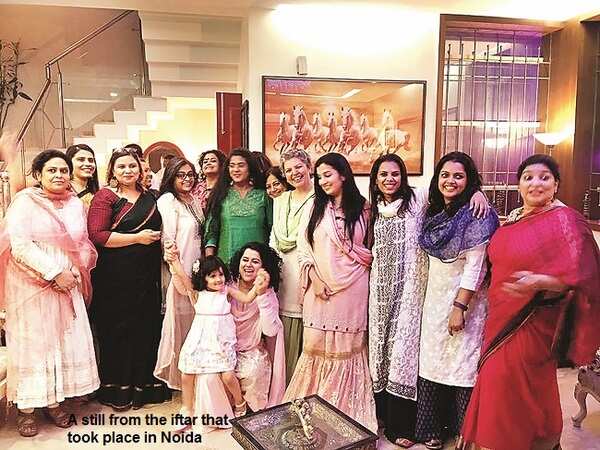
Many, travelling from Gurgaon and Delhi to Noida for the iftar, were visiting a Muslim household for the first time. “No one giggled or spoke at first. They sat upright. But soon, not only did I see, but I also heard apprehensions being dispelled. Guests were surprised to see vegetarian food on the table, while others were in awe of how well-articulated we were,” recalls Nazia. One of the guests, Gauri Sarin, says, “For the 20-odd years that I’ve been into executive search, I’ve found a countable number of Muslims walking in for senior positions. But here were women, all achievers – authors, teachers, historians, pilots, bikers, journalists, lawyers and food entrepreneurs.” What stood out for Gauri was meeting so many like-minded Muslim women, but the fact that we don’t meet them often. Through the meal, she was also able to see how the purpose of fasting was so common to her own beliefs of the same. “I would love to see Hindus throw an iftar party for Muslims, and this is something I’m going to do next year,” she adds.
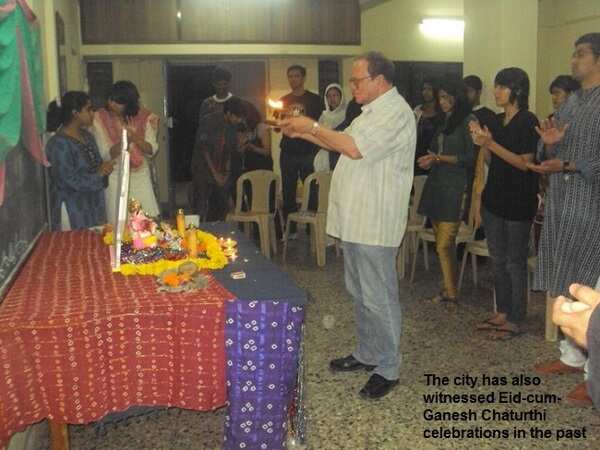
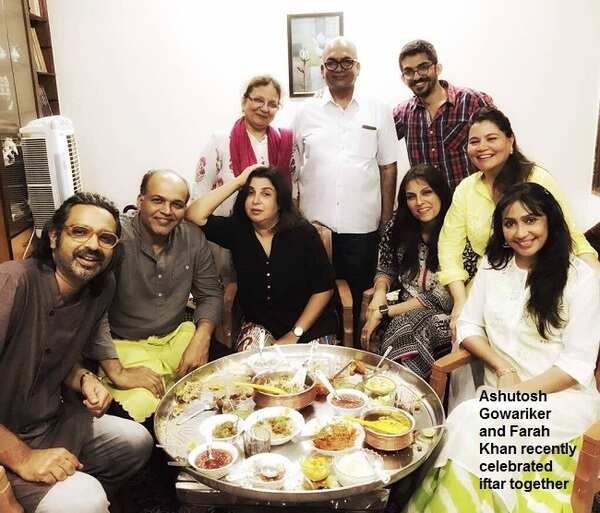
While these seem to be gaining ground, others say that iftars have always been this way. Boat Club Road resident, hair and makeup artist Saba F Poonawala, says, “For as long as I can remember, it has always been an open house at my place. If someone couldn’t make it for some reason, we’d even send food boxes home.” Charholi resident Ria Nadkarni, who belongs to a city inter-religious youth group, also recalls relishing modaks and sheer khurma at its Eid-cum-Ganesh Chaturthi celebration in 2010, when the two festivals almost coincided. So what’s new or different, one might ask. Nazia says, “We’ve always invited friends and neighbours, but the need now to is go beyond those who accept us, and include people who’ve never attended an iftar before.”
Beyond iftars, the closest example of community sharing is the Ramzan food trails that have been taking place. Jayesh Paranjape, who conducts such food walks, says, “They provide a chance to understand people and their food culture, and change perceptions. 10 people joined me at Kausar Baug this time where we got to sample cuisines ranging from Afghan to Turkish. We returned feeling enriched at the thought of having tried something new.”
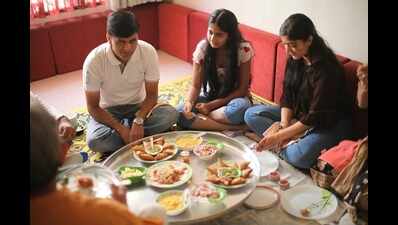
And in times when politics doesn’t seem to spare food as well, pop-up meals have been serving as the perfect means to break barriers and forge ties. Throughout Ramzan, people have been travelling from across town to visit Kalyani Nagar home chef Rizwana Yusuf’s house for her Bohri iftar. “Most diners who visit have never sat around the thaal before. I get questions from them, about how we break our fast, and the concept of the thaal, and it’s nice explaining the various customs related to the meal, such as why we begin with salt, and the reason for alternating between ‘mithas’ (sweet) and ‘kharas’ (savoury),” says Rizwana. Aneesh Dhairyawan, co-founder of Authenticook, that organises such experiences, is of the opinion that food is capable of being a great unifier today. “What people are craving for today is an experience — a chance to understand a community’s culture through its food. There’s magic when people sit across the table and share a meal. Biases and prejudices wither away while we learn to understand and respect the community and its nuances,” says Aneesh.
By the time you finish reading this, inter-faith iftars would have taken place in Mumbai, Delhi, Hyderabad, Guwahati and Pune, including one at a blind school and one for underprivileged girls. As Ramzan nears its end, we hope this beautiful tradition makes a comeback, be it during Ganesh Chaturthi, Onam or Christmas.
The city’s secular fabric
Pune isn’t new to inter-faith celebrations. Sachin Phadkar, an alumnus of Symbiosis Institute of Media and Communication, recalls the mood of the hostel when he kept Ganpati in his room, “There was an air of positivity all around for those 10 days. We felt a bond of unity and harmony among us.” Walk down the alleys of cantonment area during Christmas, and you’ll find its streets teeming with people who’ve come crib hopping. It’s a similar scene during Diwali in the old city, where people visit to partake in the deepotsav at Shaniwar Wada, Saras Baug and other old temples.
Beyond the food, it’s also about cultural exchange, and the values that Ramzan teaches us. Some people go for days without food and water, and Ramzan makes us understand the difficulty of doing so.
— Saba F Poonawala, who hosts open house iftars at her place
End of Article
FOLLOW US ON SOCIAL MEDIA





Hot Picks
TOP TRENDING
Trending Stories
In City
Entire Website
- Several people feared trapped after house collapses in Delhi's Karol Bagh
- 'Putting an end to all the masala': Virat Kohli and Gautam Gambhir leave fans stumped
- Massive tech layoffs at Apple, Dell, IBM are a wake-up call for IT professionals: Why upskilling is the key to survival
- 'Biggest security breach': 1000s of pagers explode across Lebanon, many Hezbollah fighters hurt; 9 dead
- Maharashtra schools closed on Sep 18: Here’s why
- Schools to be closed tomorrow in these states: Here’s why
- 'Prophet Muhammad who taught us to...': Pakistan batter Babar Azam turns to faith amid poor form
- Sukanya Samriddhi Yojana: What are the latest guidelines for SSY accounts? Check here
- How Israel's Mossad turned everyday pagers into deadly weapons against Hezbollah
- BCCI drops a bombshell on out-of-form Shreyas Iyer, says 'if he doesn't fire ... '
- Article 370, statehood restoration J&K poll issues now, not 'azadi'
- Taiwan company says pagers that exploded in Lebanon made in Budapest
- Can 1st election in 10 years give J&K back its sense of belonging?
- 'Tried to make him understand ...': Kejriwal to move out of CM residence
- Why was Hezbollah using outdated pagers in 2024?
- Gautam ahead of Bangladesh Tests: 'The winning style is the best style'
- Does India wish to disappear like Indus valley civilisation once did?
- Intel CEO announces major restructuring, tells employees: 'We need to fight for …'
- After bounty on Rahul's tongue, Sena MLA's 'bury Congress dogs' threat sparks row
- BCCI drops a bombshell on Shreyas Iyer, says ...

Popular Categories
Hot on the Web
Top Trends
NPS Vatsalya LaunchDonald TrumpKolkata Doctor Rape CaseShreyas IyerTaiwan PagersGautam Gambhir Press ConferenceUGC Net ResultVirat KohliSukanya Samriddhi YojanaIsrael Hezbollah WarNEET UG Admission CriteriaKarol Bagh Building CollapseDelhi CM's ListBabar AzamTupperware BrandsTech LayoffsLive Cricket Score
Trending Topics
NayantharaLuxury BrandBaby HippoKhatron Ke Khiladi 14Chinas EggAtishi Marlena Singh QualificationSunita AhujaGoat CollectionSalman Khan FarmhousePitra Paksha 2024CheetahsKangana RanautAditi Rao HydariDalljiet KaurHoliday DestinationVikas SethiBest Selling Earbuds Under 1000Apple iPhone 16 ProVirat KohliWordle Answer
Living and entertainment
Latest News
Throwback: When Aishwarya Rai said that dignity is 'extremely precious' to her; 'The way I have been brought up.....'Shilpa Shetty just rolled out the latest sari trend 'a rainbow sari''Could restore sight': FDA grants 'breakthrough status' to Musk’s Neuralink 'Blindsight' implant. What it meansCM Punk to Step In as Guest Referee for NXT Title Match at WWE NXT Chicago EventWaterborne disease cases spiked after flood in VadodaraThe man who wants to 'cancel' Adani from Sri Lanka11 get new lease of life with organs from two in SuratMrBeast aka Jimmy Donaldson, Amazon sued by ‘Beast Games’ contestants over sexual harassment and chronic mistreatment allegations - reportsAmazon India appoints new country headIndia 'very big abuser' of trade ties with US, says Donald TrumpJr NTR's 'Devara: Part 1' to have early morning showsA lot at stake as Mohun Bagan get ready for Asian footballHeart problem? Smart stetho can sense it in just 15 secsWhy am I feeling irritable? Common causes of mood swings and how to manage themPoonam Kaur calls out MAA over inaction on Trivikram complaint amid Jani Master allegationsNEET MDS Revised Cut-off 2024: Ministry of Health reduces qualifying cut-off by 21.692 percentile, NBEMS to release revised resultsSC halts bulldozer action without its nod till October 1Government removes windfall tax on crude petroleum
Copyright © 2024 Bennett, Coleman & Co. Ltd. All rights reserved. For reprint rights: Times Syndication Service