
Trending
This story is from December 1, 2016
Spare a thought for your stressed-out, overworked banker too
Bank branches, where average daily footfall has steadily declined after online transactions became a norm in urban areas, are suddenly witnessing a sea of people. "The shortage of acceptable currency notes is the biggest reason for our stress," admitted a bank official.

This is one of the jokes circulating on WhatsApp after the demonetisation-induced cash crisis. The jest is not too far from the reality that bank employees are facing these days — suddenly thrown into the deep waters to manage crores of demonetised money being deposited every day.
Bank branches, where average daily footfall has steadily declined after online transactions became a norm in urban areas, are suddenly witnessing a sea of people.

The shortage of acceptable currency notes is the biggest reason for our stress, admitted B J Nibandhe, deputy branch manager of a nationalised bank. “Workload is much higher, so much so that one of our cashiers actually took leave for a couple of days to get over the added stress. The main concern for us, apart from the longer working hours, is that we have to be extremely cautious about fake notes while accepting the demonetised currency. Irrespective of the employee’s role in the branch, every one has been contributing to ease the cash crisis,” he said.
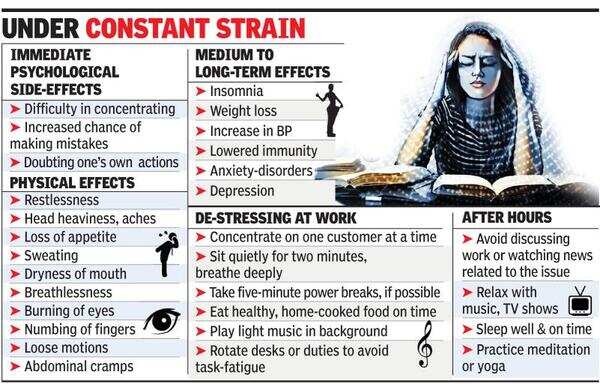
The other problem is of handling impatient customers, said another branch manager who did not wish to be named. “While the situation has improved now, the initial week was stressful as most of the crowd turned up to exchange currency. Some irate people raised their voices or picked fights, but we could not say much. So we took it upon ourselves to ensure quick settlement of every transaction so that the lines don’t become too long. That meant working fast, sometimes even without a break,” the official said. The sheer volume of work and the associated pressure is sure to take a toll on the bankers, believe city-based psychologists.
Symptoms of the burn-out can exhibit in multiple ways, said developmental and educational psychologist Yajyoti Singh. “The burn-out is as much social and physical as it is emotional, even more so because they are dealing with large audiences, and are expected to exhibit calm and control. The bank’s administration can play a critical role in boosting the morale of the staffers not only by periodically appreciating the work they are doing, but also by prepping them with ideas about handling the situation. Refreshments, energy juices, stress-relieving sweets and chocolates may also be organised for the staff, particularly those handling the crunch tasks,” she said.
Group-cohesiveness and cooperation could go a long way to alleviate their tension, said consultant psychologist Himani Chaphekar. “All the staffers are facing the same stress. So, they can talk and share their anxieties with each other to relieve this stress. Even changing their perspective about the exercise — treating it as their contribution to a larger good rather than a tedious workload — can do wonders in reducing the stress they feel because of this excessive physical work,” she said.
End of Article
FOLLOW US ON SOCIAL MEDIA






Hot Picks
TOP TRENDING
Trending Stories
In City
Entire Website
- Arvind Kejriwal Resignation News Live Updates: 'I don't have lust for power' Arvind Kejriwal to resign from the post of Delhi CM in two days
- Arvind Kejriwal Resign Live Updates: 'I don't have lust for power' Arvind Kejriwal to resign from the post of Delhi CM in two days
- Famous NFL Superstars Who Are Friends Of Taylor Swift
- GK for Students: Why is International Day Of Democracy celebrated on September 15?
- Kolkata rape-murder case: Ex-principal Sandip Ghosh, policeman arrested for destruction of evidence
- Bengaluru woman sparks controversy with comments about Swiggy delivery executive, internet reacts
- 'Nafrat ki dukaan pe ...': PM Modi attacks Congress over 'brutality' in US
- Top 10 sports stars turned power couples: From Agassi-Graf to Conner-Comaneci
- Hamster Kombat Daily Cipher Codes and Combo Cards for September 15, 2024: Unlock up to 1 million coins
- Neeraj Chopra finishes second, misses out on title by 0.01 meters at Brussels Diamond League Final
- 'Was warned in jail I would not be allowed to meet family again', Kejriwal attacks BJP's 'cruelty'
- 'Shocking details soon': Cong alleges 'rigging' by Maha govt in Adani power deal
- No driver, no haggling, Mumbai’s BKC aims for friendliest taxi service
- 'Never asked anything from party but ...': BJP's Anil Vij eyes Haryana CM post
- J&K polls: MP Rashid refutes ties with BJP, announces alliance with ...
- Video: Indian racer Kush Maini's Formula 2 car in bits and pieces at Azerbaijan GP
- Will the treaty Hasina signed with India get her extradited?
- Melinda Gates reveals the 'best part' of not working with ex-husband Bill Gates
- 'Message for Modiji': Oppn takes jab at BJP over Gadkari's 'PM post' claim
- Two simultaneous encounters under way in Poonch, Kathua of J&K

Popular Categories
Hot on the Web
Top Trends
Trending Topics
World Largest HorseEID WishesOnam WishesPriyanka Chopra TattooKottukkaali OTT ReleaseEngineers Day WishesGoat CollectionHair LossSudha MurtyMalayalam ProducersIndia's Best Dancer 4Simi GarewalDilli BabuIndian National ParksLaung BenefitsVikas SethiApple iPhone 16Donald TrumpAadhar Card UpdateWordle Answer
Living and entertainment
Latest News
PM Modi's Sunday roadshow in Jamshedpur cancelled due to heavy rain4 types of tea to improve gut health and ease digestive issuesFour Zodiac Signs That Are Hard to Control'Message for Modi': Opposition takes jab at BJP over Nitin Gadkari's 'PM post' claimNetflix denies filmmaker Soham Shah’s plagiarism allegations over Squid Games, says claim holds 'no merit'Weekly Career Horoscope, September 15 to September 21, 2024: Read your weekly astrological work predictions for all zodiac signsZodiac Signs That Crave a Luxurious Lifestyle"Miami Dolphins Owner Stephen Ross Eyes Multi-Billion Dollar Deal: The $7 Billion Power Play"Rajkummar Rao hails Kareena Kapoor Khan's The Buckingham Murders as a 'gripping thriller'MoS Finance likely to be convenor of GoM on GST compensation cessRole Rewind: Did you know Ranveer Singh and Deepika Padukone's love story has a strong Kareena Kapoor Khan connection?Coin Master free spins and coins for 15 September, 2024: Earn 7 million coins using today’s linksHow to set up partner sharing in Google PhotosIndia, Pakistan players involved in heated exchange during Asian Champions Trophy. WatchNoida authority fraud: 2 arrested in Rs 3.9 crore scam linked to fake bank accountsCouncillor's bro, 4 others held for hurling stones at Vande BharatCancer, Weekly Horoscope, September 15 to September 21, 2024: Encounter a busy week filled with unexpected challengesDoctor posts morphed clip of med classmate, held in Tamil Nadu
Copyright © 2024 Bennett, Coleman & Co. Ltd. All rights reserved. For reprint rights: Times Syndication Service