
Trending
This story is from November 15, 2022
Pune Municipal Corporation, cops identify 41 chronic jam spots
Impatient wait at traffic snarls during peak hours amid deafening honking, flouting of rules to be the first to get out of the mess and road rage have become almost an everyday affair across the city, with many fearing that Pune is going the Bengaluru way.
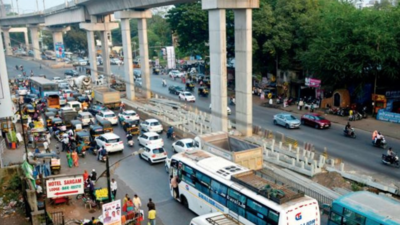
The 41 congested traffic junctions have been selected based on the feedback from citizens and traffic personnel
Traffic congestion, many say, seems to be "a rocket science" for the authorities conducting multiple studies to understand the root cause of the issue.

Earlier on multiple occasions, the traffic police had sent letters to various departments in the PMC to remove encroachments and obstructions caused by advertisement boards, utility shifting, road widening, tree cutting, garbage disposal and PMPML bus stops. After much public anger, the civic body is now working towards better traffic management with the study being the model.
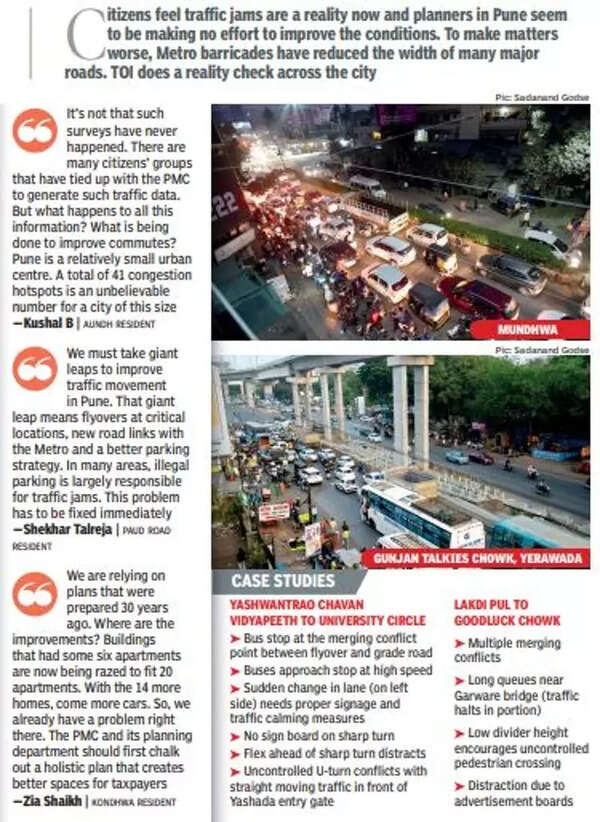
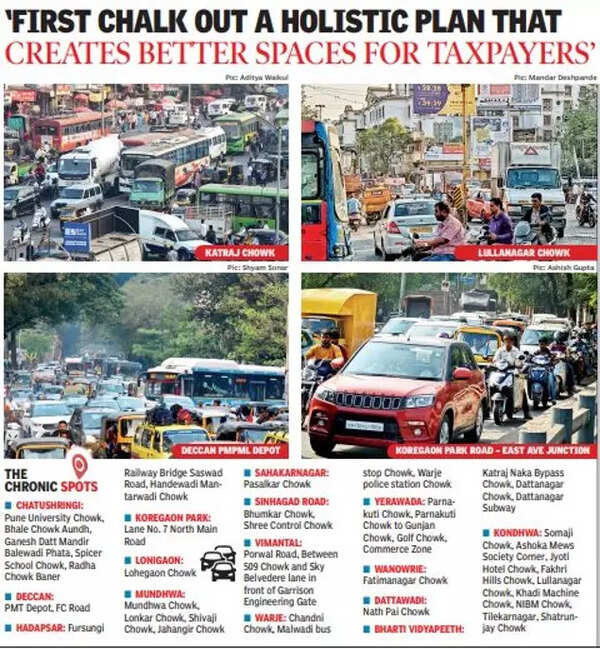
The 41 congested traffic junctions (see graphic) have been selected based on the feedback from citizens and traffic personnel. The citizens, however, seemed to have become somewhat stoic. Khadki resident Ajay Mathews said, "Traffic jams are a reality now and we have to live with them. But planners in Pune seem to be making no effort to improve conditions. Metro barricades have come up along some major roads, reducing their width."
He said, "Were the authorities expecting citizens to be okay using these smaller carriageways for the next few years, until the Metro comes up? Where are the alternate routes? Where are lights for traffic guidance? All we see are men with tattered flags doing their best to guide everything from large trucks to autorickshaws. These are half measures."
Harshad Jadhav, who regularly travels between Aundh and Shivajinagar, said, "The increased travel time has definitely impacted our mental and physical health. We are exposed to heavy pollution in the traffic. The constant honking is another problem. Taking out your car is an impossible task. Everyone is in a rush and this is leading to road rage incidents over slightest of arguments."
Kunal Jambhule, who lives in Mundhwa and travels to Magarpatta on a daily basis, said, "I have to cross multiple crucial junctions. In addition to this, the potholes on this stretch are adding to our woes. It is quite a task to travel on this road. During monsoon, it is an even bigger challenge. The bottleneck on the road just ahead of the flyover and sharp curves and turns make the road prone to accidents."
Hadapsar resident Prince Anthony said, "The stretch between the Fursungi flyover to Katraj bypass at the Fursungi junction is prone to accidents. The road is used by small cars and heavy vehicles. Trucks and lorries coming in from Hyderabad and Solapur are completely inconsiderate towards those driving smaller vehicles. The BRTS corridor on the Hadapsar highway has caused more problems."
PMC traffic consultant Nikhil Mijar said, "We have studied the features on ground and tried to understand the typical geographical features of the locations while conducting the study. Most of the traffic problems can be managed my minor changes such as setting up proper signages, shifting bus stops to the right position, constructing footpaths for pedestrians and concrete dividers with increased height and ensuring proper turning radius and markings on the roads."
Traffic inspector Ashok Toradmal said, "We have had regular correspondence with the civic body on traffic issues. They have to take action and we do not have any infrastructure for such measures. We have told them to take some temporary and routine measures, like improving signage and removing encroachments, and long-term measures like the constructing new flyovers or widening roads.After the rains, the PMC is taking measures to repair the potholes."
Prachi Mane, a resident of Bhumkar Chowk, said, "Does it take a group of experts to point out that the bus stops are improper and traffic signals are not working? Poor management is not only affecting traffic but also impacting citizens' health and often leading to fights and road rage incidents."

About the Author
Steffy ThevarEnd of Article
FOLLOW US ON SOCIAL MEDIA







Photostories
Hot Picks
TOP TRENDING
Popular Categories
Hot on the Web
Top Trends
Mohamed Muizzu India VisitIsrael Hezbollah WarAssembly Election Result 2024Travis KelceHardik PandyaBasit AliKayla NicoleSanjay ManjrekarElection Exit PollsLalu Prasad YadavUGC NET ResultDiddyWomen's T20 World CupTop MBA Colleges of IndiaT20 WC ScheduleWomen T20 World Cup Points TableLive Cricket Score
Trending Topics
Bigg Boss 18 Launch LIVE UpdatesBigg Boss Tamil 8 Contestants ListBigg Boss Tamil 8 Launch LIVE UpdatesNavratri Colours 2024Navratri Day 2 ColourDurga Puja 2024Bigg Boss 18 House PhotoDevara CollectionNita AmbaniDeepika PadukoneGovindaDevaraGovinda NewsDevara Movie ReviewSwatantrya Veer SavarkarColdplay India tour 2025Maa Durga 108 NamesNavratri JewellerySony Bravia 55 inch 4k Ultra HD TVWordle Answer
Living and entertainment
Latest News
1st T20I: Dominant India make quick work of BangladeshWorld famous Corpus Clock: A time piece and a haunting work of art'Devara' box office collecton day 10: The Jr NTR film sees 30 percent growth on Sunday despite Navratri festivities, inches towards Rs 250 crore in IndiaYouTube Shorts extends duration to 3 minutesLong farewell: Yellow alert for today and tomorrowWhy are the CEOs of most luxury brands stepping down?Delhi ki festive vibe hi alag hai: Mannara ChopraWWE Hall of Famer Diamond Dallas Page signs new WWE Legends dealNavratri 2024 Day 5: Maa Skandamata, Puja Vidhi, Mantra and SignificanceZodiac Signs Most Likely to SucceedOptical Illusion: Can you find who's the boss in this picture?'All teams will come to Pakistan for Champions Trophy': PCB chairman on India's participationDucking Below The WavesBigg Boss Kannada 11: Yamuna Srinidhi becomes first contestant to be evictedCoin Master free spins and coins for 7 October, 2024: Earn million of coins using today’s linkIndustry upbeat on policy continuity as business confidence index rises to 2-quarter high: CIISuriya shares a warm hug with Karthik Subbaraj as they wrap up shoot of 'Suriya 44'; says 'I made a brother for life'Seized vehicles, weapons used by Hamas in October 7 attack on display in Israel
Copyright © 2024 Bennett, Coleman & Co. Ltd. All rights reserved. For reprint rights: Times Syndication Service