
Trending
This story is from January 13, 2015
Popular acne treatment may knock essential drug off shelf
In a country where the strongest antibiotics are falling like ninepins to resistant infections, a popular treatment for common acne is threatening to sink into oblivion an entire antibiotic class.

In a country where the strongest antibiotics are falling like ninepins to resistant infections, a popular treatment for common acne is threatening to sink into oblivion an entire antibiotic class.
Dermatologists of Maulana Azad Medical College in Delhi trailing antibiotic-resistance patterns in acne cases are stumped by their new finding – almost all the cases they tested were resistant to azithromycin, commonly used to treat upper respiratory tract infections and pneumonia, among other conditions.

The research – genomic mapping of P.acnes and antibiotic resistance – is currently underway, but those at the helm have already sounded the alert – dermatologists should steer clear of azithromycin. They point out it is an off-label (not to be used) drug for acne treatment in any case.
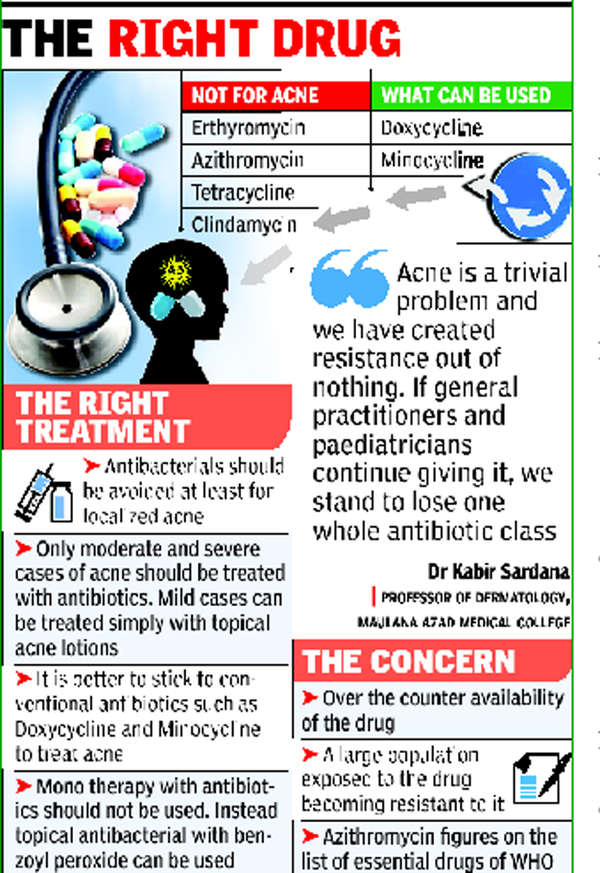
Doctors said their fraternity has used a cannon to kill a fly –a higher antibiotic like azithromycin to treat acne. “Acne is a trivial problem and we have created resistance out of nothing. If general practitioners and paediatricians continue giving it, we stand to lose one whole antibiotic class,” said Dr Kabir Sardana, professor of dermatology at MAMC. who is spearheading the clinical research.
The resistance has drawn multiple worry lines. Dr Yashwant Tawade, head of department of dermatology at KEM hospital, Pune, said dermatologists in India had switched to doxycycline and azithromycin to treat acne after other antibiotics like tetracycline and erythromycin stopped working on the infection.
“Azithromycin is a good antibiotic, mainly used to treat upper respiratory tract infections, and could go out of circulation if resistance continues to build up,” he added.
Adding to the resistance is the almost-normal practice among adolescents and teenagers of sharing prescriptions and buying drugs over the counter to treat acne, and stopping the dosage midway as soon as the skin gets better.
The other concern is that of the population size that stands the risk of being resistant to the drug –an entire generation being raised on a heavy dose of azithromycin.
Paediatricians prescribe it widely to treat cough and cold and general practitioners and dermatologists to treat adolescents for similar infections and acne.
The most critical concern, however, is the use of this broad-spectrum drug leading to the acne-causing bacteria and also other microorganisms becoming resistant to other drugs as well. “There is no new medical discovery. We don’t have those many drugs,” said Dr Rajesh S Gokhale, director of Delhi-based Institute of Genomics and Integrated Biology, pointing out how the growing resistance to most drugs is an “under-appreciated problem”.
Besides, unregulated use has only increased the fitness of organisms, and reduced immunity of people, says Dr Gokhale. He explains that as resistance against antibiotics builds, the strains that are resistant to the drug can cause other infections, more commonly in the lungs.
Chest medicine specialists have already changed gears. “We have practically stopped prescribing azithromycin because of the resistance. We, however, still prescribe it for asthma and bronchitis, which is a three-month course,” said Dr Mahavir Modi, pulmonologist at Ruby Hall Clinic in Pune.
Dermatologists say they have already changed treatment protocols. “Antibacterials should not be used in mono therapy and for a short duration. Antibacterials should be avoided at least for localized acne,” says Dr Uday Khopkar, dermatologist with KEM, Mumbai. Dr Nina Madnani, consultant dermatologist with Hinduja Hospital, Mumbai said the topical antibiotics are now being combined with benzoyl peroxide and the resistant cases were becoming a concern.
Researchers say the resistance will only spread. “The organism causing acne can spread from one person to another if people don’t stop using antibiotics and which would ensure most people will stop reacting to antibiotics,” Dr Sardana said.
End of Article
FOLLOW US ON SOCIAL MEDIA










Photostories

Hot Picks
TOP TRENDING
Popular Categories
Hot on the Web
Top Trends
IND vs BAN Live ScoreRussell WilsonsVirat KohliMickey ArthurShantanu NaiduUGC NET ResultNobel Peace PrizeMahadev Betting AppAmazon LayoffsRatan Tata DiesCBSE Class 10 12 Practical ExamPopular Schools in Navi MumbaiManagement Colleges of IndiaTop Medical Colleges of IndiaTop Engineering Colleges of IndiaTop Pharmacy Colleges of IndiaLive Cricket Score
Trending Topics
Diwali WishesDussehra 2024 QuotesDussehra WishesVettaiyan OTT ReleaseVettaiyan CollectionVettaiyan ReviewNatasa StankovicDevara CollectionBigg Boss 18Deepika PadukoneShraddha KapoorRatan Tata Passed AwayJigra Movie ReviewVettaiyan Movie ReviewSwatantrya Veer SavarkarDussehra 2024Elon MuskDussehra Whatsapp StatusUltimate Football Codes October 2024Wordle Answer
Living and entertainment
Latest News
Challenging Aspects in Astrology: What They Mean for YouNew Zealand pile pressure on India after routing Sri LankaInfosys to no longer send job offer letters and attachments, the company will ...Happy Dussehra 2024: Top 50 Wishes, Messages, Images and Quotes to Share with Your Loved OnesIn the land of Ram, a Ramlila that unites Hindus and Muslims'Singham Again' stars Ajay Devgn, Kareena Kapoor, Rohit Shetty spotted at airport as they jet off for Raavan Dahan in Delhi - Watch VIDEOPapankusha Ekadashi 2024: Date, Parana Time, Puja Rituals and Significance'Bigg Boss OTT 3' contestant Ranvir Shorey admits lack of patience for 'Bigg Boss', enters the show unprepared7 dead, 1 missing after car plunges into canal in HaryanaETimes Pic of the day: When Indrajith Sukumaran bumped into Mukesh Ambani at a traffic signalDid you know NTR is the only actor to play both Lord Rama and Ravana?TDB will go ahead with online darshan bookings at Sabarimala templeWho is judge Arun Subramanian? New Judge assigned to Sean 'Diddy' Combs sex-trafficking casePrasanth Varma shares his passion for superhero films inspired by mythology and magic'Against anyone who ... ': Congress snubs Owaisi after 'take everyone along' remarkIsrael army warns south Lebanon residents 'not to return to homes'RSS' 100th Foundation Day: Full text of speech by Mohan BhagwatStunning Dresses for a Perfect Birthday Look
Copyright © 2024 Bennett, Coleman & Co. Ltd. All rights reserved. For reprint rights: Times Syndication Service