
Trending
This story is from September 10, 2016
Chikungunya on feverish high with 311 cases so far
Chikungunya has struck more people than dengue this year, so far.As per the data of the National Institute of Virology (NIV), of the 586 samples screened here for chikungunya, 311 (54%) tested positive for the disease.
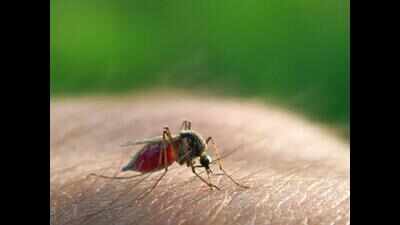
(Representative image)
As per the data of the National Institute of Virology (NIV), of the 586 samples screened here for chikungunya, 311 (54%) tested positive for the disease. In case of dengue, against a total of 588 samples, 188 (31%) tested positive for the ailment.
Incidentally, throughout last year, NIV had reported 44% chikungunya cases as against 47% dengue cases.

Health officials of the Pune Municipal Corporation (PMC), however, contended that the sizable chunk of samples tested at NIV for chikungunya were from rural parts of Pune and to some extent "peripheral areas and not from the city."
NIV's data, however, assumes significance as general practitioners in the city have expressed concern over rise in confirmed cases of chikungunya along with an unprecedented rise in cases of atypical viral fever in which patient exhibits chikungunya-like symptoms, but test negative when screened.
According to PMC records, city has more dengue cases (a total of 1,462) than chikungunya (349).
When contacted, Kalpana Baliwant, head of the insect control department at PMC, said, "Chikungunya cases have been more in rural parts of Pune and city's peripheral areas like those near Shivane and Warje. Areas in the city have reported more cases of dengue than those of chikungunya. However, when compared to last year, there has been rise in chikungunya cases this year."
Baliwant said PMC's data of 349 confirmed cases of chikungunya this year so far are from sentinel centres at Naidu and Kamla Nehru hospitals.
District health officer Bhagwan Pawar, who looks after the healthcare services in rural parts of Pune district, said, "Outbreaks of chikungunya have been reported from Kondhwe Dhawade, Uttamnagar and Shivane this year. During this time, we had sent samples of suspected cases of chikungunya patients to NIV for testing. And huge chunk of people residing in these areas were found positive for chikungunya."
Chikungunya also known as brake-bone disease is highly debilitating and does not have any specific treatment or vaccine.
Chikungunya virus has two distinct lineages. One containing all isolates from western Africa and the second comprising all southern and East African strains, as well as isolates from Asia.
"The currently circulating chikungunya genotype is East Central South African," states the NIV report. The genotype has been there in India for last several years now.
ON A FEVERISH HIGH
* Chikungunya is a relatively rare form of viral fever caused by an alphavirus that is spread by bite of an infected Aedes aegypti mosquito
* This virus is an arthropod-borne alphavirus (family Togaviridae) comprising three genotypes - West African, East/Central/South African and Asian
* It is no stranger to the Indian sub-continent. Since its first isolation in Calcutta in 1963, there have been several reports of chikungunya virus infection in different parts of the country
Clinical side
* The symptoms are most often clinically indistinguishable from those observed in dengue fever. Therefore, it is important to clinically distinguish dengue from chikungunya virus infection
* Unlike dengue, haemorrhagic manifestations are relatively rare and as a rule shock is not observed in chikungunya infection
Symptoms
Symptoms appear between four and seven days after the patient has been bitten by the infected mosquito and include:
* High fever (40°C/ 104°F)
* Joint pain (lower back, ankle, knees, wrists or phalanges)
* Joint swelling
* Rash
* Headache
* Muscle pain
* Nausea
* Fatigue
Precautions
The proximity of mosquito vector breeding sites to human habitation is a significant risk factor for chikungunya as well as for other diseases that these species transmit
Prevention and control relies heavily on reducing the number of natural and artificial water-filled container habitats that support breeding of the mosquitoes. This requires mobilization of affected communities
During outbreaks, insecticides may be sprayed to kill flying mosquitoes, applied to surfaces in and around containers where the mosquitoes land, and used to treat water in containers to kill the immature larvae
(Source: World Health Organization)

About the Author
Umesh IsalkarEnd of Article
FOLLOW US ON SOCIAL MEDIA






Hot Picks
TOP TRENDING
Trending Stories
In City
Entire Website
- The Secret Behind NFL Marriages: How These Couples Make It Work
- UPI transaction limit to change from September 16! Here are the new limits for various UPI payments
- When Laura Loomer said she's single because she's too focused on Donald Trump
- South Delhi shooting: Sleuths see killing as a message to big businessmen
- Top 10 sports stars turned power couples: From Agassi-Graf to Conner-Comaneci
- 3 Zodiac Signs Most Likely to Become Multimillionaires
- Narayana Murthy faces backlash for parenting remarks on social media; users say, "after working 72 hours a week, there’s barely time left to have babies…”
- 'Would not fit in ... ': Princess Diana's brother warned Prince Harry about marrying Meghan Markle
- The 3 Strongest Zodiac Signs: Powerhouses of the Zodiac Wheel
- Dark Side Of Each Zodiac Sign
- Assassination bid on Trump: 'Gunman supporter of Ukraine in its war against Russia'
- Who is Ryan Routh? Man held for 'apparent assassination attempt' on Trump
- Cow vigilantes killing a Brahmin is the wake-up call India needed
- Arvind Kejriwal's resignation: Who will be the next Delhi CM?
- 'Bolte zyada hain': Pakistan great on Babar, Virat
- 'No one trying to ...': How Musk reacted to 2nd assassination bid on Trump
- Will resignation gambit help Kejriwal win Delhi again?
- Apple's biggest 'iPhone update' for 2024: India time, how to prepare
- This Indian batsman is giving Australia sleepless nights
- Process for census initiated, 'open' on caste count: Govt

Popular Categories
Hot on the Web
Top Trends
Trending Topics
Living and entertainment
Latest News
Challenges won’t stop me from making films that matter: Aditya Kripalani3 Reasons Why Hell in a Cell Tag Team Match Between Cody Rhodes, Roman Reigns and The Bloodline 2.0 Would Be perfect for Bad Blood 2024Odisha to join Ayushman plan; Delhi, Bengal to be only holdoutsRobert's wild encounter with Henry, the world's oldest 124-year old crocodile; internet shocked | Watch videoHooda says Congress coming to power in Haryana, asks criminals to give up crime or leave state‘I Hate Taylor Swift!’: Donald Trump rages after singer endorses Kamala HarrisFather-son duo Eugene and Dan Levy's dazzling entrance at the EmmysBakuchiol: Nature’s answer to youthful skin radianceSaudi Arabia footballer Fahad Al-Muwallad hospitalized after fall from balcony'Will hug my kids extra tight tonight': JD Vance after Trump 'assassination attempt'Bengal govt blames junior docs for logjam but sends fresh offer for talksLodi-era mosque collapses in AgraVineet Kumar Singh calls Superboys of Malegaon standing ovation at TIFF a 'magical experience': 'I can still hear the clapping and whistling" - ExclusiveFoods to pair with dates for boosting immunityLast Lunar Eclipse of 2024: What it means for your zodiac signNeeraj Chopra misses second Diamond League title by an agonising 1 cm; finishes second behind AndersonRain washes out England-Australia T20I series finaleKejriwal says he will quit as CM in 2 days, wants aam aadmi's 'honesty certificate'
Copyright © 2024 Bennett, Coleman & Co. Ltd. All rights reserved. For reprint rights: Times Syndication Service