
Trending
India’s second largest startup hub to benefit from angel tax abolition

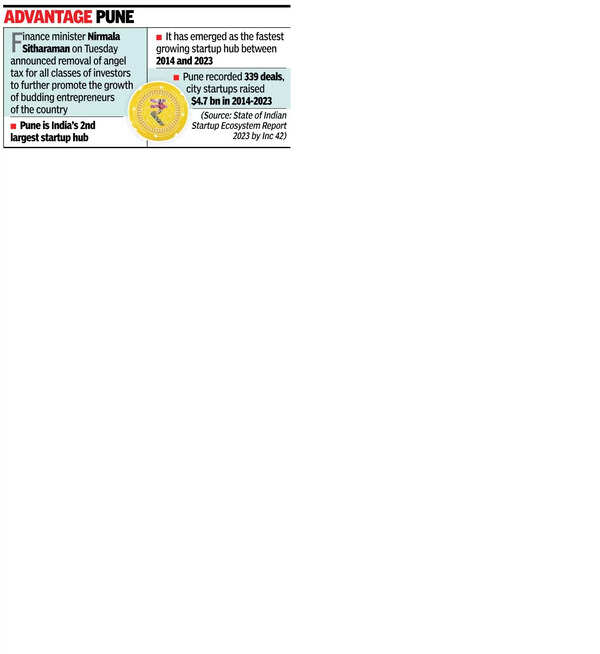
Pune, which is also India’s second largest startup hub, could see a leg-up in private funding from non-institutional investors following the govt’s decision to abolish ngel tax. Experts said startups seeking funding, especially in pre-seed and seed funding rounds, would benefit the most.

“Funding has never been tough for companies with robust business models and vision. The abolition of angel tax will make it easier for the city’s larger early-stage and pre-revenue stage startups to get funding. It will remove the perceived fear of tax complications faced by non-institutional angel investors,” said Ajay Bhagwat, president of TiE Pune.
Maneesh Bhandari, founder and CEO of Pune-headquartered Growthpal, said said abolition of the angel tax would not only benefit investors, but also startup founders. “I have been through the hassle of giving documentation and explaining the valuation for a number of portfolio companies over the past many years. However, while this was always projected as a challenge for the investors, it’s the founders who struggle the most as they had to provide documentation, deal with the IT department and chase all the investors to provide their documentation.”
Anisha Patnaik, founder of LexStart Partners, a law firm that focuses on the early-stage ecosystem, said, “Beyond the potential constraints on cash flow, the angel tax created numerous challenges during fundraising efforts, which worsened last year when even foreign investments became subject to this tax. The differing regulatory requirements and imposition of angel tax on any discrepancy between the share price and FMV has resulted in several complications for startups.”
Tech Entrepreneurs Association of Mumbai (TEAM) believes that startups will now be better positioned to scale their operations, invest in cutting-edge technologies, and create high-quality jobs. This decision also boosts investor confidence, encouraging more angel investors to support emerging ventures, it said.
Revant Bhate, CEO at Mosaic Wellness said, “India needs high networth individuals (HNIs) to consider private investments as a strong asset class and abolishing angel tax alongside reducing the disparity in the long term capital gains (LTCG) rates for public and private investing will help bring more domestic capital into Indian startups.”
Arjun Malhotra, partner at Good Capital, said, “As an investor, I’ve seen firsthand how this tax has been a thorn in the side of founders and investors alike, creating unnecessary friction in the funding process. It also allows us to more confidently co-invest with angel investors without the complications of angel tax.”
End of Article
FOLLOW US ON SOCIAL MEDIA










Hot Picks
TOP TRENDING
Popular Categories
Hot on the Web
Top Trends
Israel Hezbollah WarTirupati Laddu Case HearingKolkata Doctor Rape HearingIND vs BAN Live ScoreRohit SharmaIftikhar AhmedMayank YadavUGC NET Result 2024TS DSC Results 2024Women T20 World Cup Points TableWomen T20 World Cup ScheduleShane McMahon Net WorthHezbollah ChiefEarth Mini MoonDiddyTop Management Colleges of IndiaLive Cricket Score
Trending Topics
Devara CollectionMithun ChakrabortyKangana RanautPark Ji AhStree 2 OTT ReleaseAnant AmbaniDevara CollectionOTT Release MovieMasala OmeletteEmergencyDevaraTaaza Khabar 2 Twitter ReviewDevara Movie ReviewHealthy RaitasSwatantrya Veer SavarkarColdplay India tour 2025Smartphone DealsApple Macbook Air M1Amazon SaleWordle Answer
Living and entertainment
Latest News
The Power of Color: Zodiac Signs and Their Energetic Hues'For the next 10 years, we've got players who will make our country proud' says VVS Laxman on bench strengthBarbra Streisand pays tribute to late 'A Star Is Born' co-star Kris Kristofferson: 'He was something special'Sasikumar and Simran join hands for a feel-good, city-based entertainerCovid lockdown on earth led to dip in Moon's temperature: StudyQueen Camilla does not want King Charles to meet Prince Harry because...From A.R. Rahman to Satyajit Ray: Indian Oscar winners who made historyWatch: Jasprit Bumrah’s lethal inswinger shatters Mushfiqur Rahim’s off stumpManipur CM Biren accuses Kuki militants of abducting 2 Manipuri youthsPaul Heyman opens up on declining TNA offer after leaving WWEFun-filled inside pictures from Inaaya Naumi’s 7th birthday party with Kareena Kapoor, Saif Ali Khan, Taimur, Jeh, Soha, Kunal Kemmu and more family membersBCCI's Centre of Excellence opens up new possibilitiesBigg Boss 18 Promo: Salman Khan reveals the theme of the season by predicting the contestants' future in the houseIndia’s choking beyond Delhi: Byrnihat shows we have a big unnoticed pollution problemHow NFL Players Juggle Family Life and a Demanding CareerThe Role of Family Support in the Success of NFL Players"I feel terrible for Rashee": Chiefs Coach Andy Reid offers insight into Rashee Rice’s knee status post-winVice-presidential debate between Tim Walz and JD Vance: When and where to watch
Copyright © 2024 Bennett, Coleman & Co. Ltd. All rights reserved. For reprint rights: Times Syndication Service