
Trending
This story is from February 20, 2020
Along Mutha banks at Balewadigaon, a problem of toxic e-waste fires
For several months now, residents in Balewadi have been complaining of smoke and fumes emanating from waste burning sites along the Mutha river’s banks in Balewadigaon.
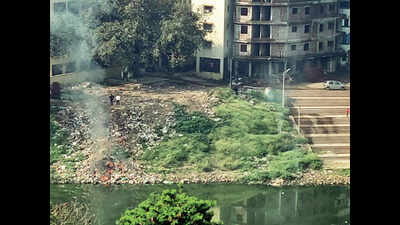
The Mutha riverbanks along Balewadigaon are not new to controversy
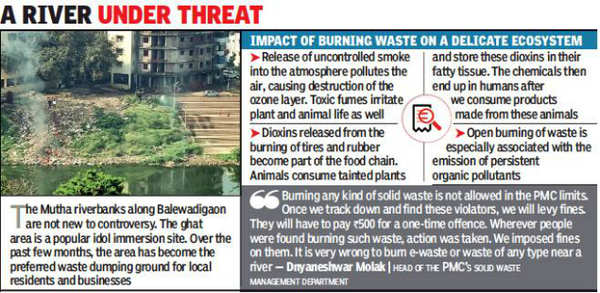
The smoke can be seen from hundreds of metres away and has impacted housing societies along both banks of the river.
“They are burning garbage along the banks opposite to Chonde Patil lawns almost every day,” said one resident of a housing society in the area.

A walk along the banks revealed foam, plastic and other such synthetic waste being set on fire a few metres from the river. A worker who was seen setting the trash ablaze said the practice has been on for the past few years.
He added that a large volume of waste came from nearby software companies. Among the material being burnt by him was a printer, insulated wires, plastic sheets and foam.“We have been burning this waste here every day for the last few years,” he said.
Another resident TOI spoke to said he has seen thick smoke billowing from the area on several occasions.
“They’re burning some types of industrial equipment and waste along the river banks. I have also seen construction material and office equipment from the nearby private firms burning near the river. This is synthetic stuff and the fumes are toxic. An entire ecosystem here is at stake,” he said.
Some residents said the open burning happens throughout the day. “I have been seeing smoke almost every day, often in the evening. They make sure to hide the waste burning behind the trees, so that people won’t be able to see what is going on from the left bank of the river,” he said.
The Mutha’s banks along Balewadigaon are not new to controversy. The ghat area is a popular idol immersion site. But over the past few months, the location has become the preferred dumping ground for local residents.
In December, TOI had carried a report highlighting the troubling state of the river due to garbage accumulation at several spots near it. Local residents alleged that a mismanaged garbage disposal system had led them to dump the garbage along the river.
Days after the TOI report, workers from the PMC carried out a clean-up at the site but many who live nearby said such measures by the civic body would only have temporary impact. They urged the PMC to implement longterm measures to ensure garbage was not brought to the river’s banks in the first place.
“This is also a waste transportation problem. Why are things such as printers ending up here? The PMC has provisions for ewaste disposal. Obviously, there are companies that have ignored how their e-waste is processed. This is a problem then of awareness too,” said Meera Raghunath, a resident of Balewadi.
Others insisted the PMC take legal action against companies who cause environmental pollution in the area. “Rivers need a ‘protection zone’ that extends a few kilometres along it,” said Deepak Andhare, an IT worker who lives in Balewadi.
“The PMC should ensure nothing that is discarded enters this protection zone. Anyone found violating this space should be penalised. A policy should be framed that guarantees action against IT firms caught illegally disposing of hazardous E-waste. There are thousands of such companies in the city that are not linked to an electronic waste disposal network. A clear policy will ensure an officer printer does not end up being set on fire near a river,” said Andhare.
According to the PMC, e-waste is classified as a hazardous waste because it contains many toxic ingredients including halogenated compounds PCBs and heavy metals. Pune region — including Pune city, Pimpri Chinchwad, the cantonment areas around Pune and the IT belt in Hinjewadi — generates around 10,000 MT of electronic waste every year.
Dnyaneshwar Molak, head of the PMC’s solid waste management department said: “We will levy fines on violators. They will have to pay Rs 500 for a one-time offence. We have imposed fines whenever people have been found burning waste. It’s very wrong and harmful to set e-waste ablaze near a river.”
End of Article
FOLLOW US ON SOCIAL MEDIA








Hot Picks
TOP TRENDING
Trending Stories
In City
Entire Website
- Arvind Kejriwal Resignation News Live Updates: 'I don't have lust for power' Arvind Kejriwal to resign from the post of Delhi CM in two days
- Arvind Kejriwal Resign Live Updates: 'I don't have lust for power' Arvind Kejriwal to resign from the post of Delhi CM in two days
- Famous NFL Superstars Who Are Friends Of Taylor Swift
- GK for Students: Why is International Day Of Democracy celebrated on September 15?
- Kolkata rape-murder case: Ex-principal Sandip Ghosh, policeman arrested for destruction of evidence
- Bengaluru woman sparks controversy with comments about Swiggy delivery executive, internet reacts
- 'Nafrat ki dukaan pe ...': PM Modi attacks Congress over 'brutality' in US
- Top 10 sports stars turned power couples: From Agassi-Graf to Conner-Comaneci
- Hamster Kombat Daily Cipher Codes and Combo Cards for September 15, 2024: Unlock up to 1 million coins
- Neeraj Chopra finishes second, misses out on title by 0.01 meters at Brussels Diamond League Final
- 'PR stunt ... gimmick': How BJP, Congress reacted to Kejriwal's shock announcement
- 'Op Sadbhav': India sends aid to Myanmar, Vietnam, and Laos post Typhoon Yagi
- Why you should not be fooled by ‘20-year SIP crorepati’ dream
- Watch: India, Pakistan players involved in heated exchange
- Kolkata rape-murder: Ex-principal, police officer sent to CBI custody till Sept 17
- 'Shocking details soon': Cong alleges 'rigging' by Maha govt in Adani power deal
- No driver, no haggling, Mumbai’s BKC aims for friendliest taxi service
- Melinda Gates reveals the 'best part' of not working with ex-husband Bill Gates
- J&K polls: MP Rashid refutes ties with BJP, announces alliance with ...
- Prince William wishes brother Harry on his 40th birthday

Popular Categories
Hot on the Web
Top Trends
Trending Topics
World Largest HorseEID WishesOnam WishesPriyanka Chopra TattooKottukkaali OTT ReleaseEngineers Day WishesGoat CollectionHair LossSudha MurtyMalayalam ProducersIndia's Best Dancer 4Simi GarewalDilli BabuIndian National ParksLaung BenefitsVikas SethiApple iPhone 16Donald TrumpAadhar Card UpdateWordle Answer
Living and entertainment
Latest News
PM Modi's Sunday roadshow in Jamshedpur cancelled due to heavy rain4 types of tea to improve gut health and ease digestive issuesFour Zodiac Signs That Are Hard to Control'Message for Modi': Opposition takes jab at BJP over Nitin Gadkari's 'PM post' claimNetflix denies filmmaker Soham Shah’s plagiarism allegations over Squid Games, says claim holds 'no merit'Weekly Career Horoscope, September 15 to September 21, 2024: Read your weekly astrological work predictions for all zodiac signsZodiac Signs That Crave a Luxurious Lifestyle"Miami Dolphins Owner Stephen Ross Eyes Multi-Billion Dollar Deal: The $7 Billion Power Play"Rajkummar Rao hails Kareena Kapoor Khan's The Buckingham Murders as a 'gripping thriller'MoS Finance likely to be convenor of GoM on GST compensation cessRole Rewind: Did you know Ranveer Singh and Deepika Padukone's love story has a strong Kareena Kapoor Khan connection?Coin Master free spins and coins for 15 September, 2024: Earn 7 million coins using today’s linksHow to set up partner sharing in Google PhotosIndia, Pakistan players involved in heated exchange during Asian Champions Trophy. WatchNoida authority fraud: 2 arrested in Rs 3.9 crore scam linked to fake bank accountsCancer, Weekly Horoscope, September 15 to September 21, 2024: Encounter a busy week filled with unexpected challengesWeekly love Horoscope, September 15 to September 21, 2024: Read your weekly astrological romantic predictions for all zodiac signs7 benefits of drinking lemon water with black salt daily
Copyright © 2024 Bennett, Coleman & Co. Ltd. All rights reserved. For reprint rights: Times Syndication Service