
- News
- City News
- patna News
- Save endangered speciesfrom extinction: Experts
Trending
This story is from March 4, 2022
Save endangered speciesfrom extinction: Experts
Even as World Wildlife Day was celebrated across the globe under the theme ‘Recovering key species for ecosystem restoration’ on Thursday, life scientists and government officials emphasized the need of creating public awareness for saving the endangered species of the state from

They stressed the need to reverse the fate of the critically endangered species to support the restoration of their habitats and ecosystems and promote their sustainable use by humanity.

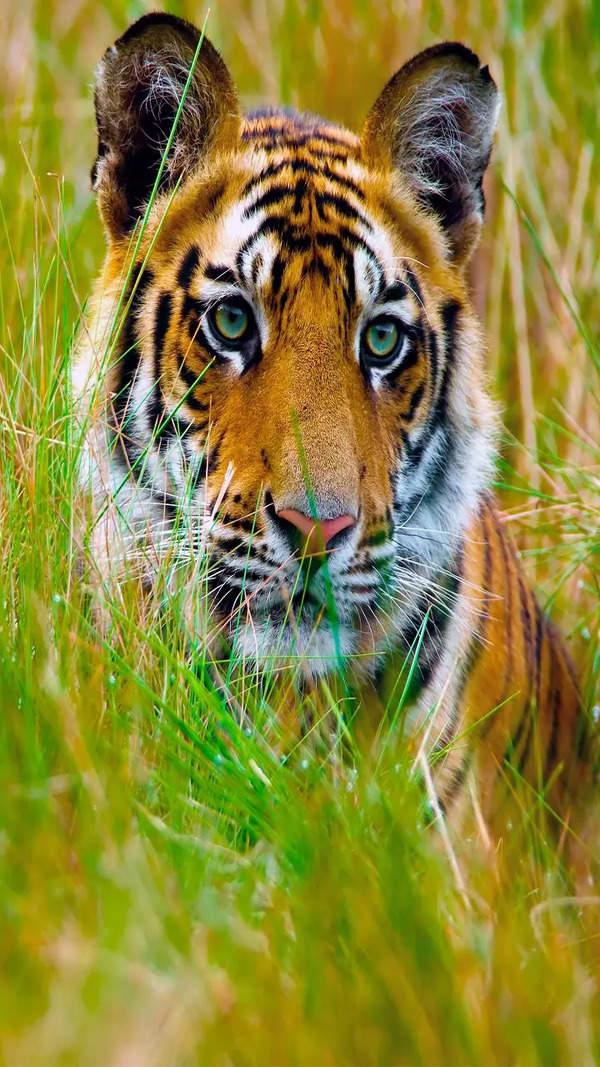
State environment, forest and climate change department’s principal secretary Dipak Kumar Singh said though some steps have recently been taken to save the endangered species, more such efforts on the part of the people are needed for sustaining their growth and survival. The number of tigers, which are endangered species, has increased in the Valmiki Tiger Reserve (VTR) through special efforts, he added.
Singh said the government is also trying to restore the population of critically endangered species of the Greater Adjutant Stork, locally known as garuda, in Bhagalpur district.
“Once abundant in Asian countries, the bird species declined rapidly in the 20th century due to hunting and habitat loss. Presently, the species is reportedly found only in Assam, Bihar and Cambodia, with an estimated population of a little over 1,000. The state is also planning to launch a conservation drive for endangered blackbucks in Buxar district,” he said.
Singh pointed out that the national aquatic animal, the dolphin, is also an endangered species. The total population of aquatic dolphins in the world is roughly around 3,000 and 1,700 of them are found in Bihar alone. “Every effort needs to be made to protect this mammal from extinction,” he added. Dr
Gopal Sharma of Zoological Survey of India said even though the number of tigers in VTR has increased in recent years, they are reportedly migrating from this reserve in search of food.
“The authorities must initiate steps for enhancing their prey (food) in the reserve to stop their migration. Too much pressure on water resources has been telling upon the survival of aquatic life. This, in turn , adversely affects the entire ecosystem,” he said.
Patna University zoology department teacher Arbind Kumar said it is good that efforts were being made to protect endangered species like tigers and dolphins, but attention must also be paid on the conservation of vultures whose numbers have declined considerably in recent times.
Kumar said despite feeding on infected carcasses, vultures do not get infected. “The acids in their stomach are potent enough to kill the pathogen. Thus, the chain of infection is broken. It invisibly controls the spread of harmful pathogens causing deadly anthrax, cholera, foot and mouth disease, rabies and distemper,” he added.
End of Article
FOLLOW US ON SOCIAL MEDIA







Hot Picks
TOP TRENDING
Trending Stories
In City
Entire Website
- UPI transaction limit to change from September 16! Here are the new limits for various UPI payments
- GK for students: 7 Fascinating Features of These Unique Birds
- No look shot gone wrong! Pakistan batter hilariously trolled after dismissal. Watch
- Andhra suspends 3 IPS officers for 'framing', arresting Mumbai actress
- UP medical aspirants converting religion to secure MBBS seats: A look at NEET UG admission criteria around minority reservation rules
- Who is Ryan Wesley Routh? Man held for 'apparent assassination attempt' on Trump
- Virat Kohli at his destructive best, shatters Chepauk wall near India dressing room with six
- 'Prince Harry is not even the spare to his wife': Meghan Markle’s treatment of Duke under fire
- Vince McMahon’s Expensive Properties, Bungalows, Villas, Private Jet, Car Collections, and More
- "Miami Dolphins Owner Stephen Ross Eyes Multi-Billion Dollar Deal: The $7 Billion Power Play"
- BJP brass eyes Independents, local outfits as key to next govt in J&K
- Files move faster with ‘weight’ on them: Nitin Gadkari faults govt system
- Doctors’ protest shows Mamata’s hold over Bengal is slipping
- Madhya Pradesh: Jobat MLA's son booked for abetting suicide
- 'A U-turn govt': Cong takes jab at Modi 3.0 as it marks completion of 100 days
- 'Fifth & final time': Mamata govt invites protesting doctors again for talks
- Cow vigilantes killing a Brahmin is the wake-up call India needed
- Amazon Great Indian Festival 2024: Sale dates, bank offers, offer on iPhone 13 and other details revealed
- Apparent assassination attempt on Donald Trump: 10 points
- 'They could be knocked down ... ': Gavaskar to India

Popular Categories
Hot on the Web
Top Trends
Who is Ryan RouthUPI Transaction LimitArvind Kejriwal ResignationNEET UG Admission CriteriaYounis KhanBorder Gavaskar TrophyRohit SharmaSports Stars Turned Power CouplesIBPS RRB Clark PO ResultDonald TrumpBianca Belair Net WorthVivek RamaswamyBMW Accident Madhya PradeshIndore BMW CrashPrince HarryMiami Dolphins OwnerLive Cricket Score
Trending Topics
Living and entertainment
Latest News
4 types of tea to improve gut health and ease digestive issuesWho was Illia 'Golem' Yefimchyk, the Belarusian bodybuilder who consumed 2.5 kg of meat and 108 sushi pieces daily before his death at 36?When Shah Rukh Khan performed 'Kanyadaan' at Farah Khan's wedding- See PICSFather-son duo Eugene and Dan Levy's dazzling entrance at the EmmysLodi-era mosque collapses in AgraJr NTR on shooting under water scene for 35 days in 'Devara Part 1': It is an important sequence!Last Lunar Eclipse of 2024: What it means for your zodiac signAbhishek Kumar shares selfies with Alia Bhatt; recalls the time when he worked as a crowd artist in ‘Humpty Sharma Ki Dulhaniya’Kejriwal says he will quit as CM in 2 days, wants aam aadmi's 'honesty certificate'Jessica Gunning wins her 1st Primetime Emmy for 'Baby Reindeer'Shocking! Man celebrates birthday by lying among massive Pythons‘Stree 2’ star Shraddha Kapoor to reveal her character name! But there’s a catchSathiyan set to partner Sreeja in mixed doubles'Seven varsities in Odisha have potential to be in top 100'Capricorn, Daily Horoscope Today, September 16, 2024: Harmonious relationships with partners are likelyThrowback: When Sunita Ahuja said that she has a worse temper than her husband GovindaIndia fall to Sweden, face Davis Cup relegationEid Milad Un Nabi 2024: Date, Rituals and Significance of Eid e Milad
Copyright © 2024 Bennett, Coleman & Co. Ltd. All rights reserved. For reprint rights: Times Syndication Service