
- News
- City News
- patna News
- Government writes to Centre on world heritage tag for Cyclopean Wall
Trending
This story is from January 19, 2018
Government writes to Centre on world heritage tag for Cyclopean Wall
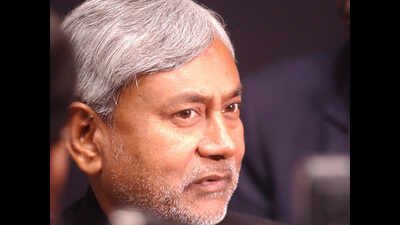
CM Nitish Kumar
CM Nitish Kumar has pitched for inclusion of Cyclopean Wall on the world heritage list on multiple occasions. “A preliminary report on Cyclopean Wall was submitted to chief minister’s office in December, which was approved with certain suggestions.

A dossier is a voluminous document giving details of an archaeological site, its salient features and universal value, among other aspects, which is submitted by the government of the applicant country with World Heritage Committee of Unesco. The dossiers for Nalanda ruins and Mahabodhi Mahavihara in Bodh Gaya – the two world heritage sites in state – were also prepared in the similar manner by ASI.
The 22-km long Cyclopean Wall at Rajgir is believed to have been built in the pre-Mauryan era, before 3rd century BC, using massive undressed stones. It was built to provide protection to the ancient Rajgriha city, majority of which are protected site of ASI at present.
Archaeologists said the Cyclopean Wall at Rajgir is similar to “Frontiers of the Roman Empire” that runs through Germany, UK and Northern Ireland, and it was included on Unesco’s world heritage list in 1987. The wall represents the outermost boundary of the Roman Empire at its zenith in the 2nd century AD. Its three parts comprise a 118-km long Hadrian’s Wall, 550-km long Upper German Raetian Limes and a 60-km long Antonine Wall.
End of Article
FOLLOW US ON SOCIAL MEDIA










Photostories

Hot Picks
TOP TRENDING
Popular Categories
Hot on the Web
Top Trends
Shantanu NaiduRussell WilsonsTom BradyPakistan Cricket FanSuryakumar YadavHurricane MiltonRatan Tata NewsNew UPI Transaction LimitRatan Tata DiesPM ModiNarayana MurthyUGC NET Result 2024Management Colleges of IndiaTop Medical Colleges of IndiaTop Engineering Colleges of IndiaTop Pharmacy Colleges of IndiaLive Cricket Score
Trending Topics
Diwali WishesJigra ReviewDussehra WishesVettaiyan Twitter ReviewVettaiyan CollectionVettaiyan ReviewSalman KhanDevara CollectionBigg Boss 18Deepika PadukoneShraddha KapoorRatan Tata Passed AwayColdplayVettaiyan Movie ReviewSwatantrya Veer SavarkarDussehra 2024Watch NFL Live StreamDress To ImpressRatan Tata DeathWordle Answer
Living and entertainment
Latest News
NIA charges 5 with human traffickingHarris overtakes Trump among suburban voters: Reuters/Ipsos pollDisturbed sleep tops list of complaints received on mental health helplineSamantha Ruth Prabhu shares playtime with Chinmayi Sripaada's daughter, says 'It took her 4.5 seconds to disown her parents'TD Bank pleads guilty to money laundering violations, agrees to $3 billion penaltyDilip Kumar-Saira Banu wedding anniversary: How the legendary actor surprised all by marrying his belovedSpiritual fervour all around as Sun God steers Lord's chariot at TirumalaInfosys to no longer send job offer letters and attachments, the company will ...Jaggery vs honey: Which one is better for weight loss?SP-Congress alliance for UP bypolls intact: Akhilesh YadavHours after arrest, 1 of 2 Surat rape accused dies in custodyMy mother would love to have a swayamwar for me: Raj AnadkatHappy Dussehra 2024: Top 50 Wishes, Messages, and Quotes to Share with Your Loved OnesAnees Bazmee reveals Vidya Balan's first reaction after reading 'Bhool Bhulaiyaa 3' scriptRanji Trophy: Focus on Shreyas Iyer as Mumbai begin title defenceBigg Boss 18: Karan Veer Mehra's comment on Arfeen Khan converting his wife's religion sparks anger; Arfeen says, "Agar ye ghar mein nahi hota main iski band baja deta"Haaland becomes Norway's all-time leading scorer, then gives some big personal newsDell’s 5-day work from office mandate for sales team leaves employees speculating on what next …
Copyright © 2024 Bennett, Coleman & Co. Ltd. All rights reserved. For reprint rights: Times Syndication Service