
- News
- City News
- patna News
- 'Fake' labs mushroom in city, patients suffer
Trending
This story is from October 14, 2016
'Fake' labs mushroom in city, patients suffer
Mukesh Hissariya thanks heaven that he does not have to pop pills to keep in check his blood sugar levels. Had he accepted the report of a pathological lab on the city’s Govind Mitra Road at face value, he would have to. A blood donor with connections in the medical fraternity, the man in mid-40s went for a second and even third opinion, and “I am saved, you see”.
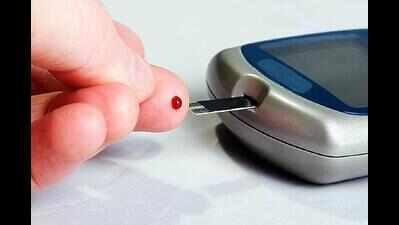
(Representative image)

A tad confused, Hissariya had his blood sample taken two hours after meal by a big-banner lab’s franchise in the city. Its result matched with the Bank Road lab’s. “Mind it, I had the blood taken out of my veins exactly 120 minutes after the meal -- at all the three labs,” said Hissariya who runs a drug store on Govind Mitra Road.
What added to the indignation of Hissariya was the “utterly irresponsible” response of the “erring” lab when he went to complain about the “criminal negligence”. “They nonchalantly offered me to repeat the test for free if I so wished,” he told TOI earlier this week.
Hissariya’s is not a one-off case. Doctors are also complaining. Not only physicians, pathologists too rue the mushrooming growth of illegal labs. The Bihar chapter of Indian Association of Pathologists and Microbiologists (IAPM) has even filed a PIL in the Patna high court, seeking a directive to the government to crack down on such labs.
The IAPM had in fact written to the Medical Council of India as well as the Bihar health department bosses in 2014, complaining about this. “Patients are wrongly being diagnosed and thus wrongly treated,” the letter read and added patients’ life was in danger due to the mafia’s stranglehold on this life-saving diagnostic field.
The letter made startling revelations. While MCI rules prescribe a pathological lab must have a dedicated pathologist who should sign every test report, the letter hinted many labs were being run by technicians. “Pathologists’ name and signature are being misused (forged)... For example, one particular pathologist is (purported to be) present in ten different districts of the state on the same date, which is impossible,” the letter pointed out.
The letter, also marked to Union health ministry officials, alleged most labs in Bihar lacked proper diagnostic equipment, qualified technicians and qualified phlebotomist (who collects blood samples from patients).
“According to MCI rules, one pathologist can give services in not more than five labs and that too within a prescribed distance. Patna has at best 50 trained pathologists, but even a conservative estimate puts the number of labs in the city at 2,000. Who are managing them? Labs can be found wholesale outside big hospitals like PMCH, NMCH and IGIMS. The gullible masses suffer,” IAPM’s Bihar chapter joint secretary Dr Prabhat Ranjan fumed.
However, the administration pleads helplessness. “The Patna high court earlier this year ordered no coercive action against the labs or hospitals not registered under the Clinical Establishments (Registration and Regulation) Act. What can we do?” asked Patna civil surgeon Dr G S Singh.
The IAPM still sees a way out. “The high courts of Maharashtra, Andhra Pradesh, Gujarat, MP and UP have ruled in favour of MCI rules. Using these rulings, the Bhagalpur and Purnia civil surgeons ordered raids on labs in 2014. Many of them were found running without qualified pathologists,” Dr Ranjan claimed and wondered why couldn’t the Patna civil surgeon take a cue from his Purnia and Bhagalpur counterparts.
The International Standards Organisation and the National Accreditation Board for Testing and Calibration Laboratories (NABL) are into certifying medical labs. Though not mandatory, the accreditation by these non-government bodies is considered by experts as a proof of quality infrastructure at the certified lab. Bihar has only ten NABL-accreditated labs.
End of Article
FOLLOW US ON SOCIAL MEDIA









Photostories

Hot Picks
TOP TRENDING
Popular Categories
Hot on the Web
Top Trends
Stock Market TodayBasit AliBrittany MahomesRavichandran AshwinBabar AzamKanpur Test Match RecordsUGC NET Result 2024Tirupati LadduIndia T20 WC SchedulePPF CalculatorBryonna Burrows Net WorthWomen T20 World Cup Points TableWomen T20 World Cup ScheduleIND vs PAK T20 WC MatchDiddyTop Management Colleges of IndiaLive Cricket Score
Trending Topics
GovindaNavratri Colours 2024Solar Eclipse 2024 TimesNavratri WishesGandhi Jayanti WishesDevara CollectionGOAT OTT ReleaseGandhi Jayanti 2024Rajinikanth Health UpdateNavratri HistoryDevaraGovinda NewsDevara Movie ReviewHealthy RaitasSwatantrya Veer SavarkarColdplay India tour 2025Upcoming Smartphones In OctoberAmazon SaleSony Bravia 55 inch 4k Ultra HD TVWordle Answer
Living and entertainment
Latest News
Zodiac Signs as Romantic Movie CouplesJapanese artist’s tribute to Indian classical dance formAnanya Panday unveils her Amol Palekar-inspired look in quirky BTS PICS from 'CTRL’Sanjay Dutt celebrates 'Gandhigiri', shares a scene from 'Lage Raho Munna Bhai'Women's T20 World Cup 2024: Teams, format, venues, defending champions and more FAQs answeredGovinda's bullet injury: Mumbai police not convinced with actor's version but rule out foul playTriptii Dimri denies skipping the Jaipur event after allegations of charging an appearance feeFormer WWE Champion Jeff Hardy talks about “addiction struggles”Qualifier Yash upsets second seed Manish at Fenesta Open'Scam marathon' under JMM-Congress-RJD rule 'biggest obstacle' to Jharkhand's development: PM ModiPopulation of Hindus & tribals declining in Jharkhand, says PM ModiWHO chief praises PM Modi on 10th anivarsary of Swachh Bharat missionNasa switches off instrument on Voyager 2 spacecraft to save powerAre 3 senior Karnataka mantris jockeying for chief minister's chair?Best Leather Wallets for Men in 2024: Timeless EleganceArya's film faces controversy for not paying junior artists on timeGomathi Priya and Vetri Vasanth's 'Siragadika Asai' completes 500 episodesCongress leader Jairam Ramesh says 'fierce urgency for peace' in West Asia
Copyright © 2024 Bennett, Coleman & Co. Ltd. All rights reserved. For reprint rights: Times Syndication Service