
- News
- City News
- noida News
- Home calling? What's causing learning loss among kids in Delhi-NCR
Trending
This story is from April 17, 2023
Home calling? What's causing learning loss among kids in Delhi-NCR
It has been three years since Lalita, now 15, has been to school. Instead, she is taking stitching lessons at an NGO near her house hoping to bag a job in a garment factory.
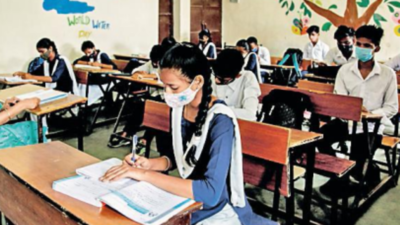
Migrant kids are more vulnerable to disruption in education, say studies.
It was her parents' search for better employment opportunities that brought the teenager to Noida from Assam.
"Initially, I took admission in a government school in Noida.

Like Lalita, nearly 90% of students in government primary schools across Gautam Buddha Nagar face discontinuation of education due to migration and dropout. "Of the total 296 students in our school, 248 are children of migrant labourers. Once these kids go to their village, they take 3 to 4 months, at times more, to return," Arvind Kumar, assistant principal of Tugalpur Primary School, said.
Delhi-NCR remains a major destination for north Indian migrants - a sizeable group among the 453.6 million migrants in the country as per Census 2011.
While the Right to Education (RTE) Act, 2009, aims to provide free and compulsory elementary education of equitable quality to all children aged 6 to 14, several studies indicate that migrant children are more vulnerable to disruption in education and frequently drop out of school.
Loss and gaps in learning also make it difficult for them to cope with varying academic curricula, the language of instruction, and the difficulty of re-enrolling in another school among others. According to the Unified District Information System for Education (UDISE) Plus 2021-22 report, 1.5% of migrant children dropped out of primary schools (classes 1 to 5) in that academic year from 0.8% in 2020-21.
"Every year, we need to cancel the enrollment of nearly 60 out of 140 students in our school," Rakesh Sharma, principal of a government primary school in Dankaur block, said. Students go back to their native places for different purposes, including relatives' wedding ceremonies, harvest or to avail state government schemes and come back six months or more later, he said.
Schools have introduced additional remedial classes for students who return late, but teachers believe they are not enough. "How can we complete the whole syllabus if we continue to take remedial classes? Once students come back, they forget everything that was taught. It seems all our efforts go in vain," Shalini Sharma, a teacher in a government primary school at Kasna, said.
Meanwhile, there seems to be a gap in data accounting for migrant children at the grassroots level. When contacted, Basic Shiksha Adhikari (BSA) Aishwariya Lakshmi told TOI, "We do not have any number for migrant children. However, we have instructed schools to provide remedial classes for them."
According to NGOs working for migrant labourers in the NCR city, most daily wagers work as household helps in residential areas or in factories. "When making ends meet becomes tough, sending children to school ceases to be a priority for parents. Those who manage to enrol their kids in schools are least bothered about facilities provided to their children," Mala Bhandari, a social worker, said.

About the Author
Ayantika PalEnd of Article
FOLLOW US ON SOCIAL MEDIA










Photostories
Hot Picks
TOP TRENDING
Popular Categories
Hot on the Web
Top Trends
Stock Market TodayBasit AliBrittany MahomesRavichandran AshwinBabar AzamKanpur Test Match RecordsUGC NET Result 2024Tirupati LadduIndia T20 WC SchedulePPF CalculatorBryonna Burrows Net WorthWomen T20 World Cup Points TableWomen T20 World Cup ScheduleIND vs PAK T20 WC MatchDiddyTop Management Colleges of IndiaLive Cricket Score
Trending Topics
GovindaNavratri Colours 2024Solar Eclipse 2024 TimesNavratri WishesGandhi Jayanti WishesDevara CollectionGOAT OTT ReleaseGandhi Jayanti 2024Rajinikanth Health UpdateNavratri HistoryDevaraGovinda NewsDevara Movie ReviewHealthy RaitasSwatantrya Veer SavarkarColdplay India tour 2025Upcoming Smartphones In OctoberAmazon SaleSony Bravia 55 inch 4k Ultra HD TVWordle Answer
Living and entertainment
Latest News
Zodiac Signs as Romantic Movie CouplesJapanese artist’s tribute to Indian classical dance formAnanya Panday unveils her Amol Palekar-inspired look in quirky BTS PICS from 'CTRL’Sanjay Dutt celebrates 'Gandhigiri', shares a scene from 'Lage Raho Munna Bhai'Women's T20 World Cup 2024: Teams, format, venues, defending champions and more FAQs answeredGovinda's bullet injury: Mumbai police not convinced with actor's version but rule out foul playGovt proposes to bring motorcycles under ‘contract carriage’ by amending MV ActHaircuts and colours to try out this PujoTriptii Dimri denies skipping the Jaipur event after allegations of charging an appearance feeMaharashtra assembly polls: Deputy CM Ajit Pawar meets Union home minster Amit Shah amid Mahayuti tensions over NCP, seat-sharingWatch: Orry channels Aishwarya Rai in a hilarious tribute to Shah Rukh Khan and Amitabh Bachchan starrer 'Mohabbatein'NFL insider reveals Raiders’ asking price for star wide receiver Davante Adams amid trade speculationFormer WWE Champion Jeff Hardy talks about “addiction struggles”Qualifier Yash upsets second seed Manish at Fenesta Open'Scam marathon' under JMM-Congress-RJD rule 'biggest obstacle' to Jharkhand's development: PM ModiWHO chief praises PM Modi on 10th anivarsary of Swachh Bharat missionNasa switches off instrument on Voyager 2 spacecraft to save powerBest Leather Wallets for Men in 2024: Timeless Elegance
Copyright © 2024 Bennett, Coleman & Co. Ltd. All rights reserved. For reprint rights: Times Syndication Service