
- News
- City News
- noida News
- Fatalities rising, but EPE still waits for cameras
Trending
This story is from November 12, 2019
Fatalities rising, but EPE still waits for cameras
Lack of cameras and scant police patrolling have left the Eastern Peripheral Expressway vulnerable to accidents and prompted experts to question if the high-speed corridor was slowly transforming into the next Yamuna Expressway.
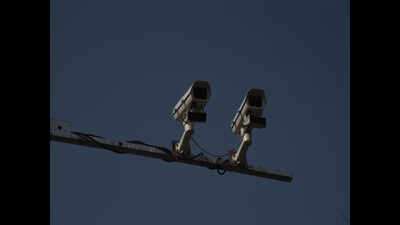
Representative image
Currently, the 135km EPE does not have any cameras. The lack of it is felt mostly by the police, who have to rely on cameras installed only at the toll plazas to identify vehicles in hit and run cases.

The expressway has seen at least 25 deaths in the past year and a half. In the accident in which seven persons were killed on Sunday, the police are yet to identify the vehicle that might have hit the Eeco in which the family was travelling to Bulandshahr.
SP (rural) Ranvijay Singh said his force was left with little choice but to rely on CCTV cameras installed at the toll plazas to identify vehicles fleeing after being involved in accidents.
“A team has already examined the cameras installed at the Dadri toll, which was the nearest to the accident site. But with so many vehicles crossing the toll plaza daily, it is very difficult to identify the one involved in the accident,” he added.
On April 27, three persons were killed while two, including a five-year-old child, were injured after the Swift Dzire they were travelling in was hit by an unknown heavy vehicle on the EPE. In that case too, police could not identify the killer vehicle in the absence of cameras.
With at least eight fatal accidents on the EPE since it was thrown open to public in May last year, the Gautam Budh Nagar administration and police say installation of cameras is a must on the stretch.
District magistrate BN Singh had written to the National Highways Authority of India (NHAI) in June last year, suggesting that automatic number plate reading cameras, speed cameras and police outposts be set up on the 41km stretch of the EPE that falls in the district.
On Monday, Singh said the NHAI should replicate the Yamuna Expressway model, where cameras are installed to catch speeding vehicles, on the EPE. “Along with this, support systems such as PCR vans etc should be provided so that response time to emergencies can be be reduced,” he said.
Velu Murugan, senior principal scientist at the Central Road Research Institute (CRRI), said an expressway needs to have speed monitoring cameras at least every 5km. “Ideally, cameras should be installed every 3km,” he added.
Toll officials, too, agreed that had Sunday’s accident taken place somewhere in the middle of the expressway, it would have taken them much longer to reach the spot.
“In this case, the ambulance managed to reach the spot within 15-20 minutes as the accident happened near the toll plaza. Had it been farther away, it would have taken us a lot of time to reach the accident spot,” a toll operator said.
The EPE stretch in Gautam Budh Nagar does not have a separate police station. The district police, which is already battling lack of personnel, admitted that patrolling on the speed corridor is done only “during an emergency”.
An NHAI official, however, said the accident was the result of overloading and rough driving. “We have been told that the vehicle lost balance because it was filled twice its capacity. As far as CCTV cameras are concerned, we have already procured 35 of a total 143. Their installation will begin in the 35 km stretch from Kundli to Dasna side. The entire system will be functional by March next year,” he said.
End of Article
FOLLOW US ON SOCIAL MEDIA





Hot Picks
TOP TRENDING
Trending Stories
In City
Entire Website
- Arvind Kejriwal Resignation News Live Updates: 'I don't have lust for power' Arvind Kejriwal to resign from the post of Delhi CM in two days
- Arvind Kejriwal Resign Live Updates: 'I don't have lust for power' Arvind Kejriwal to resign from the post of Delhi CM in two days
- Famous NFL Superstars Who Are Friends Of Taylor Swift
- GK for Students: Why is International Day Of Democracy celebrated on September 15?
- Kolkata rape-murder case: Ex-principal Sandip Ghosh, policeman arrested for destruction of evidence
- Bengaluru woman sparks controversy with comments about Swiggy delivery executive, internet reacts
- 'Nafrat ki dukaan pe ...': PM Modi attacks Congress over 'brutality' in US
- Top 10 sports stars turned power couples: From Agassi-Graf to Conner-Comaneci
- Hamster Kombat Daily Cipher Codes and Combo Cards for September 15, 2024: Unlock up to 1 million coins
- Neeraj Chopra finishes second, misses out on title by 0.01 meters at Brussels Diamond League Final
- 'Don't have lust for power': Kejriwal to resign from Delhi CM post in two days
- Hindus should only engage with Hindus in property deals: BJP MLA Nitesh Rane
- Hum do hamare chaar: Why is south India junking population control?
- It took 'Didi', not CM Mamata to get junior doctors to Kalighat
- 'Its just hot water': Tea for Rs 340 at airport shocks Chidambaram, travelers
- 'Virat Kohli played under my captaincy': Tejashwi Yadav
- Will Germany’s suspension of Schengen entry end the Europe dream?
- Melinda Gates reveals the 'best part' of not working with ex-husband Bill Gates
- Woman visits Delhi's Vasant Kunj flat for job ‘interview’, gets raped
- Chris Gayle: The man who scored first-ever T20I ton

Popular Categories
Hot on the Web
Top Trends
Trending Topics
World Largest HorseEID WishesOnam WishesPriyanka Chopra TattooKottukkaali OTT ReleaseEngineers Day WishesGoat CollectionHair LossSudha MurtyMalayalam ProducersIndia's Best Dancer 4Simi GarewalDilli BabuIndian National ParksLaung BenefitsVikas SethiApple iPhone 16Donald TrumpAadhar Card UpdateWordle Answer
Living and entertainment
Latest News
PM Modi's Sunday roadshow in Jamshedpur cancelled due to heavy rainHow to identify a real friendTCS teams up with Tata Electronics for ‘made-in-India’ chips4 types of tea to improve gut health and ease digestive issuesKashmir will soon get a government, but those blinkers are going to stayNetflix denies filmmaker Soham Shah’s plagiarism allegations over Squid Games, says claim holds 'no merit'Weekly Career Horoscope, September 15 to September 21, 2024: Read your weekly astrological work predictions for all zodiac signsZodiac Signs That Crave a Luxurious LifestyleMegha Akash marries Saai Vishnu, celebrities and fans extend their wishesRajkummar Rao hails Kareena Kapoor Khan's The Buckingham Murders as a 'gripping thriller'Coin Master free spins and coins for 15 September, 2024: Earn 7 million coins using today’s linksOnam 2024: Pearle Maaney, Sajan Surya, Malayalam TV celebs send warm wishesISL: Odisha's home run broken as Chennaiyin script 3-2 comeback win in season opener at KalingaHow to set up partner sharing in Google PhotosMassachusetts state police recruit dies during boxing training exerciseDeepika Padukone gets discharged from the hospital, twins with Ranveer Singh in white as they bring home their newborn baby girl37 year old beats fatty liver condition with unbelievable weight lossWhat You’re Always Doing, According to Your Zodiac Sign
Copyright © 2024 Bennett, Coleman & Co. Ltd. All rights reserved. For reprint rights: Times Syndication Service