
- News
- City News
- nagpur News
- Maharashtra: An adult who has not lost childlike qualities
Trending
This story is from January 16, 2020
Maharashtra: An adult who has not lost childlike qualities
On the eve of his visit to Nagpur, here are some nuggets about Chief Justice Sharad Bobde penned by his childhood friend Vijay Dandige
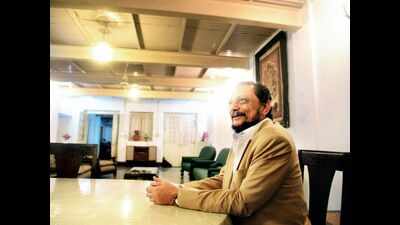

On the eve of his visit to Nagpur, here are some nuggets about Chief Justice Sharad Bobde penned by his childhood friend Vijay Dandige
“What’s the real name of Pele?”
The question was flung at me by a boyish face as we sat in my friend Vinod’s spacious house in Civil Lines. It was 1965, the first year of college. The question had come from Vinod’s younger brother, Sharad. As I struggled to come up with the answer, pat came the reply from him, “Edson Arantes do Nascimento.”
That was my first meeting with Sharadbhau, as we call him now.

I believe everyone should have a friend with whom one can spend hours discussing, sharing new books and authors, new tenets and philosophies and many other things. That’s the bond I have shared with Sharadbhau.
It was only years later that I understood his penchant for asking questions. It was not meant as a prank or a trick. It sprang from his innate nature, his intense curiosity about everything.
Today, decades later, he has not changed at all. He is the only adult I know who has not lost his childlike qualities: Insatiable curiosity to know and to understand everything, a sense of wonder, the joy of discovery of new things. He is the only one I know who is passionately driven by a desire to find out why things happen, how things work and how they can be improved. He is like a man who is perpetually in awe of the magnificence of life, as reflected in all beings and things around us, and whose ravenous curiosity impels him to fully drink in and savour that beauty in myriad forms.
Sharadbhau’s interests and passions have been breathtakingly vast and universal, astounding in their sheer breadth, ranging from, among others, Oscar Wilde, Jiddu Krishnamurti’s philosophy, Sun Tzu’s The Art of War to the grand vision of the Upanishads, Jim Corbett’s hunting skills, the Beatles to Koran’s teachings, quirks of singer Bhimsen Joshi, dribbling skills of Irish footballer George Best to the dialogues between Lord Shiva and Parvati from Tantra, Harley Davidson bikes, the power of Gayatri mantra to Ernest Hemingway, parables of the Bible, Guru Gobind Singh to bisons and their strength, how Moses wrote the Torah, Ilie Nastase's tennis wizardry, to Sant Tukaram’s abhangas, the secret behind Marilyn Monroe’s stunning impact, the concept of dharma in the Geeta and Scriptures to Chanakya's brilliance, general Rommel’s conquest of Africa, the purifying qualities of gou-mutra to the uplifting vibrations of Rudra chanting, the medicinal qualities of snakes' venom, Colin Wilson's the Outsider to the Japanese ritual of seppuko, the parables of Ramkrishna, the tenets of ancient Indian Nyaya system....just to mention a few. This kaleidoscopic list could go on.
Back in the 70s, captivated by the reptile and animal world, he once caused hilarious consternation in his household by keeping a non-poisonous snake in his room as a pet. On another occasion, at the house of a friend who collected snakes, to get a closer look he came within the striking range of a fully-grown king cobra, sending his friend into a panic.
Remarkably, he has done this wide-ranging reading of his, in addition to the voluminous legal reading he has had to do as a lawyer and a judge. And he has been a deep reader, his intensely curious mind devouring facts and details. This is evident from his phenomenal memory that enables him to recite verbatim, even today, some lines from a Shakespeare play, an Art of War tenet, a Brahma sutra couplet or Sant Tukaram’s abhanga. He also remembers in exact words, even today, some strange or unique incident narrated to him by a friend decades ago.
And this terrific memory of his also serves to make him an enchanting storyteller who embellishes his stories with quaint facts and colourful details. In lighter moments, his delightful sense of humour, too, comes out.
Normally, one would expect such a diversely read person to be arrogant and snotty. Not him. If anything, he has a strange, endearing kind of humility. He is, more often than not, likely to effusively praise some accomplishment or special talent of one of his friends to others, sometimes much to the discomfiture of the person being praised.
Another extraordinary quality is his fierce drive to improve things, to find solutions. He is not only constantly trying out new ideas, new concepts in his personal life but has no ego or hang-ups about enlisting the help and cooperation of anyone who might contribute to making things better. As he often says, “If it works, what does it matter where it comes from.”
Sharadbhau is the only true Renaissance man I have come across, a Universal man — represented as an accomplished man, limitless in his capacity for development who embraces all knowledge and develops his own capacities as fully as possible. He is a true cosmopolite who views all human beings as just that, nothing more and nothing less. He is a deeply spiritual man who is impervious to the allure of the usually sought-after baubles: money, power, prestige, wealth, status, position, name and fame.
As for his legal knowledge and expertise, that, undoubtedly, is his forte, both inherited and acquired.
As for his integrity, honesty, incorruptibility, those are his inheritance, embedded in his DNA, passed down from an illustrious grandfather and an equally renowned father.
And as for his fearlessness, it is the offshoot of his moral values and yogic qualities.
And so, I am sure that under Sharadbhau’s stewardship we will see a throbbing, pulsating, questioning, prodding, vigorous, innovative, proactive, avant-garde judiciary.
End of Article
FOLLOW US ON SOCIAL MEDIA










Photostories

Hot Picks
TOP TRENDING
Popular Categories
Hot on the Web
Top Trends
Vinesh Phogat Election ResultHisar Election Result 2024Election Results 2024Haryana Election ResultJason KelceJammu Kashmir Election Result 2024Israel Hezbollah WarHardik SinghAakash ChopraAssembly ElectionHaryana Assembly Constituencies 2024Top Pharmacy Colleges of IndiaGurgaon Election ResultTop MBA Colleges of IndiaLive Election ResultFaridabad Election ResultLive Cricket Score
Trending Topics
Tulsi KumarBigg Boss Tamil 8 Contestants ListAjay DevgnNavratri Colours 2024Sanjay Leela BhansaliDurga Puja 2024Bigg Boss 18 House PhotoDevara CollectionBigg Boss 18Deepika PadukoneShailesh LodhaDevaraGovinda NewsNational Film Awards 2024Swatantrya Veer SavarkarColdplay India tour 2025Watch NFL Live StreamDress To ImpressCall Of Duty Black Ops 6Wordle Answer
Living and entertainment
Latest News
Ambala Cantt Assembly Election Result 2024: BJP's big gun Anil Vij leading in early trendsAquarius, Daily Horoscope Today, October 08, 2024: . You are likely to receive recognitionNavratri as Spiritual Detox: 9 days to cleanse your mind, body and soul5 must follow rules of Ayurveda to lose 5kg in 30 daysAlia Bhatt just cannot keep calm on watching 'Singham Again' trailer, says 'all the dynamite in one frame' for the big multi-starrer led by Ajay DevgnNCERT to triple textbook production, aims to print 150 million books this year: Edu ministerMonetary policy committee meet: RBI moving closer to rate cut'I own a Glock and yes, I’ve fired It,' says Kamala on 60 Minutes; rules out solo talks with PutinEr Rashid calls for keeping govt formation on hold to press for statehood restorationKathua (SC) Assembly Election Result 2024: BJP's Dr Bharat Bhushan leads with 6,845 votes against BSP's Sandeep MajotraHappy Durga Puja 2024: Best Messages, Quotes, Wishes, and Images to Share on Durga Puja'Hopeful assembly elections results will be in our favour': Union Minister Chirag Paswan3 killed after an Air Evacuation helicopter crashes in Owen County"We do it every day in practice”: Kansas City Chiefs Head Coach Andy Reid Confirms Travis Kelce’s 3rd And 22 Lateral Play Was PlannedHoroscope Today, October 8, 2024: Read your today's astrological predictions for all zodiac signsWhat Each Zodiac Sign Complains AboutPrayaga Martin responds to Kochi drug bust reports: "I don't know Om Prakash; I had to google him"Nayanthara and Vignesh Shivan's wedding documentary to finally have an OTT release soon
Copyright © 2024 Bennett, Coleman & Co. Ltd. All rights reserved. For reprint rights: Times Syndication Service