
- News
- City News
- mumbai News
- With its lights and cameras still on, Chandivali Studio completes 80 years
Trending
This story is from February 4, 2020
With its lights and cameras still on, Chandivali Studio completes 80 years
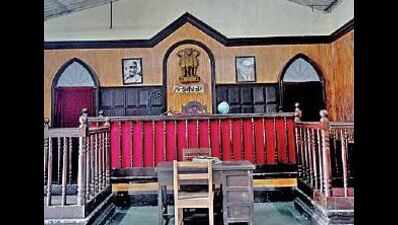

That’s because everything here is a doppelganger of the real and imagined — a police station, a courtroom, a temple — all precincts where some of the most legendary Hindi films have taken shape. When actor Amitabh Bachchan tackled a real tiger in Khoon Pasina or stood inside a temple to converse with God in Deewar or when a reticent Naseeruddin Shah shimmied inside a cave to Oye Oye, it was within these hallowed portals of the Chandivali Studio, an institution built in the 1940s, way before the now famous Film City came into existence.
Every time a film studio is razed to make way for commercial or residential complexes, it takes with it a slice of cinematic history and craftsmanship. Be it the trio of Ranjit Studios, Shree Sound Studios and Roop Tara Studios that came up in Dadar in the 1920s and were the first to call it quits and sold to realty promoters in the ’70s; or Natraj Studio that was demolished for a shopping mall in 2007 or Raj Kapoor’s 7-decade-old RK Studios that shut after a fire destroyed it over a year ago. But even as most of Mumbai’s film studios were on death row, the Chandivali Studio continued to stand the test of time.
The studio, which completes 80 years in 2020, came to life when Chandrarao Kadam bought a large parcel of land near Powai Lake in 1940 to provide outdoor locations for Bombay’s filmmakers.
Born in Kutch to a gymnast coach in the army, Kadam was a skilled malkhamb artiste skilled in the art of akhada and drunken wirewalking, that fetched him the job of a circus performer before he came to Mumbai in 1928 to find his spot under the arclights.
After a period of struggle, Kadam found work as an “extra” and later made it as a “hero” in silent films before graduating to talkies. Kadam went on to multi-task as a producer, director, and actor in films such as Fauladi Jigar, Daivi Khazana, Jungee-Azadi, and played Tarzan in Himmat-e-Marda. His inexhaustible agility as a gymnast earned him the title of “The Stunt King” before he decided to create a film studio that still serves the Hindi film industry till date.
Today, his sons and grandchildren look back at Chandivali and their studio’s metamorphosis with delight. “There were no proper roads beyond Saki Naka in the ’40s. My father would hitch a ride from Matunga to the stone quarries in Vile Parle in trucks and then trek on foot before he bought a station wagon in 1948 that was later used to ferry actors to the studio,” recounts Anand Kadam who continues his family’s legacy as a gymnast coach in the US and in steering the studio.
The studio has reinvented itself with studio tours and renting out space for private events instead of selling out to builders when the going got tough. And yet, Chandivali Studio is a shooting spot first and a tourist site later. “We have at least 50 shoots a month but it’s down from 100. With high tax obligations, rising expenses, and old mills in Naigaon converted into studio floors having eaten into our business, the struggle to stay afloat is constant. We wish the government came up with some scheme that would allow private studios with historical value to carry on,” says Bijal Kadam, the third generation of Kadams keeping the family heirloom alive.
End of Article
FOLLOW US ON SOCIAL MEDIA









Photostories

Hot Picks
TOP TRENDING
Popular Categories
Hot on the Web
Top Trends
Stock Market TodayBasit AliBrittany MahomesRavichandran AshwinBabar AzamKanpur Test Match RecordsUGC NET Result 2024Tirupati LadduIndia T20 WC SchedulePPF CalculatorBryonna Burrows Net WorthWomen T20 World Cup Points TableWomen T20 World Cup ScheduleIND vs PAK T20 WC MatchDiddyTop Management Colleges of IndiaLive Cricket Score
Trending Topics
GovindaNavratri Colours 2024Solar Eclipse 2024 TimesNavratri WishesGandhi Jayanti WishesDevara CollectionGOAT OTT ReleaseGandhi Jayanti 2024Rajinikanth Health UpdateNavratri HistoryDevaraGovinda NewsDevara Movie ReviewHealthy RaitasSwatantrya Veer SavarkarColdplay India tour 2025Upcoming Smartphones In OctoberAmazon SaleSony Bravia 55 inch 4k Ultra HD TVWordle Answer
Living and entertainment
Latest News
Zodiac Signs as Romantic Movie CouplesJapanese artist’s tribute to Indian classical dance formAnanya Panday unveils her Amol Palekar-inspired look in quirky BTS PICS from 'CTRL’Sanjay Dutt celebrates 'Gandhigiri', shares a scene from 'Lage Raho Munna Bhai'Women's T20 World Cup 2024: Teams, format, venues, defending champions and more FAQs answeredGovinda's bullet injury: Mumbai police not convinced with actor's version but rule out foul playGovt proposes to bring motorcycles under ‘contract carriage’ by amending MV ActHaircuts and colours to try out this PujoTriptii Dimri denies skipping the Jaipur event after allegations of charging an appearance feeWatch: Orry channels Aishwarya Rai in a hilarious tribute to Shah Rukh Khan and Amitabh Bachchan starrer 'Mohabbatein'Former WWE Champion Jeff Hardy talks about “addiction struggles”Qualifier Yash upsets second seed Manish at Fenesta Open'Scam marathon' under JMM-Congress-RJD rule 'biggest obstacle' to Jharkhand's development: PM ModiPopulation of Hindus & tribals declining in Jharkhand, says PM ModiWHO chief praises PM Modi on 10th anivarsary of Swachh Bharat missionNasa switches off instrument on Voyager 2 spacecraft to save powerAre 3 senior Karnataka mantris jockeying for chief minister's chair?Best Leather Wallets for Men in 2024: Timeless Elegance
Copyright © 2024 Bennett, Coleman & Co. Ltd. All rights reserved. For reprint rights: Times Syndication Service