
- News
- City News
- mumbai News
- This Ramzan, shortage of meat hits livelihood of 50,000 in Mumbai
Trending
This story is from May 1, 2020
This Ramzan, shortage of meat hits livelihood of 50,000 in Mumbai
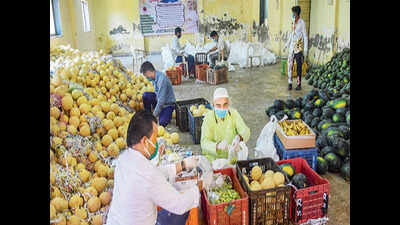
Haidar Azam, president and founder of Azam foundation, prepares Iftar packets to be distributed among families

Meat comprises a major part of iftar delicacies in the holy month of Ramzan but this year popular dishes such as keema, kofta and kebabs are almost off the table as chicken is not a good substitute for these. The few shops that sell mutton do so at an exorbitant price—the Rs 450 per kg rate before the lockdown has now increased to Rs 800.
“We have been requesting the Deonar slaughterhouse authorities to at least open the abattoir partially and allow the traders from within the state to bring animals here. We are ready to follow all the health guidelines. If goats are sold and bought at Deonar, the price of mutton will come down,” said Shaikh Abdur Rahman Abdullah of Mumbai Sheep and Goat Brokers’ Association.
However, Deonar abattoir’s general manager Dr Yogesh Shetye said trading at the slaughterhouse cannot be allowed for two reasons.
“The slaughterhouse falls under an area declared a red zone because of being a hotspot for coronavirus. We cannot risk the spread of the contagious disease. Secondly, transportation of animals from outside the state is not allowed. Given the scenario, we cannot allow crowding at the abattoir,” said Dr Sheyte.
He further said that on normal days, around 200 buffaloes and 300 goats and sheep are slaughtered at the abattoir.
All India Jamaitul Qureish’s president (Mumbai) Gulrez Qureishi said there are several traders in the state who want to sell their animals but are unable to do so, incurring a huge loss. “The livelihood of around 50,000 people is threatened. Our families are dependent on this business. We will be forced to stage a protest if it is not allowed at least partially. If chicken and vegetables are allowed to be sold, why not meat?” asked Qureishi
End of Article
FOLLOW US ON SOCIAL MEDIA



Photostories

Hot Picks
TOP TRENDING
Popular Categories
Hot on the Web
Top Trends
IND vs BAN Live ScoreIsrael Hezbollah WarRahul GandhiShan MasoodBryonna Burrows Net WorthIndian Team Fastest Test FiftyWTC Points TableUGC NET Result 2024GovindaWomen T20 World Cup Points TableWomen T20 World Cup ScheduleEarth Two MoonsKerala Lottery ResultAsteroid 2024 PT5DiddyTop Management Colleges of IndiaLive Cricket Score
Trending Topics
GovindaNavratri Colours 2024Deadpool and Wolverine OTT ReleaseNavratri WishesGandhi Jayanti WishesDevara CollectionGOAT OTT ReleaseGandhi Jayanti 2024Rajinikanth Health UpdateNavratri HistoryDevaraGovinda NewsDevara Movie ReviewHealthy RaitasSwatantrya Veer SavarkarColdplay India tour 2025Upcoming Smartphones In OctoberAmazon SaleSony Bravia 55 inch 4k Ultra HD TVWordle Answer
Living and entertainment
Copyright © 2024 Bennett, Coleman & Co. Ltd. All rights reserved. For reprint rights: Times Syndication Service