
- News
- City News
- mumbai News
- Rojmel account books adapt to cashless economy
Trending
This story is from October 18, 2017
Rojmel account books adapt to cashless economy
Diwali marks the start of the new year Vikram Samvat 2074. On Thursday Gujarati, Jain and Maharashtrian businessmen will perform the Chopda Pujan where new account books called rojmel are sanctified for the new trading cycle.
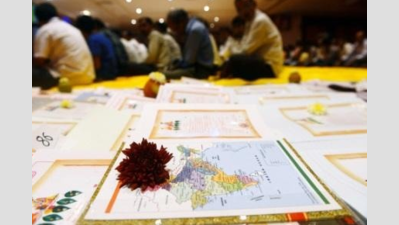
Traders sit behind trading books during Chopda Pujan- special prayers for trading account books - during Diwali. (AFP file photo)
Red books imprinted with images of Lord Ganesh and Goddess Laxmi are worshipped during the mahurat hour with offerings of vermilion, flowers, fruit and fragrance.

Dealers explain how changing economic trends have impacted Chopdi Pujan. Pratik Gala of Anupam Stationery, Andheri West, said, "This year fewer people are opting to keep handwritten account books owing to the focus on cashless economy. Handwritten accounts may be construed as cash payment and could attract scrutiny. In any case, most have switched to computerised records. For them Chopda Pujan is an age-old tradition that they feel they must maintain."
Pratik's own family adapted to computers a few years ago, but continues to perform this ritual. Some traders actually anoint their screens with vermilion and place flowers.
Pratik said, "The rojmel itself has undergone a change in recent months. In 2016, the finance ministry's proposal to change the financial year from April-March to January-December prompted printers to offer more options. Account books are printed from Diwali to Diwali but we also printed them from January to April in case businessmen needed to make the switch suddenly."
End of Article
FOLLOW US ON SOCIAL MEDIA








Photostories

Hot Picks
TOP TRENDING
Popular Categories
Hot on the Web
Top Trends
Haryana Election ResultNew UPI Transaction LimitHurricane MiltonRBI Monetary Policy MeetingWorld First Top 10 TrillionairesStock Market TodayKerala Lottery ResultElection Results 2024Biblical TreeJammu Kashmir Election ResultIsrael Hezbollah WarHardik SinghManagement Colleges of IndiaTop Medical Colleges of IndiaTop Engineering Colleges of IndiaTop Pharmacy Colleges of IndiaLive Cricket Score
Trending Topics
Tulsi KumarBigg Boss Tamil 8 Contestants ListAjay DevgnNavratri Colours 2024Sanjay Leela BhansaliDurga Puja 2024Bigg Boss 18 House PhotoDevara CollectionBigg Boss 18Deepika PadukoneShailesh LodhaDevaraGovinda NewsNational Film Awards 2024Swatantrya Veer SavarkarColdplay India tour 2025Watch NFL Live StreamDress To ImpressCall Of Duty Black Ops 6Wordle Answer
Living and entertainment
Latest News
A historic victory for "Kallanum Bhagavathiyum" on Amazon Prime7 Potassium-rich foods to eat during Navratri vratColdplay India tour 2025: New Mumbai show, concert dates and epic fan reactions, here’s all you need to knowHurricane Milton: Why Tampa area is so vulnerable to stormsUP Muslim family creates 80-feet pollution-free Ravan effigy for DussehraBeard Trimmer with Titanium Blades: Style Your Beard to Perfection with Unmatched SharpnessEthel Kennedy, widow of Senator Robert F Kennedy Sr suffers stroke in sleep, hospitalisedMozambique votes in tense election likely to see ruling party winSum 41’s Deryck Whibley accuses former manager of sexual abuse in new memoirNearly two dozen women leaders on top scripting India GCC storyHyundai aims to raise up to $3.3 billion in record India IPOLibra, Daily Horoscope Today, October 09, 2024: Today is a test of your resiliencePrabhas starrer 'Kalki 2898 AD' gears up for its release in JapanMan declares income of Rs 9.6k, pays tax on Rs 43.5L after US earnings addedKerala lottery results: Thiruvonam bumper BR-99th winners for 09 October 2024; first prize Rs. 25 crore, second prize Rs 1 crore and third prize Rs. 50 lakhsZodiac Signs Most Likely to SucceedPatanjali Foods gets CCI nod for Rs 1,100-crore buyout of parent's home & personal care businessDocumentary suggests Bitcoin creator Satoshi Nakamoto is developer Peter Todd
Copyright © 2024 Bennett, Coleman & Co. Ltd. All rights reserved. For reprint rights: Times Syndication Service