
- News
- City News
- mumbai News
- 'No conflict with patients if ward boys do their job'
Trending
This story is from March 25, 2017
'No conflict with patients if ward boys do their job'
A harrowed Bhoiwada resident said on Friday she was unable to meet her 15-yearold niece at KEM's ICU for want of a pass. “I have no idea what it is. I was supposed to feed her after giving her a sponge bath,“ Vaishali Jadhav said. Her niece was admitted to the hospital after consuming pesticide.
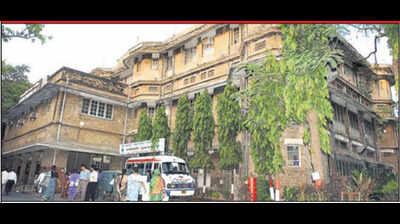
A harrowed Bhoiwada resident said on Friday she was unable to meet her 15-yearold niece at KEM's ICU for want of a pass. “I have no idea what it is. I was supposed to feed her after giving her a sponge bath,“ Vaishali Jadhav said. Her niece was admitted to the hospital after consuming pesticide.
“My pleas to security personnel could not get me an entry even after an hour of trying.

“It's a painful reality in all public hospitals that relatives perform the job of attendants,“ said a senior professor from Sion Hospital. Right from running around with blood and urine samples, taking a patient for examinations, fetching reports, buying medicines to feeding, everything is done by relatives. “Is it a justifiable demand then to restrict the number of relatives before the hospital can promise a strong fleet of caregivers and helpers?“ said the doctor.
Resident doctors almost unanimously feel that the near absence of support staff in public hospitals not just aggravate their work burden, but also agitate patients' relatives. “In a crowded ward, we are often left to do petty things that are supposed to be the job of helpers.There have been situations when we had to leave a ward unguarded to fetch a report or a medicine,“ said a third year resident doctor. “The lack of quality support staff is a key reason why patients are often accompanied by 5-10 relatives. People who come from far-flung areas tend to come with relatives, friends and even neighbours so that they can take turns to attend to their loved one.“
Pradeep Narkar, secretary , Municipal Mazdoor Union, won't accept any criticism. “Patients must understand that they will not get five-star treatment here. KEM or Sion gets more patients than all private hospitals in Mumbai put together,“ he said. “The hospitals have never increased the number of sanctioned posts despite the patient load increasing manifold over the years.“
KEM dean Dr Avinash Supe said caste requirements and several other factors often prove a hindrance in filling up posts. Dean of Nair Hospital Dr Ramesh Bharmal feels a healthy count of support staff could also prevent mob attacks as doctors are not left alone in the ward to defend themselves.

About the Author
Sumitra DebroyEnd of Article
FOLLOW US ON SOCIAL MEDIA









Photostories
Hot Picks
TOP TRENDING
Popular Categories
Hot on the Web
Top Trends
Trending Topics
Diwali WishesDhanteras 2024Vettaiyan CollectionDiwali 2024 DateAhoi Ashtami 2024Venom ReivewBigg Boss 18Vicky Vidya Ka Woh Wala Video CollectionSalman KhanPushpa 2IsraelisPapayaSalman KhanPataudi PalaceActor Bala Wedding NewsGheeDiwali Bank HolidaysCyclone Dana Track OnlineSamsung Galaxy S24Wordle Answer
Living and entertainment
Latest News
Nothing but books as Diwali presentDid you know Sai Pallavi initially didn't agree to do the role in 'Premam'? Says,'Thought the call from Puthren was a scam'Applying castor oil on navel at night: Why it is highly recommendedPunjab bypolls: Senior Akali leader Sohan Singh Thandal joins BJP, likely to contest from Chabbewal seatDiwali sales cross Rs 1.2 lakh crore, another Rs 2 lakh crore expected by year endGoa board’s Class IX Urdu question paper comes with answer key'Power of dialogue': Defence minister Rajnath Singh on India-China easing LAC tensionGarmin Fenix 8 series debuts in India: Price, specifications and moreWatch: Sudden crack in floor tiles causes panic among Tamil Nadu govt staffISL: A text to Coyle that led to Edwin’s return to Chennaiyin FCJ&K: Policeman injured in grenade explosion at Baramulla court evidence roomTips to ensure a diabetic friendly Diwali this yearViral video: Auto driver intercepted with rigged meter in MumbaiShahid Kapoor and Mira Rajput’s playful BTS from Diwali bash photoshoot: 'What it takes to get that one picture'Unni Mukundan’s ‘Marco’ Hindi teaser to be unveiled by John AbrahamKartik Aaryan recalls standing outside Mannat to catch a glimpse of Shah Rukh Khan: 'I’ve been on the other side'Exclusive - Bigg Boss 18: Muskan Bamne's 'Anupamaa' family members Sudhanshu Pandey, Madalsa and Nidhi back her journeyKerala Blasters bank on attack as they face BFC
Copyright © 2024 Bennett, Coleman & Co. Ltd. All rights reserved. For reprint rights: Times Syndication Service