
- News
- City News
- mumbai News
- Need census, radio-collaring of jackal to protect it, say activists
Trending
Need census, radio-collaring of jackal to protect it, say activists
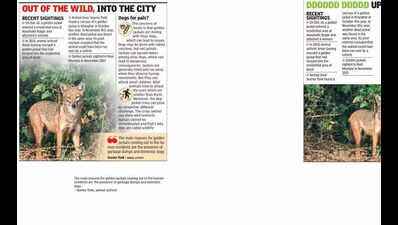
For the first time, a baseline survey on golden jackal distribution in Mumbai Metropolitan Region research project report was put out. The survey by Wildlife Conservation Society–India, in collaboration with the Mangrove Foundation, revealed several interesting aspects of the life of the jackal. The activity pattern shown by golden jackals in the study site was mainly nocturnal, with peaks during dawn and dusk. This was inversely proportional to the activity pattern humans showed using this landscape. Golden jackals were found chasing stray dogs in the study landscape.
To protect the golden jackal, the govt must declare ‘Project Jackal', along the lines of ‘Project Tiger', NatConnect Foundation says. This should be followed by the census -- count and radio-collar them to track their movement and understand their habitat requirement.
People living around BSNL Quarters, Gorai, have been sharing the space with golden jackals for generations, existing peacefully with them. and other fauna. The main reasons for golden jackals coming out to the human residents are the presence of garbage dumps and domestic dogs, says animal activist Seema Tonk.
Also, golden jackals are being besieged in their natural habitat due to recent infrastructure projects like the coastal road and Pradhan Mantri Awas Yojana housing, says NatConnect Foundation director B N Kumar.
Recent instances of golden jackals crawling out of their natural habitat, and entering urban settlements is alarming, say environmentalists. They warned that the newfound man-animal conflict threatens biodiversity and ecological balance in Mumbai and the metro region. The year gone by saw several cases of the jackal venturing into the metropolitan region, leading to cases of man-animal conflict. The golden jackal is protected under Wildlife Act, 1972.
Fires breaking out in mangroves are also forcing the golden jackal out of their habitat, as also other wildlife species. Vested interests are encouraging burning and destruction of mangroves to get dry land. A major reason for this is that many patches of mangroves are still with different public agencies, and the tidal plants have not yet been handed over to the state forest department for protection and conservation. "This is a gross violation of Bombay high court's order," says Kumar. A contempt petition in this regard filed against some agencies by non-profit organisation Vanashakti is pending in the high court.
Animal lover Pradeep Choudhary had recently captured images of jackals headed to Kharghar's residential colonies. "Dogs run after them and even bite them. People who tend to get scared throw stones or even lay traps to kill them," said animal rescuer Amar Gurang. "I have seen 2-3 families of golden jackals along Thane Creek between Koparkhairane and Digha. They emerge from the jungle during the night-time in search of rats, cats and snakes."
Only recently, a curious, unfamiliar beast ventured out of its jungle lair in the stillness of the night and attacked a woman at Anushakti Nagar. The tawny dog-like creature turned out to be a golden jackal, exhibiting signs of rabies. The canine was later captured by forest dept officials and volunteers from NGO Resqink Association for Wildlife Welfare. Similar attacks on humans have occurred with alarming frequency in Chembur-Trombay area, where five golden jackals were in fact found dead. Nocturnal sightings of jackals, previously uncommon visitors in Kharghar, have been reported recently, says Tonk.
Golden jackals, with a host of wildlife — snakes, cats, insects, and monkeys — is part of the ecosystem. As mangroves come under attack by encroachers and infrastructure projects, biodiversity gets disturbed.
Besides, there is also the need for a veterinary hospital in Navi Mumbai in order to handle golden jackals and the entire mangrove-wetland ecosystem. The building is ready at Jui Nagar, but the hospital is not functional.
End of Article
FOLLOW US ON SOCIAL MEDIA








Photostories

Hot Picks
TOP TRENDING
Explore Every Corner
Across The Globe
Kerala SET Hall Ticket 2025Israel Hamas Ceasefire DealGRAP 4Julio RodríguezDME Assam Recruitment 2025
Pushpa 2 Box Office CollectionGame Changer Box Office CollectionTravis HunterVanessa Hudgens Net WorthJason Kelce
Popular Categories
Hot on the Web
Top Trends
Trending Topics
Living and entertainment
Latest News
Kite Flying: An Allegory Of Meditative UnionUKPSC RO/ARO prelims exam 2024 postponed, admit cards released: Check detailed schedule and link to download hall ticketsSA20: 'Couldn't ask for a better start from Kagiso Rabada,' says Reeza Hendricks after MICT beat Paarl RoyalsIndian Armed Forces and Bajaj Auto embark on the ‘Dare Square’ rally'Kaun hai yeh?': Kapil Dev responds with humour to Yograj Singh's 'want to put a bullet' commentsWhy Stephen Baldwin thinks one of his brothers would fare better on special forces: 'A little stud muffin'Facebook founder doesn’t know who India's PM is; gets corrected by IT Minister Ashwini VaishnawDelhi polls: Atishi files nomination papers from Kalkaji seatSangam witnesses sea of devotees taking holy dip on Makar SankrantiFrom Sean 'Diddy' Combs protection plot to woke politics: LA wildfires spark surge of wild conspiracy theories'India cap shouldn't be given just like that': Sunil Gavaskar urges BCCI to trim squad size for England Test tourJimmy Kimmel Live launches L.A. fire relief donation center on Hollywood backlotChoreographer Bosco Martis is all praise for ‘Deva’ star, saying “Shahid Kapoor now dances like a superstar”Shruti Haasan discusses menstrual leave Says, 'We can apply it in some professions, but it is very difficult to apply it in cinema'Ram Charan’s Game Changer loses steam in North America as it struggles to cross US $1.9 million collectionDelhi police registers complaint against CM Atishi for using government vehicle for political purposeWWE RAW on Netflix Results and Highlights (1/13/25): Shocking Debut, Chaotic Street Fight Match and MoreMaha Kumbh 2025: Why is Harsha Richhariya the 'beautiful sadhvi' going viral on social media
Copyright © 2025 Bennett, Coleman & Co. Ltd. All rights reserved. For reprint rights: Times Syndication Service