
- News
- City News
- mumbai News
- Mega boost for Mumbai-Ahmedabad bullet train corridor; underground work to begin in 3 months
Mega boost for Mumbai-Ahmedabad bullet train corridor; underground work to begin in 3 months
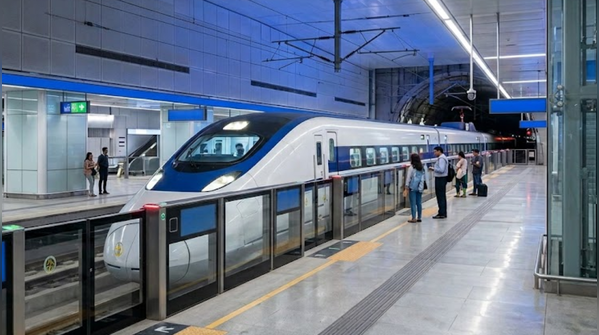
Mumbai bullet train
Two Tunnel Boring Machines (TBMs) for the underground stretch of the Mumbai–Ahmedabad bullet train project are set to arrive at Jawaharlal Nehru Port on Monday, marking a major breakthrough after prolonged delays caused by geopolitical issues that had stalled consignments in China. (AI Image)
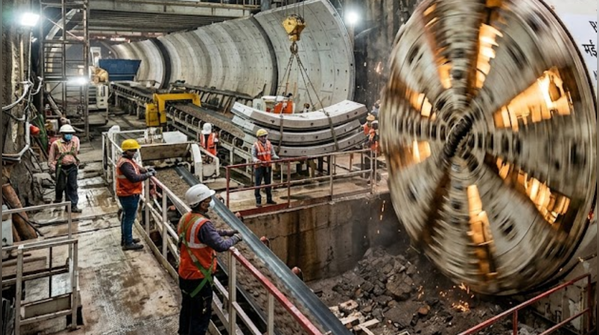
Critical underground & subsea stretch
The machines will be deployed for the 20.37-km underground section between Bandra Kurla Complex (BKC) and Shilphata, which includes a challenging 7-km subsea tunnel beneath Thane Creek—one of the most technically demanding parts of the project. (AI Image)
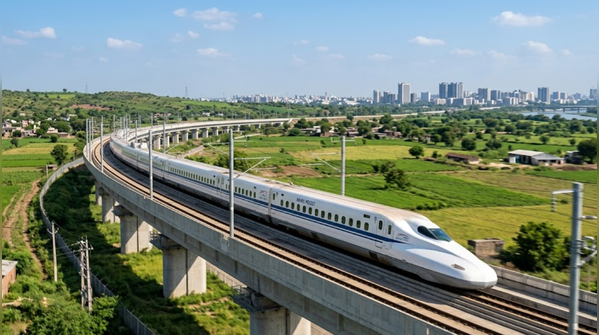
16 Km tunnelling target
Out of the underground stretch, around 16 km is slated to be excavated using TBMs, underlining the dependence on advanced mechanised tunnelling for faster and safer execution in dense urban conditions.(AI Image)
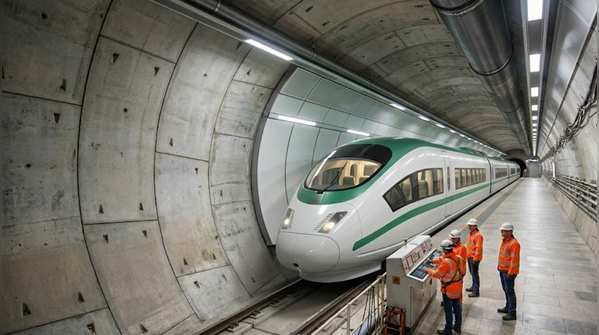
Complete shipment details
Officials confirmed that the shipment includes the remaining components of the first TBM—whose cutter head had already reached Mumbai around September 24, 2025—along with the full set of parts required to assemble the second TBM, moving the project closer to execution readiness. (AI Image)
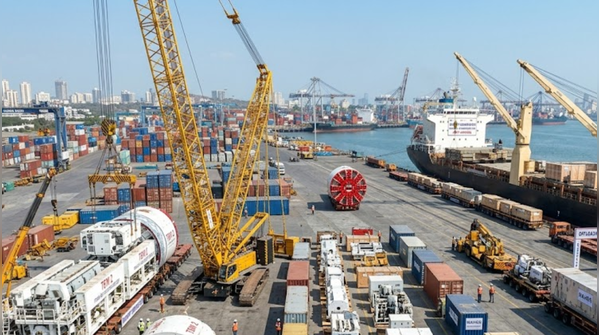
Logistics movement timeline
Sources said, “The consignment left China in early March, reached Chennai port, and was dispatched for Mumbai on March 18,” indicating that logistical bottlenecks have now been resolved and movement of critical equipment is back on track. (AI Image)
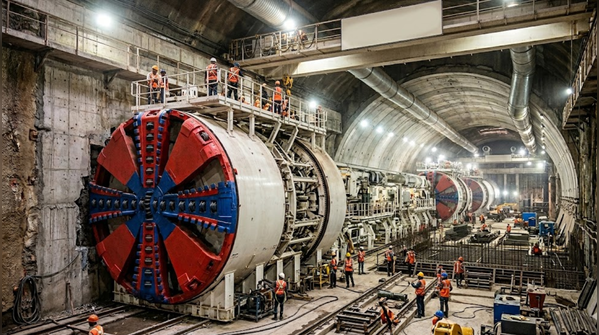
Total TBMs & scale
As per project plans, a total of 3 TBMs are to be deployed for the Mumbai section, highlighting the massive scale of underground engineering involved, with the current arrival marking the first major step toward full deployment. (AI Image)
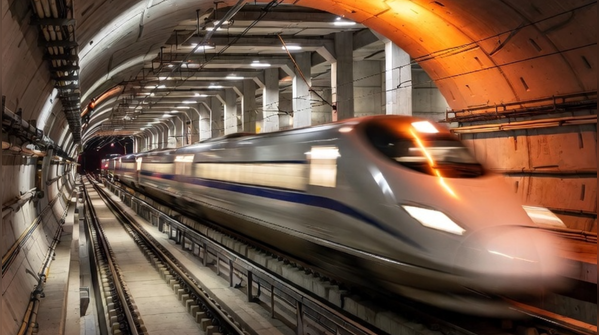
Launch points & alignment logic
The TBMs will be launched from key points including BKC, Vikhroli, and Sawli, with the underground alignment chosen due to severe land acquisition constraints in Mumbai and the presence of existing and planned elevated metro corridors and bridges. (AI Image)
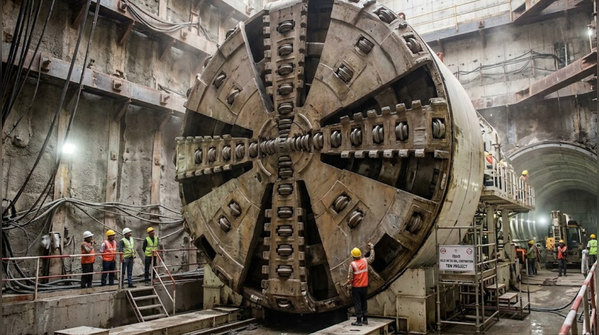
Advanced mixshield technology
The TBMs are equipped with a mixshield configuration, a sophisticated tunnelling technology designed to handle complex geological conditions, including soft soil, rock layers, and high-pressure underwater environments like the subsea stretch. (AI Image)
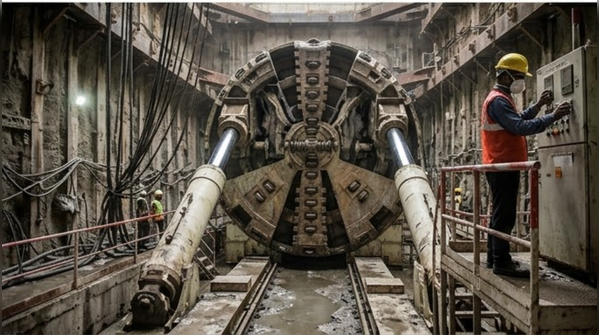
Massive cutter head size
Each TBM features a cutter head diameter of 13.56 metres, placing them among the largest TBMs ever used in India, specifically designed for deep and subsea tunnelling conditions. (AI Image)
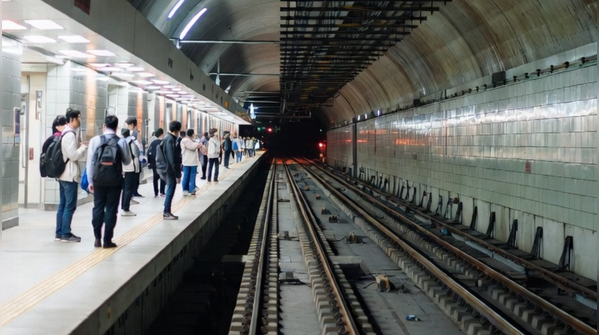
Diplomatic push & Pproject complexity
Although procured from German firm Herrenknecht, the TBMs were manufactured in Guangzhou and had remained stranded at a Chinese port due to clearance issues, prompting diplomatic intervention involving the railways and external affairs ministries, with the matter also raised during high-level talks; the underground package, executed by Afcons Infrastructure Ltd, involves tunnelling at depths of up to 114 metres, making it one of the most complex components of India’s first high-speed rail corridor designed for speeds up to 320 kmph. (AI Image)
Featured In City

