
- News
- City News
- mumbai News
- Lata Mangeshkar: A rare purist who catered to popular taste, say critics
Trending
This story is from February 7, 2022
Lata Mangeshkar: A rare purist who catered to popular taste, say critics
Scholars and critics have different interpretations to the phenomenon that is Lata Mangeshkar.
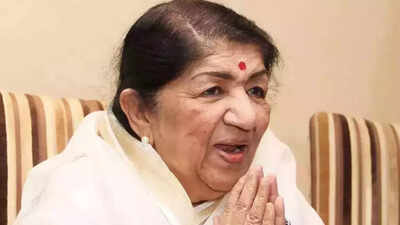
Shruti Sadolikar, classical vocalist of the Jaipur-Atrauli gharana, said Mangeshkar’s entry into films coincided with the emergence of playback artists who began to replace actor singers. “The parameters of popular entertainment underwent a change after World War II. The playback technique was widely accepted as it cut costand-time overruns,” said Sadolikar.
Referring to her high-pitched and light style which became popular, Sadolikar said it symbolised youth, passion and a certain freshness.

Musicologist Ashok Ranade spoke of the ‘sakhi bhaav’ in her songs which, he said, leads to a heart-to-heart conversation between her and the listener, the latter sharing their deepest thoughts with her as if she was a close friend. “Every listener thinks Latadidi is singing for him/her,” said Sadolikar.
Critic-vocalist Amarendra Nandu Dhaneshwar said though catering to popular taste, she remained loyal in technique and rendition to classical music. “Latadidi cultivated the discipline of ‘raagdaari gayaki’. She would execute a film number with the precision, finesse and clarity of ‘khayaal gayaki’,” he said. Citing a long list of her raag-based film songs, Dhaneshwar said, “Didi spread music literacy across the country.”
Mangeshkar invested a film song with an identity of its own, a genre distinct from ghazal and thumri, said film chronicler Veerchand Dharamsey.
Prakash Joshi, medicoturned-music buff who has a 4,000-plus collection from Mangeshkar’s reper- toire, said her songs transcend class, community and creed, and offer an “elevating spiritual experience … liberates us from the humdrum of life. ” Practically every film composer came to rely on Mangeshkar’s voice. “The music industry would come to a halt if Didi was down with fever,” said Joshi.
Detractors often raised a stink over Mangeshkar’s monopoly, but she paid no attention. “That Latadidi could belt out ‘Bachche man ke sachche’ (‘Do Kaliyaan’) for a nine-yearold Neetu Singh and ‘Aa jaane jaa’, the sizzling ‘Inteqam’ number, with equal ease and elan is a testimony to her talent and tenacity,” said Vyas. “She could croon a garba, a mujra and an Arabic melody with equal felicity, thus celebrating India’s cultural diversity. ”
End of Article
FOLLOW US ON SOCIAL MEDIA






Hot Picks
TOP TRENDING
Trending Stories
In City
Entire Website
- 'We were treated like slaves, made to work for 15 hours a day': Tricked into Ukraine war, 3 from Karnataka return home
- 'My father was on the flight': Jaishankar opens up about 1984 Air India hijack
- Airtel CEO Gopal Vittal sends letter to Reliance Jio, Vodafone-Idea, Tata Tele and BSNL CEOs; here's what he said
- Prince Harry to celebrate 40th birthday away from Meghan Markle
- Haitian immigrant pet-eating row: Ohio woman accused of eating cat is US citizen, video is not from Springfield
- Kejriwal out of jail; 'CBI arrest only to frustrate ED case bail': SC judge
- Donald Trump reveals what Laura Loomer is to his campaign: 'I don't control her'
- Hamster Kombat Daily Cipher Codes and Combo Cards for September 14, 2024: Unlock up to 1 million coins
- Laura Loomer's photo with Donald Trump viral. People ask where's Melania, where's wedding ring
- Garena Free Fire MAX redeem codes for September 13: Win in-game goodies and rewards
- 50 Dalit families boycotted for Pocso case on upper caste man
- After AAP workers burst crackers, BJP slams govt
- Did doctors make a mistake in making Mamata wait for 2 hours?
- Prohibit alcohol, meat consumption in towns along Narmada: MP CM Mohan Yadav
- 'Model banana padega': Giriraj on Hindu groups protesting over Shimla mosque
- Ind vs Pak: Famous encounters of storied hockey rivalry
- No driver, no haggling, Mumbai’s BKC aims for friendliest taxi service
- Infosys founder Narayana Murthy: My wife's logic was ...
- Royal commentator warns, ‘If Prince Harry got an ounce of brain, he won’t ... ’
- 'The way FM handled bizman apology ... ': TN CM Stalin slams Sitharaman

Popular Categories
Hot on the Web
Top Trends
Moin KhanShreyas IyerWhere to Watch IND vs PAK Hockey MatchTravis KelceVande MetroAadhaar Card UpdateTech LayoffsShannon SharpeUPSC Mains Admit CardKristina JoksimovicWay Chatgpt can be your Study PartnerAir Taxi IndiaWWE Smackdown ResultsHaitian Immigrant OhioArvind KejriwalPM ModiLive Cricket Score
Trending Topics
Alia BhattMalaika Arora Father DeathArbaaz KhanNatasa StankovicMr Bachchan OTT ReleaseNational Parks In IndiaSelena GomezGOAT CollectionVikas Sethi DeathMalayalam ProducersIndia's Best Dancer 4Simi GarewalDilli BabuIndian National ParksLaung BenefitsVikas SethiApple iPhone 16SpaceXAadhar Card Update By Sept 14Wordle Answer
Living and entertainment
Latest News
Regina Cassandra calls herself a 'serial dater,' had many relationships :'But I’m taking a break now'Kaun Banega Crorepati 16: Can you guess the answer for this Rs 3,20,000 question on Navy, which contestant Naman Jain incorrectly answered?Kitchen Tips: How to elevate home cooking to Michelin levelFord drives into India for 3rd timePIL: Publicise laws, penalties to curb crimes against womenGrowth potential 7.5% or more: RBI governorHindus take to Bangladesh streets to stop attacks and demand justiceE-commerce speeds up to catch up with Quick commerce'Will take digital public infrastructure stack to 50 nations'Justin Timberlake faces DWI charges: Court-ordered apology, fine and community serviceDonald Trump on another debate with Kamala Harris: 'Maybe, if I got in the right mood ... 'Border Gavaskar Trophy: When Ricky Ponting's on-air analysis of Prithvi Shaw turned into match realitySebi gives clean chit to NSE, ex-executives in co-location caseRusty or Ready? Falcons' Cousins Falls Flat in $180M NFL DebutEdible oil import duty hiked by 20%Lucky houseplants for each Zodiac, as per a renowned astrologerBest Phones Under 35000 To Smoothly Carry Out Multiple Tasks On A BudgetHow to manage eczema in babies
Copyright © 2024 Bennett, Coleman & Co. Ltd. All rights reserved. For reprint rights: Times Syndication Service