
- News
- City News
- mumbai News
- In chilling 'digital detention' scams, cybercriminals pose as cops, CBI, ED
Trending
In chilling 'digital detention' scams, cybercriminals pose as cops, CBI, ED
Cybercriminals defrauded an elderly man from Malabar Hill of over Rs 2 crore by posing as law enforcement officers and subjecting him to a fake 'digital detention'. The scam involved online interrogations and intimidation tactics. The modus operandi has been replicated in several cases, targeting victims by fabricating legal threats and coercing financial transfers.

Representative Image

Cybercriminals are masquerading as law enforcement officers and deploying chillingly simple yet effective methods to trick unsuspecting victims. Posing as policemen, CBI, or ED officers, these fraudsters launch online interrogations, typically through platforms like WhatsApp or Skype, where victims can be monitored over the camera. The victims are isolated, forbidden from contacting anyone, and subjected to a barrage of intimidation to extract money. "Interrogations" could range from a few hours to two or three days, and the victims are told that they are under "digital detention".
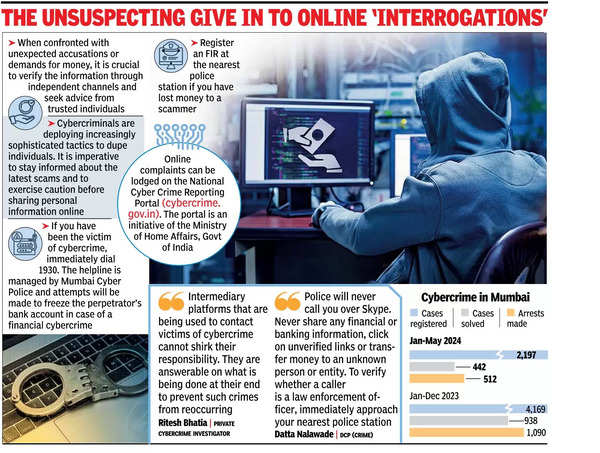
In another case, a south Mumbai resident was forced to send selfies every hour to his cyber captors. The fraudsters claimed that his Aadhaar card was implicated in money laundering and he had been "digitally detained". He was coerced into paying Rs 13 lakh to settle.
Scammers often begin by casting a wide net, calling up individuals with claims of drugs being found in their courier packages, or their personal information being misused for money laundering. The victims are then subjected to a high-pressure interrogation, complete with threats of legal action or arrest. In one incident, fraudsters told the victim that his mobile number popped up during the investigation of a criminal case involving a former state minister from the NCP.
The emotional toll on victims is immense. A homemaker, targeted in a similar scam, was reduced to tears after being subjected to a barrage of abuse. She was threatened that her explicit videos had been leaked, leaving her shattered. "The use of profanity by scammers is a tactic to mimic aggressive demeanour often attributed to police officers in movies," said cyber investigator Ritesh Bhatia. It would increase the victim's belief in the legitimacy of the situation.
To enhance their credibility, cybercriminals have been known to create elaborate setups, resembling police stations, complete with men donning uniforms and official-looking logos. In one instance, scammers used a fake profile picture of a policeman on WhatsApp and called up a businessman, accusing him of being involved in human trafficking. They sent him a fabricated arrest warrant and seizure order via an online link. One of the scammers even impersonated a Supreme Court judge in a call with the victim. The fraudsters convinced the businessman that he needed to undergo a "fund legalization process" and deposit his money in an RBI account. The scam, which unfolded over seven to eight hours, resulted in a loss of Rs 1.3 crore.
Another victim, a doctor, was compelled to apply for a pre-approved loan and transfer the full amount to the fraudsters, who had told her that she was under digital detention and maintained a constant watch on her through a Skype call.
"When faced with a situation that seems suspicious, don't hesitate to ask too many questions," advised Bhatia. "Fraudsters often become uncomfortable when confronted with scrutiny and will typically end the call abruptly," he said. Bhatia also pointed out the irony of our heightened awareness in offline situations compared to our online complacency.
End of Article
FOLLOW US ON SOCIAL MEDIA










Photostories

Hot Picks
TOP TRENDING
Popular Categories
Hot on the Web
Top Trends
IND vs BAN Live ScoreIND vs SL LiveNew UPI Transaction LimitHurricane MiltonRBI Monetary Policy MeetingWorld First Top 10 TrillionairesStock Market TodayKerala Lottery ResultElection Results 2024Oxford UniversityIsrael Hezbollah WarHardik SinghManagement Colleges of IndiaTop Medical Colleges of IndiaTop Engineering Colleges of IndiaTop Pharmacy Colleges of IndiaLive Cricket Score
Trending Topics
Diwali WishesBigg Boss Tamil 8 Contestants ListBhool Bhulaiyaa 3 TrailerNavratri Colours 2024Sanjay Leela BhansaliDurga Puja 2024Bigg Boss 18 House PhotoDevara CollectionBigg Boss 18Deepika PadukoneShailesh LodhaDevaraColdplayNational Film Awards 2024Swatantrya Veer SavarkarColdplay India tour 2025Watch NFL Live StreamDress To ImpressCall Of Duty Black Ops 6Wordle Answer
Living and entertainment
Latest News
CATS YouTube codes for October 9, 2024: Earn 500 CATS and know how to redeem the codesHurricane Milton: Why Tampa area is so vulnerable to stormsBeard Trimmer with Titanium Blades: Style Your Beard to Perfection with Unmatched SharpnessTHE World University Rankings 2025: IISc Leads India , Check the List of Top 10 Indian Institutes HereAre HDFC Bank, Axis, Kotak a value buy or value trap for investors?Triptii Dimri on emotional struggles following criticism for 'Animal’: Side effect of being in a mainstream filmDid the threat of ‘first Hindu CM’ help NC-Congress win J&K?Ethel Kennedy, widow of Senator Robert F Kennedy Sr suffers stroke in sleep, hospitalisedRanbir Kapoor's UNSEEN BTS pic from 'Shamshera' goes viralSum 41’s Deryck Whibley accuses former manager of sexual abuse in new memoirMudassar Aziz: A filmmaker needs to carefully study while pegging a film around the idea of stardomHyundai aims to raise up to $3.3 billion in record India IPOPrabhas starrer 'Kalki 2898 AD' gears up for its release in JapanMan declares income of Rs 9.6k, pays tax on Rs 43.5L after US earnings addedPatanjali Foods gets CCI nod for Rs 1,100-crore buyout of parent's home & personal care businessWho is Aniruddhacharya Maharaj? Know more about Pookie Baba’s life journey and net worthWill Allu Arjun be able to beat Prabhas in North America with Pushpa 2?OnePlus 12 is available for Rs 35,314 only on Amazon; check exchange deal and bank offers
Copyright © 2024 Bennett, Coleman & Co. Ltd. All rights reserved. For reprint rights: Times Syndication Service