
- News
- City News
- mumbai News
- Durable missile metal stents give a leg up
Trending
This story is from January 29, 2016
Durable missile metal stents give a leg up
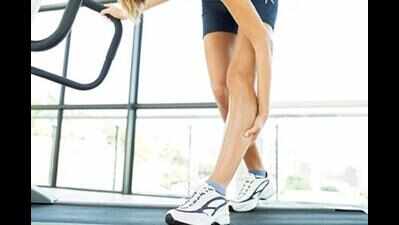
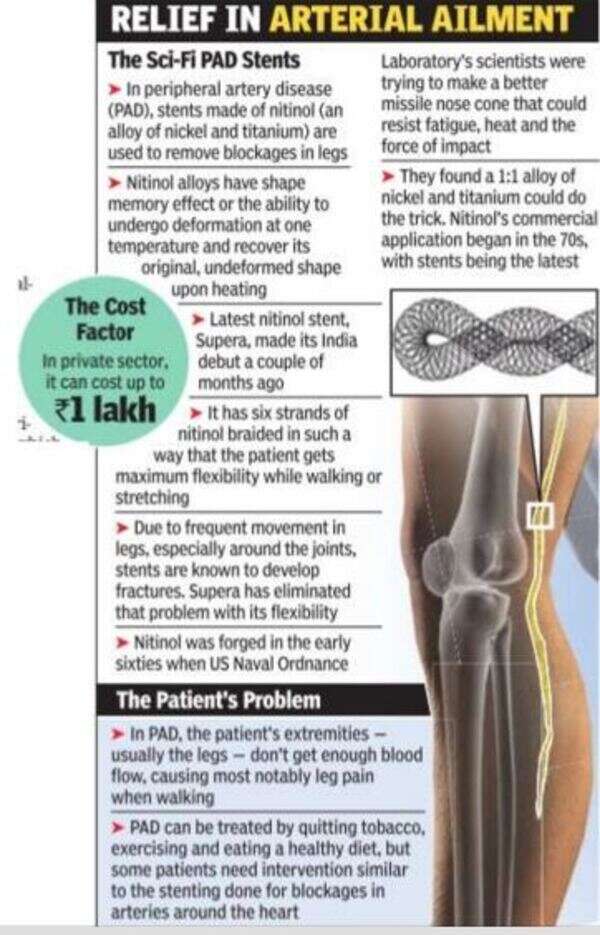
Ram Sanap, a 62-year-old farmer from Jalna, would have lost his right leg to an infection if he hadn’t made it to JJ Hospital in Byculla in December. Thanks to funding from the government and the latest stent — made from an alloy developed by the US navy while trying to build more robust nose cones for missiles — inserted in an artery in the back of his leg, he is walking again.
Ram Sanap, a 62-year-old farmer from Jalna, would have lost his right leg to an infection if he hadn’t made it to JJ Hospital in Byculla in December. Thanks to funding from the government and the latest stent — made from an alloy developed by the US navy while trying to build more robust nose cones for missiles — inserted in an artery in the back of his leg, he is walking again.

Dr Avinash Gutte from JJ Hospital’s interventional neuro-radiology department who carried out the procedures said, “Both men were in an advanced stage of the disease that began from their thigh artery.” They needed a stent that could bear the heavy activity, bending and flexing that legs perform. “European studies showed the latest Supera stent don’t develop fractures that many previous orthopaedic stents used to,” he added.
A senior doctor who didn’t want to be identified said it’s not easy to deploy these new stents because they come in particular lengths. “There are many new devices to treat peripheral artery disease. Some are in the pipeline, some are available in the West,’’ he said.
Dr Hemant Deshmukh, who heads the interventional radiology department of KEM Hospital, said there was growing recognition of peripheral artery disease in India. “Previously, patients wouldn’t be able to afford a stent, but they can now because of insurance,’’ he said.
Dr Rahul Sheth, the first to use Supera stents in India, said he has used it on 10 patients in the private sector. “These stents are not rigid and take on the shape of the body’s contours.”
End of Article
FOLLOW US ON SOCIAL MEDIA





Hot Picks
TOP TRENDING
Trending Stories
In City
Entire Website
- Malaika Arora's father Anil Arora dies by suicide in Mumbai
- 7 Key Reasons Why UPSC is the Toughest Exam in India
- 9/11 Remembrance Day: Key moments from the deadliest attack on US
- Howard University: 10 landmark firsts of the institution that shaped Kamala Harris
- Earthquake of magnitude 5.8 strikes Pakistan, tremors felt in Delhi, neighbouring areas
- Who were Barack Obama's challengers in 2008 and 2012 US presidential elections?
- 'A in INDIA alliance': Rahul Gandhi's slip-up during address to Indian-Americans goes viral
- Trump vs Harris: Betting markets reveal who’s expected to win the US presidential debate
- IGNOU December 2024 Term-End Exam: Registration Details, Important Dates, and Fee Structure
- Top 10 TED Talks to Boost Confidence and Success for Female Students
- Ayushman Bharat health insurance scheme to be expanded to cover elderly above 70
- Mosque row: Himachal tense as protesters clash with police
- Why is Kolkata rape-murder victim’s mother accusing Mamata of lying?
- Impasse continues as Kolkata docs list new demands for Mamata
- Omar alleges BJP conspiracy over Rashid's release from Tihar jail
- Ukraine wants India to play more active role to end Russia’s war
- Why growing lure of protein supplements is worrying health experts
- iPhone 16 series launched: Complete features, price and how to pre-order
- The untold story of Ganguly’s Test debut
- 'Anti-national statements': Shah targets Rahul over remarks on quota

Popular Categories
Hot on the Web
Top Trends
Trending Topics
Deepika PadukoneMalaika Arora Father DeathArbaaz KhanJayram RaviAishwarya Rai BachchanSlat WaterWeight GainGOAT CollectionVikas Sethi DeathMalayalam ProducersIndia's Best Dancer 4Simi GarewalDilli BabuIndian National ParksLaung BenefitsVikas SethiiPhone 16Dubai Princess Sheikha MahraMG Windsor EvWordle Answer
Living and entertainment
Latest News
Manju Warrier expresses gratitude for birthday wishes: "Forever humbled and grateful"6,0,6,6,6 - Smashing Kieron Pollard rolls back the clock in Caribbean Premier League - WatchJiiva and wife escape with minor injuries after a road accidentWhy Banyan trees survive for centuries and spread indefinitely?Shilpa Shetty and Raj Kundra spotted at the Siddhivinayak Temple; video insideNBA 2K25 locker codes September 2024: Locker codes revealed and know how to reveal themDonald Trump and Kamala Harris shake hands as they meet for first time on debate stage: Watch the 'awkward' momentBRS pushes for disqualification of turncoat MLAs after High Court rulingPrince William’s commitment to a lasting marriage with KateVarun Dhawan shares unfiltered reaction to Janhvi Kapoor's 'Daavudi' song from 'Devara: Part 1': 'So freaking good...'Jr NTR starrer 'Devara: Part 1' completes censorship formalities; receives UA certificate'Trump should not be telling a woman what to do with her body', says Kamala Harris on abortion rights during US presidential debateJalen Ramsey demands action against Miami Police following Tyreek Hill's pulled from car49ers RB Christian McCaffrey misses win over JetsArbaaz Khan spotted outside Malaika Arora's house along with police after the tragic news of her father's demise by alleged suicide - WATCH VIDEOShivaji statue collapse: Sculptor’s custody extended till September 13Vijay Sethupathi and Trisha starrer '96' to have a sequel, reveals Prem Kumar7 Common veggies that are loaded with iron and essential nutrients
Copyright © 2024 Bennett, Coleman & Co. Ltd. All rights reserved. For reprint rights: Times Syndication Service